
Franciscan
The Franciscans are a group of Catholic religious orders founded by Saint Francis of Assisi in the early 13th century. Adhering to a life of poverty, preaching, and service, they have evolved into multiple branches for men and women, including the Order of Friars Minor, the Poor Clares, and the Secular Franciscan Order. Their original emphasis on extreme poverty was later relaxed, leading to internal conflicts and the establishment of distinct orders like the Conventuals and Capuchins.
Key Facts
- ›Founded in the early 13th century by Saint Francis of Assisi.
- ›Emphasizes a life of poverty, preaching, and service, emulating Jesus Christ.
- ›Includes three main male orders: Friars Minor (OFM), Conventuals (OFM Conv.), and Capuchins (OFM Cap.).
- ›Also encompasses the Order of Saint Clare (Poor Clares) for nuns and the Secular Franciscan Order for lay members.
- ›The concept of strict poverty was a source of significant internal conflict and reform throughout their history.
- ›The Franciscan Custody of the Holy Land, established in the 14th century, continues to this day.

- Emphasis On Poverty and Mendicancy
- Role As Custodians of the Holy Places In the Holy Land
- the Basilica of San Francesco D'Assisi, Built To House Francis's Remains
Order of Friars Minor, Seraphic Order, Greyfriars, Minorites, Fraticelli
Francis of Assisi, Clare of Assisi, Anthony of Padua, Elizabeth of Hungary, Bernard of Quintavalle, Brother Elias of Cortona, Brother Leo, Bonaventure
- Francis's Preaching and Seeking Papal Approval
- Founding of the Poor Clares By Clare Under Francis's Guidance
- Relaxation of Extreme Poverty In the 1223 Rule
- Francis's Journey To Egypt and Meeting With the Sultan
- Establishment of the Franciscan Custody of the Holy Land
- Amalgamation of Smaller Orders Into the Order of Friars Minor By Pope Leo Xiii
About Franciscan
The Franciscans represent a significant religious movement within the Catholic Church, originating from the teachings and example of Saint Francis of Assisi in the early 13th century. Francis, the son of a wealthy merchant, renounced his possessions to embrace a life of extreme poverty, preaching, and service, seeking to emulate the life of Jesus Christ. This radical commitment to evangelical poverty became the defining characteristic of the early Franciscan order.
Origins and Development
Francis began preaching around 1207, and by 1209, he had gathered a following and sought papal approval from Pope Innocent III to establish a religious order. The initial rule, approved in 1209, strictly prohibited the ownership of property, requiring members to beg for food and live in solidarity with the poor. This austere lifestyle, combined with their itinerant preaching, made a profound impression on the people of Umbria and beyond. Under Francis's guidance, Clare of Assisi founded the Order of Saint Clare, a female branch of the Franciscan family.
Internal Dynamics and Branches
The commitment to extreme poverty was a source of ongoing internal debate and conflict within the Franciscan movement. Over time, the strictness of this requirement was relaxed, leading to various interpretations and the eventual formation of distinct branches. The modern structure of the Franciscan First Order for men comprises three main institutes, each observing the Rule of Saint Francis with different emphases:
- Order of Friars Minor (OFM): The largest contemporary male order, often referred to as the Observants, and commonly known as Franciscan friars.
- Order of Friars Minor Conventual (OFM Conv.): Also known as Conventuals or Minorites, sometimes called Greyfriars.
- Order of Friars Minor Capuchin (OFM Cap.): Founded in 1520, known for their austere lifestyle and commitment to prayer and service.
Beyond these male orders, the Franciscan family includes the Second Order, the Order of Saint Clare (Poor Clares), for enclosed nuns, and the Third Order of Saint Francis, which has both secular and regular branches for men and women seeking to live Franciscan ideals in their daily lives or in community.
Historical Significance and Legacy
Franciscans played a crucial role in the life of the medieval Church, serving as preachers and ministers to the populace. Their mendicant nature contrasted with older monastic traditions, sometimes leading to friction. Notable historical events include Francis's mission to Egypt in 1219 to preach to the Saracens and the Sultan, initiating a spirit of dialogue. Later, in 1342, the Franciscans were officially appointed custodians of the Holy Places in the Holy Land, a role they continue to fulfill. The Basilica of San Francesco d'Assisi, built to house Francis's tomb, remains a spiritual center for the order. Despite internal divisions and reforms, the Franciscan charism continues to influence religious life and charitable work worldwide.
Source: Wikipedia ↗
Frequently Asked Questions
When were the Franciscans founded?
The Franciscan movement began around 1207 when Francis of Assisi started preaching. He sought and received papal approval to form a religious order in 1209 from Pope Innocent III.
What is the core philosophy of the Franciscans?
Franciscans adhere to the teachings and spiritual disciplines of Saint Francis of Assisi, emphasizing a life of evangelical poverty, preaching, and solidarity with the poor. Their lifestyle was intended to emulate the life and ministry of Jesus Christ.
What are the different branches of the Franciscan order?
The Franciscan family includes three main male orders: the Order of Friars Minor (OFM), the Order of Friars Minor Conventual (OFM Conv.), and the Order of Friars Minor Capuchin (OFM Cap.). There is also the Order of Saint Clare (OSC) for nuns and the Secular Franciscan Order (OFS) for lay people.
Why is poverty such a central theme for the Franciscans?
Saint Francis of Assisi, the founder, gave up his wealth and embraced extreme poverty to live in solidarity with the poor and to emulate Christ's life. This principle was a cornerstone of the original rule, though its strict observance led to significant debates and reforms within the order.
Are there Protestant Franciscan orders?
Yes, since the late 19th century, several smaller Protestant Franciscan orders have been established, particularly within the Lutheran and Anglican traditions. Some Franciscan communities have also become ecumenical.
What is the significance of the Franciscan presence in the Holy Land?
Franciscans established a presence in the Holy Land starting in 1217. In 1342, Pope Clement VI officially declared them the custodians of the Holy Places in the name of the Catholic Church, a role they continue to fulfill today.
Related Monasteries

Rome
Rome, often called the "Eternal City" and "Caput Mundi," is the capital of Italy and a pivotal center of Western civilization and Christian culture. Its history spans over three millennia, from its legendary founding by Romulus to its role as the capital of the Roman Kingdom, Republic, and Empire, and later as the seat of the Papacy and the modern Italian Republic. The city is renowned for its rich artistic and architectural heritage, having been a major center of the Renaissance, Baroque, and Neoclassicism.

Brixen
Brixen, also known as Bressanone, is a historic town and municipality in South Tyrol, northern Italy, situated at the confluence of the Eisack and Rienz rivers. It is the third-largest city and oldest town in the province, known for its German-speaking majority and rich history dating back to the Upper Paleolithic. The town boasts significant religious and secular architecture, including its cathedral and the Renaissance Bishop's Palace, and is a center for culture and tourism, particularly for its nearby ski resort, Plose.
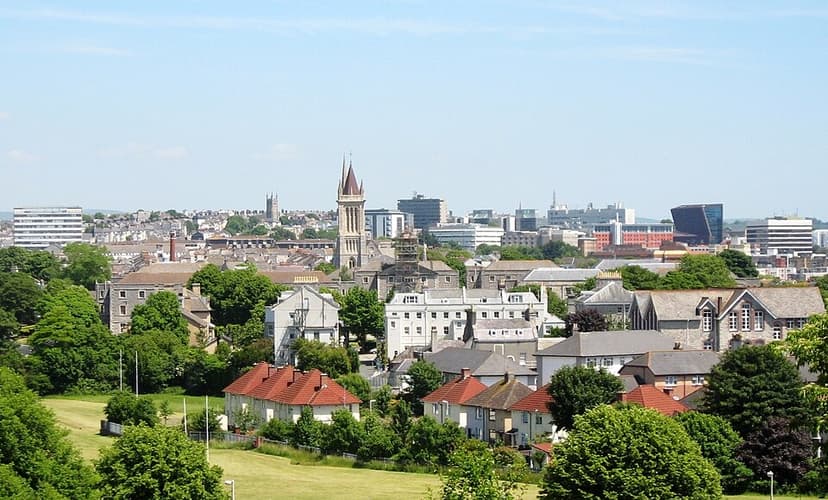
Plymouth Whitefriars
Plymouth Whitefriars, a former Dominican friary, was established in Plymouth, England, likely in the early 13th century. It played a role in the religious life of the town during the medieval period and was dissolved during the English Reformation. Today, remnants of the friary can be seen integrated into modern structures and public spaces, offering a glimpse into Plymouth's historical religious landscape.