
Kumbum Monastery
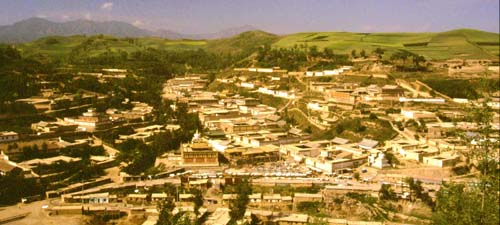
Kumbum Monastery, also known as Ta'er Temple, is a significant Tibetan Buddhist monastery founded in 1583 in Lusar, Qinghai, China. It holds a prominent place in Tibetan Buddhism, second only to Lhasa's Drepung Monastery. The monastery is renowned for its origins tied to Je Tsongkhapa, the founder of the Gelug school, and the miraculous "Tree of Great Merit" that grew from his birthplace.
Key Facts
- ›Founded in 1583 by Tsöndrü Gyeltsen under the patronage of Altan Khan and the 3rd Dalai Lama.
- ›Centered around the "Tree of Great Merit," believed to have grown from Je Tsongkhapa's umbilical cord or afterbirth.
- ›Comprises four monastic colleges: Debate, Tantric, Medical, and Kalachakra.
- ›Historically housed around 3600 monks, though numbers significantly reduced due to Chinese Communist policies.
- ›Continues to be a major pilgrimage site for Vajrayana Buddhists and scholars.
- ›Known for its "Golden Tiled Temple" with a golden roof and intricate religious artifacts.
Tree of Great Merit, Golden Tiled Temple, Four Monastic Colleges
Ta'Er Temple, Kumbum Jampa Ling
Je Tsongkhapa, TsöNdrü Gyeltsen, Altan Khan, 3rd Dalai Lama, 4th Dalai Lama, Chojey Legpa Gyatso, Chuzang Lozang-Tenpai-Gyeltsen, Ngawang Shedrub Tenpé Nyima, Choekyi Gyaltsen, Ma Bufang, Alexandra David-NéEl, éVariste RéGis Huc, Joseph Gabet
- Founded In 1583.
- Damaged By Qing Armies In 1723, Leading To the Conversion of Ngagpa Dratsang Into A Medical College.
- Affected By Chinese Communist Policies Since the Late 1950s.
About Kumbum Monastery
Kumbum Monastery, officially known as Kumbum Jampa Ling and also referred to as Ta'er Temple, is a historically significant Tibetan Buddhist monastery located in Lusar, Xining, Qinghai, China. Founded in 1583, it holds a prominent position within the Gelug school of Tibetan Buddhism, ranking as the second most important monastery after Drepung Monastery in Lhasa.
Origins: The Tree of Great Merit
The monastery's foundation is deeply intertwined with the legend of Je Tsongkhapa, the founder of the Gelug school, who was born in the vicinity. According to tradition, a sacred sandalwood tree, known as the "Tree of Great Merit," sprouted from the spot where Tsongkhapa's umbilical cord or afterbirth was buried. This tree is reputed to bear impressions of the Buddha's face on its leaves and to exude a pleasing fragrance. The "Golden Tree" temple, built around this sacred tree, is considered the holiest site within Kumbum Monastery.
Foundation and Development
The initial steps towards the monastery's establishment began in the 1360s with a small temple built on Tsongkhapa's birthplace. In 1560, the meditator Tsöndrü Gyeltsen established a small monastery for intensive meditation practice. The larger monastery, Kumbum Jampa Ling, was constructed in 1583 at the request of the 3rd Dalai Lama, Sönam Gyatso, who had been invited to Mongolia by Altan Khan. Tsöndrü Gyeltsen was appointed as the head lama, and the monastery was named "Kumbum" meaning "100,000 enlightening bodies of the Buddha," referencing the images said to appear on the holy tree's leaves.
Monastic Institutions
Kumbum Monastery developed into a major educational center, featuring four distinct monastic colleges: the Debate College (Shadupling Dratsang), the Tantric College (Sangngag Dechenling Datsang), the Medical College (Menpa Dratsang Sorig-Dargey-Zhenphen-Norbuling), and the Kalachakra College (Dükhor Dratsang). These colleges offered specialized curricula, awarding advanced degrees such as Geshe Rabjampa, Geshe Shayrampa, Geshe Ngagrampa, and Menrampa.
Historical Context and Current Status
The monastery experienced periods of both patronage and hardship. In 1723, Qing armies caused damage, leading to the transformation of one college into a medical institution. By the mid-20th century, Kumbum housed approximately 3600 monks. However, Chinese Communist policies in the latter half of the century significantly reduced the monastic population to around 400. Despite these changes, Kumbum Monastery remains a vital pilgrimage destination for Vajrayana Buddhists and scholars, preserving Tibetan culture, art, and religious traditions.
Source: Wikipedia ↗
Frequently Asked Questions
What is the origin of Kumbum Monastery?
Kumbum Monastery's origins are linked to the birthplace of Je Tsongkhapa, founder of the Gelug school. A sacred sandalwood tree, known as the "Tree of Great Merit," is said to have grown from his umbilical cord or afterbirth, and the monastery was established around this site.
What are the main monastic colleges at Kumbum?
Kumbum Monastery features four primary monastic colleges: the Debate College (Shadupling Dratsang), the Tantric College (Sangngag Dechenling Datsang), the Medical College (Menpa Dratsang Sorig-Dargey-Zhenphen-Norbuling), and the Kalachakra College (Dükhor Dratsang).
What is the significance of the "Tree of Great Merit"?
The "Tree of Great Merit" is central to Kumbum's founding story. Tradition holds that its leaves bear impressions of Buddha's face and mystic syllables, and its blossoms emit a pleasant scent. Portions of this tree are preserved within a stupa in the Great Golden Temple.
How has the monastery been affected by political events?
The monastery was significantly impacted by Chinese Communist policies starting in the late 1950s, leading to a substantial decrease in the number of resident monks. Despite these challenges, it remains an active pilgrimage destination and a repository of Tibetan culture.
Is Kumbum Monastery open to visitors?
While the text doesn't explicitly state public access, it describes it as a major pilgrimage site visited by thousands annually, suggesting it is accessible to visitors and pilgrims.
Related Monasteries

Gonchen Monastery
Gonchen Monastery, also known as Derge Monastery, is a significant Sakya Tibetan Buddhist monastery situated in the town of Derge, within the Kham region of Sichuan, China. Founded by the renowned polymath Thang Tong Gyalpo, it is recognized for its unique architectural design and its association with the historic Derge Parkhang printing house, which continues to produce Buddhist scriptures using traditional methods. Though largely destroyed during the Cultural Revolution, the monastery was restored in the 1980s and remains a vital center for Tibetan Buddhism.
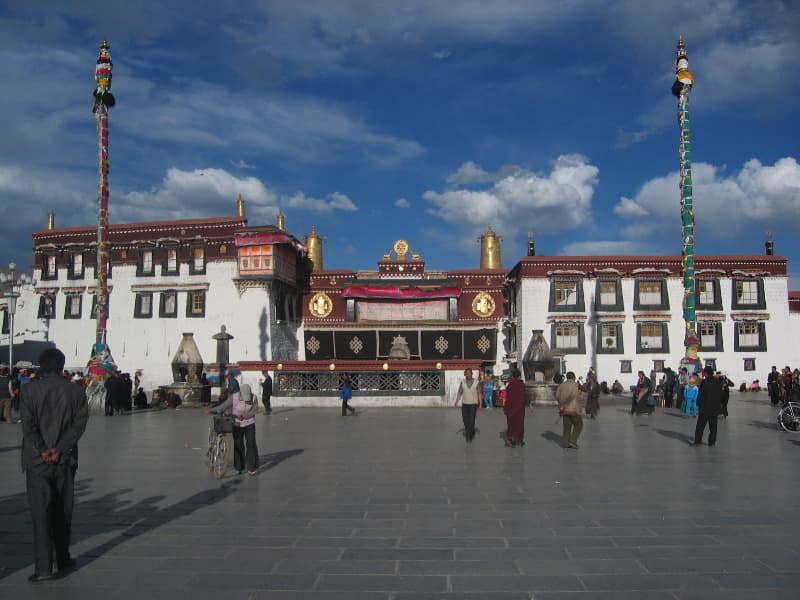
Jokhang Temple
The Jokhang Temple, also known as Rasa Trulnang or Zuglagkang, is a Tibetan Buddhist temple complex and monastery in Lhasa, considered the spiritual heart of the city. Constructed around 640 CE by King Songsten Gampo, it was built to house the Jowo Mikyo Dorje statue. Over centuries, it has undergone expansions and renovations, most notably by the Fifth Dalai Lama in 1610, and was designated a UNESCO World Heritage Site in 2000 as an extension of the Potala Palace.
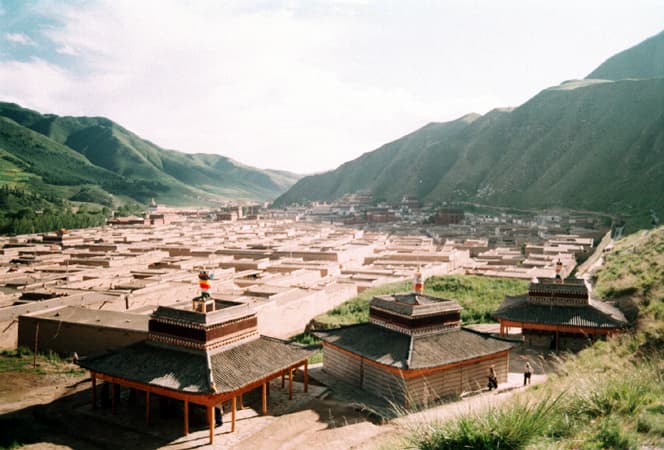
Labrang Monastery
Labrang Monastery, also known by its formal Tibetan name Genden Shédrup Dargyé Trashi Gyésu khyilwé Ling, is one of the six great monasteries of the Gelug school of Tibetan Buddhism. Founded in 1709 by Je Lama Tsongkhapa, it is the largest Tibetan Buddhist monastery outside the Tibet Autonomous Region and was a significant monastic university and regional power base in Amdo. The complex features a blend of Tibetan and Indian Vihara architectural styles and houses numerous halls, institutes of learning, and a museum.