
Labrang Monastery
Labrang Monastery, also known by its formal Tibetan name Genden Shédrup Dargyé Trashi Gyésu khyilwé Ling, is one of the six great monasteries of the Gelug school of Tibetan Buddhism. Founded in 1709 by Je Lama Tsongkhapa, it is the largest Tibetan Buddhist monastery outside the Tibet Autonomous Region and was a significant monastic university and regional power base in Amdo. The complex features a blend of Tibetan and Indian Vihara architectural styles and houses numerous halls, institutes of learning, and a museum.
Key Facts
- ›Founded in 1709 by the first Jamyang Zhépa, Ngawang Tsöndrü.
- ›Home to the largest number of monks outside the Tibet Autonomous Region.
- ›One of the six great monasteries of the Gelug school of Tibetan Buddhism.
- ›Historically a significant monastic university and regional power base in Amdo.
- ›Features a blend of Tibetan and Indian Vihara architectural styles.
- ›Contains 18 halls, six institutes of learning, and a Buddhist museum.
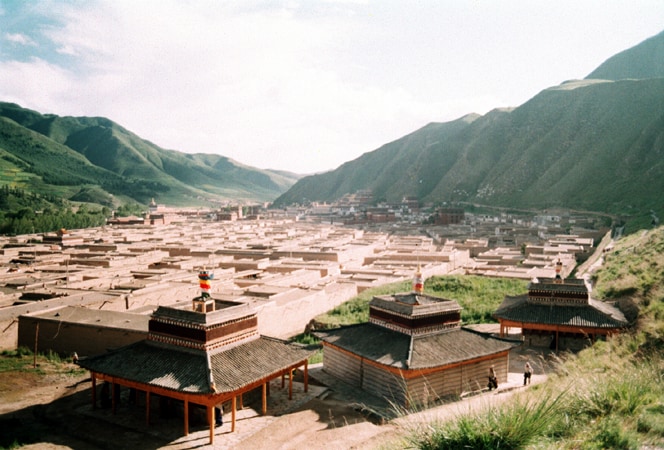
Tibetan, Indian Vihara
- Buddhist Museum With Buddha Statues, Sutras, and Murals
- Large Collection of Tibetan Language Books
- Gilded Stupa
- Sutra Debate Area
- the Golden Chorten
- Genden ShéDrup Dargyé Trashi GyéSu Khyilwé Ling
- LāBǔLéNg Sì
Je Lama Tsongkhapa, Ngawang TsöNdrü, Alakh Jamv Japa
- Founded In 1709
- Major Monastic University and Power Base In the Early 20th Century
- Suffered During the Cultural Revolution
- Assembly Hall Burned Down In 1985, Rebuilt By 1990
- Attacks and Occupations By the Hui Ma Clique
- Riot Police Surrounded Monastery During Tibetan Uprising Anniversary In March 2008
- Chinese Authorities Raid In October 2025
About Labrang Monastery
Labrang Monastery, formally known as Genden Shédrup Dargyé Trashi Gyésu khyilwé Ling, stands as one of the most significant monastic institutions of the Gelug school of Tibetan Buddhism. Founded in 1709 by the first Jamyang Zhépa, Ngawang Tsöndrü, it is renowned as the largest Tibetan Buddhist monastery located outside the Tibet Autonomous Region. Its strategic position in Labrang Town, Xiahe County, within the Gannan Tibetan Autonomous Prefecture of Gansu, places it in the traditional Tibetan area of Amdo at the intersection of Tibetan and Mongolian cultures.
Historically, Labrang Monastery was not only a spiritual center but also a major monastic university and a crucial Tibetan power base. In the early 20th century, it housed thousands of monks and was a focal point for annual religious festivals, playing a role in maintaining regional autonomy amidst shifting political landscapes. The monastery complex itself is notable for its architectural blend of Tibetan and Indian Vihara styles, featuring numerous halls, six institutes of learning, a gilded stupa, and a Buddhist museum containing a vast collection of religious artifacts, sutras, and murals.
History and Significance
The monastery's establishment in 1709 marked it as a key center for the Gelug school. Its influence extended across Amdo, making it one of the largest and most important Buddhist monastic universities in the region. Throughout much of its history, Labrang was a site of both religious devotion and political maneuvering, striving for regional autonomy. The monastery experienced periods of significant hardship, including damage during the Cultural Revolution and numerous violent campaigns by the Hui Ma clique in the early 20th century, which saw occupation, taxation, and brutal massacres of monks. The Assembly Hall was destroyed by fire in 1985 and subsequently rebuilt, with the new structure consecrated in 1990. Recent years have seen continued state scrutiny, including a significant raid by Chinese authorities in October 2025.
Description and Collections
The monastery complex is a prominent feature of Labrang Town, characterized by its white walls and gilded roofs. Within its 18 halls and six institutes of learning, it houses an extensive collection of nearly 60,000 sutras. A Buddhist museum showcases a large array of Buddha statues, intricate murals, and historical texts. While the monastery suffered losses during the Cultural Revolution, it has since been reopened and continues to be an active center for Buddhist ceremonies and learning. Historically, it was known for a colossal gold-painted Buddha statue and magnificent chortens, including the far-famed Golden Chorten, which symbolized Buddhist cosmology.
Source: Wikipedia ↗
Frequently Asked Questions
When was Labrang Monastery founded?
Labrang Monastery was founded in 1709 by the first Jamyang Zhépa, Ngawang Tsöndrü. This makes it one of the more recent of the great Gelug monasteries.
Where is Labrang Monastery located?
The monastery is situated in Labrang Town of Xiahe County, within the Gannan Tibetan Autonomous Prefecture of Gansu Province, in the traditional Tibetan area of Amdo. It is located on the Daxia River, a tributary of the Yellow River.
What is the significance of Labrang Monastery?
Labrang Monastery is one of the six great monasteries of the Gelug school and is the largest Tibetan Buddhist monastery outside the Tibet Autonomous Region. It was historically a major monastic university and a center of Tibetan culture and regional autonomy.
What architectural styles are present at Labrang Monastery?
The monastery complex displays a blend of Tibetan and Indian Vihara architectural styles. Its white walls and gilded roofs are characteristic of this fusion.
How many monks did Labrang Monastery house at its height?
At its height, Labrang Monastery housed several thousand monks, with records indicating around 4,000 monks were present in the early 20th century. Government restrictions later limited enrollment to approximately 1,500 monks.
What historical events have impacted Labrang Monastery?
The monastery suffered during the Cultural Revolution, with monks sent to work in villages. It also faced significant attacks and occupation by the Hui Ma clique in the early 20th century, involving considerable violence and taxation. The Assembly Hall burned down in 1985 and was rebuilt by 1990. In 2025, Chinese authorities conducted a raid focusing on the monastery and surrounding villages.
Related Monasteries
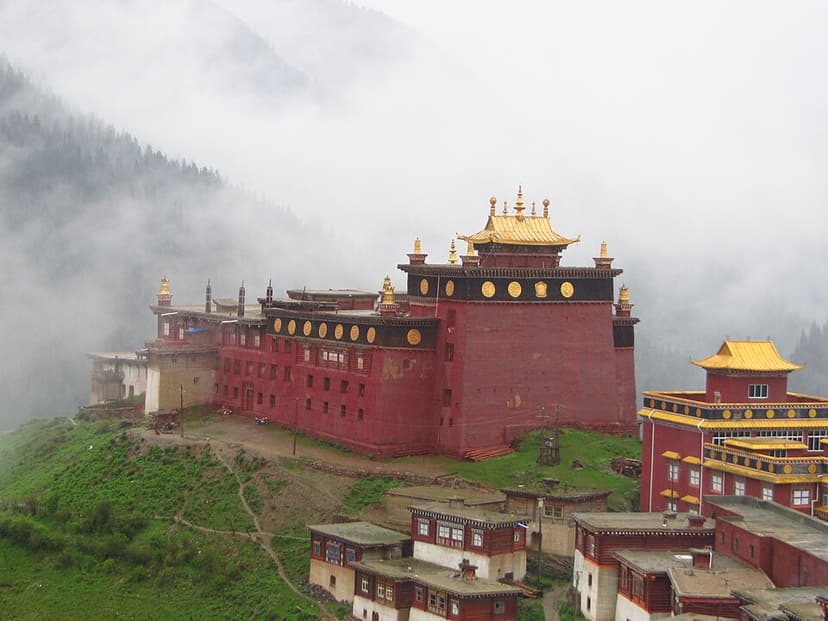
Palpung
Palpung Monastery, meaning "glorious union of study and practice," is a historic monastic seat in Babang, Kham (modern Sichuan), founded in 1727 by the 8th Tai Situ, Situ Panchen. It is a significant center for Tibetan Buddhism, particularly within the Karma Kagyu lineage, and has historically housed a large monastic community and an extensive library. The monastery played a crucial role in the Rimé movement and continues to exert religious and cultural influence, with both a Tibetan and an Indian branch.

Rumtek Monastery
Rumtek Monastery, also known as the Dharma Chakra Centre, is a significant Tibetan Buddhist monastery in Sikkim, India. Originally built in the mid-18th century, it was rebuilt by the 16th Karmapa in the 1960s after fleeing Tibet, becoming his seat in exile. The monastery is the largest in Sikkim and a major center for the Karma Kagyu lineage but has also been the focus of a lengthy controversy over the succession of the 17th Karmapa.

Gonchen Monastery
Gonchen Monastery, also known as Derge Monastery, is a significant Sakya Tibetan Buddhist monastery situated in the town of Derge, within the Kham region of Sichuan, China. Founded by the renowned polymath Thang Tong Gyalpo, it is recognized for its unique architectural design and its association with the historic Derge Parkhang printing house, which continues to produce Buddhist scriptures using traditional methods. Though largely destroyed during the Cultural Revolution, the monastery was restored in the 1980s and remains a vital center for Tibetan Buddhism.