
Palpung
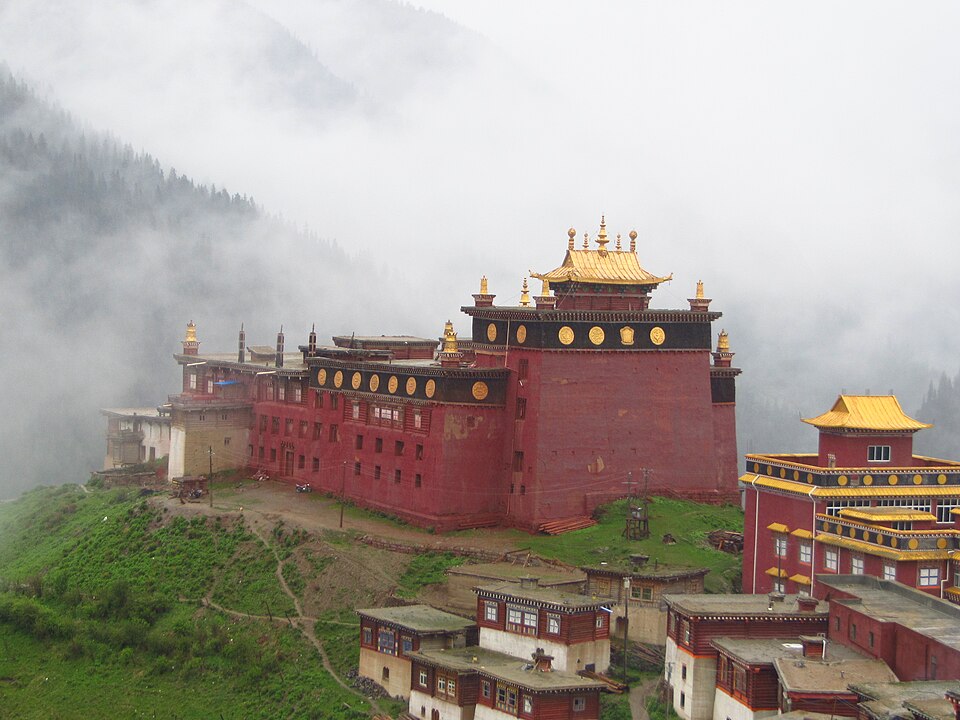
Palpung Monastery, meaning "glorious union of study and practice," is a historic monastic seat in Babang, Kham (modern Sichuan), founded in 1727 by the 8th Tai Situ, Situ Panchen. It is a significant center for Tibetan Buddhism, particularly within the Karma Kagyu lineage, and has historically housed a large monastic community and an extensive library. The monastery played a crucial role in the Rimé movement and continues to exert religious and cultural influence, with both a Tibetan and an Indian branch.
Key Facts
- ›Founded in 1727 by the 8th Tai Situ, Situ Panchen.
- ›Historically associated with the Karmapas, including the 16th Karmapa.
- ›Once housed over 1000 monks and a vast library of over 324,000 texts.
- ›Known for its contributions to spiritual painting, including the Karma Gadri style.
- ›Its main temple was recognized as a national cultural heritage site in China in 2013.
- ›Has an active branch, Palpung Sherab Ling Monastery, in Himachal Pradesh, India.
- Vast Library With Over 324,000 Texts
- Art Collection of Over 10,150 Thangkas
- Karma Gadri Painting Style
- Main Temple Recognized As A National Cultural Heritage Site
Dpal Spungs Dgon Pa
Situ Panchen, Temba Tsering, Rangjung Rigpe Dorje, Jamgon Kongtrul, Beru Khyentse, Pema TöNyö Nyinje
- Destruction of Some Buildings and Neglect of Maintenance During Social Turmoil
- Commencement of Construction and Repair In the Late 1980s
About Palpung
Palpung Monastery
Palpung Monastery, whose name translates to "glorious union of study and practice," is a historically significant monastic seat located in Babang, Kham, within modern-day Sichuan, China. Its origins trace back to the 12th century, though the current monastery was established in 1727 by the 8th Tai Situ, known as Situ Panchen, with substantial support from the Dharma King of Derge, Temba Tsering.
Religious Significance and Lineages
Palpung holds a prominent position within Tibetan Buddhism, particularly as the historic seat of the successive incarnations of the Chamgon Kenting Tai Situpas. It also served as the mother monastery for the Karma Kagyu lineage in Kham. The monastery is recognized as the seat of four lines of incarnate lamas, with the Tai Situ, Jamgon Kongtrul, and the Second Beru Khyentse being the most well-known. Historically, Palpung has been closely associated with the Karmapas; for instance, the 16th Karmapa was enthroned at Palpung before proceeding to his main seat at Tsurphu Monastery.
Center of Learning and Culture
Through the centuries, Palpung wielded considerable religious, political, and economic influence. It evolved into a preeminent center of learning and scholarship on the eastern Tibetan plateau. At its peak, the monastery hosted over 1000 monks and boasted one of the region's leading monastic universities. Palpung was also celebrated for its vast library, which contained more than 324,000 texts, and an art collection of over 10,150 thangkas. The monastery was a leading institution in spiritual painting, and the Situ Rinpoche is credited as the founder of the Karma Gadri painting style. The monastery was known for its spiritual, studious, and artistic excellence and authority.
Historical Challenges and Revival
Social upheaval from the late 1950s to 1976 led to the destruction of some monastery buildings and neglect of maintenance at Palpung's main temple. Reconstruction and repair efforts began in the late 1980s, initially funded by the government and later supported by the 12th Tai Situpa and others. In recognition of its cultural importance, Palpung's main temple was designated a national cultural heritage site in 2013, having previously held provincial-level status. The monastery was also included on the World Monuments Watch list in 1998 and 2000.
Contemporary Presence and Global Reach
Today, an estimated 800 monks reside at the monastery itself, with a larger number in the surrounding region. The 12th Tai Situpa, Pema Tönyö Nyinje, established an exile seat, Palpung Sherab Ling Monastery, in Himachal Pradesh, India. This Indian branch currently houses approximately 1000 monks and offers traditional Kagyu retreats. The Palpung congregation extends globally, comprising over 180 monasteries and temples within China and Tibet, as well as approximately 300 branch institutions across Europe, the USA, Canada, Oceania, and Asia.
Source: Wikipedia ↗
Frequently Asked Questions
When was Palpung Monastery founded?
The current monastery was founded in 1727 by the 8th Tai Situ, known as Situ Panchen. However, the origins of Palpung as a monastic seat date back to the 12th century.
What is the significance of Palpung Monastery?
Palpung is the historic monastic seat of the Tai Situpas and served as the mother monastery for the Karma Kagyu lineage in Kham. It was also a prominent center for the Rimé movement, fostering religious harmony and scholarship.
How many monks resided at Palpung Monastery historically?
Historically, Palpung Monastery once hosted more than 1000 monks and was home to one of the leading monastic universities on the eastern Tibetan plateau.
What notable collections were housed at Palpung?
Palpung was renowned for its extensive library containing over 324,000 texts and an art collection comprising more than 10,150 thangkas. It was also a leading institution in spiritual painting.
Does Palpung Monastery still operate today?
Yes, Palpung Monastery continues to operate, with an estimated 800 monks residing there. Additionally, an exile seat, Palpung Sherab Ling Monastery, was established in India by the 12th Tai Situpa.
Is Palpung Monastery a UNESCO World Heritage Site?
While Palpung's main temple was recognized as a national cultural heritage site in China in 2013 and was listed on the World Monuments Watch list in 1998 and 2000, it is not currently designated as a UNESCO World Heritage Site.
Related Monasteries
Labrang Monastery
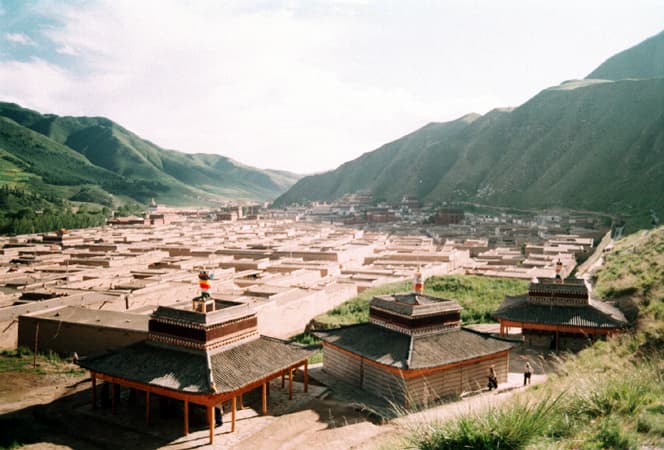
Labrang Monastery, also known by its formal Tibetan name Genden Shédrup Dargyé Trashi Gyésu khyilwé Ling, is one of the six great monasteries of the Gelug school of Tibetan Buddhism. Founded in 1709 by Je Lama Tsongkhapa, it is the largest Tibetan Buddhist monastery outside the Tibet Autonomous Region and was a significant monastic university and regional power base in Amdo. The complex features a blend of Tibetan and Indian Vihara architectural styles and houses numerous halls, institutes of learning, and a museum.

Rumtek Monastery
Rumtek Monastery, also known as the Dharma Chakra Centre, is a significant Tibetan Buddhist monastery in Sikkim, India. Originally built in the mid-18th century, it was rebuilt by the 16th Karmapa in the 1960s after fleeing Tibet, becoming his seat in exile. The monastery is the largest in Sikkim and a major center for the Karma Kagyu lineage but has also been the focus of a lengthy controversy over the succession of the 17th Karmapa.

Dorje Drak
Dorje Drak, also known as Indestructible Rock Vihara, is a significant Tibetan Buddhist monastery of the Nyingma school, recognized as one of its 'Six Mother Monasteries' in Tibet. Originally founded as Ewam Chogar Gompa, it was enlarged and renamed Dorje Drak following the discovery of auspicious natural signs. The monastery has a history marked by destruction and rebuilding, most notably its relocation in 1632 and subsequent destruction during the 1960s, leading to a new foundation in India.