
Palpung Monastery
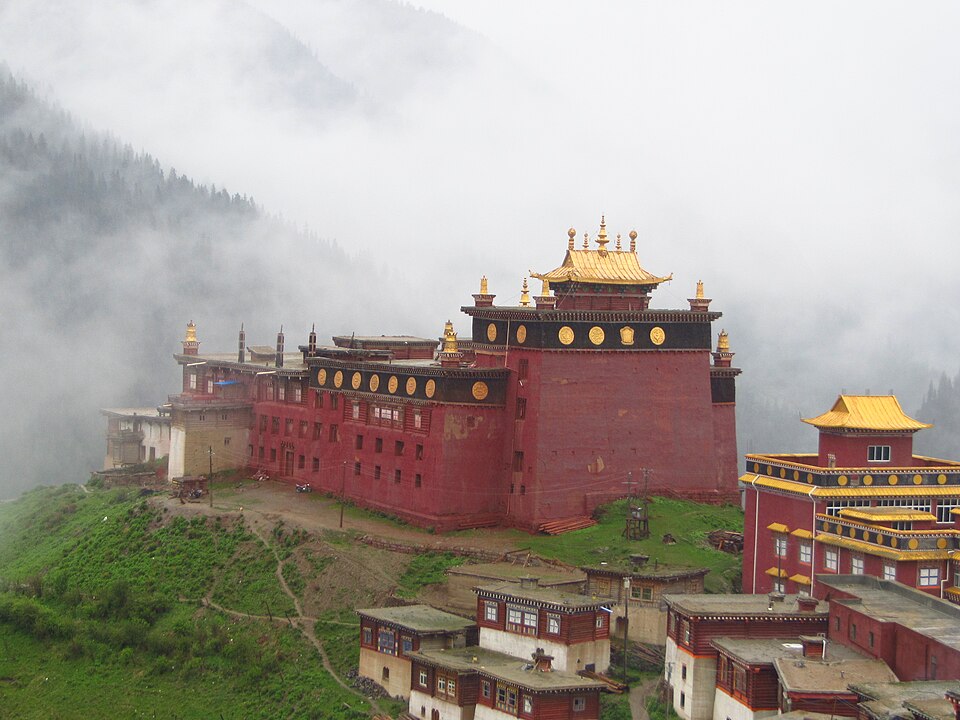
Palpung Monastery is the historic monastic seat of the Tai Situpas in Babang, Kham, and a significant center for Tibetan Buddhism. Founded in 1727, it was a preeminent hub for learning, scholarship, and artistic excellence, known for its extensive library and the Karma Gadri painting style. Once home to over 1000 monks, it continues to be a vital institution, with branches and a seat in exile in India.
Key Facts
- ›Originated in the 12th century, with the current monastery founded in 1727 by the 8th Tai Situ, Situ Panchen.
- ›Seat of four lines of incarnate lamas, notably the Tai Situ, Jamgon Kongtrul, and Beru Khyentse.
- ›Historically associated with the Karmapas; the 16th Karmapa was enthroned there before proceeding to Tsurphu Monastery.
- ›Renowned for its vast library containing over 324,000 texts and an art collection of more than 10,150 thangkas.
- ›Developed the Karma Gadri painting style, a leading tradition in spiritual painting.
- ›Its main temple was recognized as a national cultural heritage site in 2013 and was listed on the World Monuments Watch in 1998 and 2000.
Important Relationships
- Tai Situpa
- Karmapa
- Jamgon Kongtrul
- Beru Khyentse
- Situ Panchen
- Temba Tsering
- Rangjung Rigpe Dorje
- Pema Tönyö Nyinje
Library With Over 324,000 Texts, Art Collection With Over 10,150 Thangkas, Karma Gadri Painting Style
- Origin In the 12th Century
- Founding of the Current Monastery In 1727
- 16th Karmapa Enthroned At Palpung
- Destruction and Neglect From the Late 1950s To 1976
- Reconstruction and Repair Efforts From the Late 1980s
- Main Temple Recognized As A National Cultural Heritage Site In 2013
- Listed On the World Monuments Watch In 1998 and 2000
About Palpung Monastery
Palpung Monastery, meaning "glorious union of study and practice" in Tibetan, is a historically significant monastic complex located in Babang, Kham, within modern-day Sichuan, China. Its origins can be traced back to the 12th century, though the current monastery was established in 1727 by the 8th Tai Situ, known as Situ Panchen, with substantial support from the Dharma King of Derge, Temba Tsering. Palpung has served as the principal monastic seat for the successive incarnations of the Tai Situpas and has wielded considerable religious, political, and economic influence over the centuries.
History and Influence
The monastery evolved into a preeminent center for learning and scholarship on the eastern Tibetan plateau, historically hosting over 1000 monks and one of the region's leading monastic universities. It is recognized as the mother monastery of the Karma Kagyu lineage in Kham and became a focal point for the Rimé movement, a non-sectarian approach to Buddhism. Palpung was particularly renowned for its vast library, which once contained more than 324,000 texts, and an extensive art collection of over 10,150 thangkas. It also played a crucial role in the development of spiritual painting, being the origin of the Karma Gadri style founded by Situ Rinpoche.
Notable Features and Modern Status
Palpung Monastery has been closely associated with the Karmapas, with the 16th Karmapa being enthroned there before proceeding to his main seat. Despite suffering destruction and neglect during periods of social turmoil from the late 1950s to 1976, reconstruction and repair efforts began in the late 1980s. These endeavors have led to the recognition of Palpung's main temple as a national cultural heritage site in 2013, having previously been a provincial-level site. The monastery was also placed on the World Monuments Watch list in 1998 and 2000. Today, an estimated 800 monks reside at Palpung itself, with a larger monastic community in the surrounding region. The monastery has also established an exile seat, Palpung Sherab Ling Monastery, in Himachal Pradesh, India, and maintains numerous branches globally, reflecting its enduring influence.
Source: Wikipedia ↗
Frequently Asked Questions
When was Palpung Monastery founded?
While Palpung's origins trace back to the 12th century, the current monastery was founded in 1727 by the 8th Tai Situ, known as Situ Panchen. This significant event was supported by the Dharma King of Derge, Temba Tsering.
What is Palpung Monastery known for?
Palpung Monastery is celebrated for its extensive library, housing over 324,000 texts, and its significant art collection of more than 10,150 thangkas. It is also the birthplace of the Karma Gadri painting style, a prominent tradition in spiritual art.
What is the significance of the Tai Situpa lineage at Palpung Monastery?
Palpung Monastery serves as the historic monastic seat for the successive incarnations of the Chamgon Kenting Tai Situpas. The lineage has been central to the monastery's religious, political, and economic influence throughout its history.
Does Palpung Monastery have a presence outside of Tibet?
Yes, the 12th Tai Situpa established an exile seat called Palpung Sherab Ling Monastery in Himachal Pradesh, India. The Palpung congregation also manages over 300 branches worldwide, including in Europe, North America, Oceania, and Asia.
What is the current status of Palpung Monastery?
Following periods of destruction and neglect in the late 20th century, reconstruction and repair efforts began in the late 1980s. The monastery's main temple is now a recognized national cultural heritage site, and an estimated 800 monks reside there, with a larger number in the surrounding region.
Related Buddhist Temples

Rumtek Monastery
Rumtek Monastery, also known as the Dharma Chakra Centre, is a prominent Buddhist monastery located near Gangtok in Sikkim, India. It serves as the seat in exile for the Gyalwang Karmapa and was inaugurated in 1966 by the 16th Karmapa. The monastery is a significant center for the Karma Kagyu lineage and has been a focal point for sectarian tensions within the school.
Phodang Monastery
Phodang Monastery is a significant Buddhist monastery located in Sikkim, India, approximately 28 kilometers from Gangtok. Founded in the early 18th century, it holds historical importance as one of three monasteries established by the 9th Karmapa at the invitation of the King of Sikkim. The monastery is known for its residence of around 260 monks and its collection of ancient murals.

Tsurphu Monastery
Tsurphu Monastery, also known as Tölung Tsurphu, is the traditional seat of the Karmapa, the spiritual leader of the Karma Kagyu lineage of Tibetan Buddhism. Located in the Tibet Autonomous Region of China, it is situated at a high altitude within a valley surrounded by mountains. The monastery holds significant importance as the historical center for a major school of Tibetan Buddhism and has undergone periods of destruction and reconstruction.