
Rumtek Monastery
Rumtek Monastery, also known as the Dharma Chakra Centre, is a prominent Buddhist monastery located near Gangtok in Sikkim, India. It serves as the seat in exile for the Gyalwang Karmapa and was inaugurated in 1966 by the 16th Karmapa. The monastery is a significant center for the Karma Kagyu lineage and has been a focal point for sectarian tensions within the school.
Key Facts
- ›Originally built in the MID-18th century by the 12th Karmapa Lama, it was later rebuilt by the 16th Karmapa as his seat in exile.
- ›The monastery was officially inaugurated in 1966 and houses sacred items and relics brought from Tibet.
- ›It is the largest monastery in Sikkim and home to a community of monks who practice the Karma Kagyu lineage.
- ›A golden stupa at the monastery contains the relics of the 16th Karmapa.
- ›Rumtek is located 24 kilometers from Gangtok at an altitude of approximately 1,500 meters.
- ›The monastery has been central to the Karmapa controversy, involving disputes over the succession of the 17th Karmapa.

Important Relationships
- Gyurme Dorje, 12th Karmapa Lama
- Rangjung Rigpe Dorje, 16th Karmapa
- Ogyen Trinley Dorje
- Trinley Thaye Dorje
- Sikkim royal family
- Tsurphu Monastery
- Tsurphu Labrang
- Karmapa Charitable Trust
- Shamar Rinpoche
- Topga Yugyal
- Goshir Gyaltsab Rinpoche
- Golden Stupa Containing the Relics of the 16th Karmapa
- Karma Shri Nalanda Institute For Higher Buddhist Studies
- Location Surrounded By Auspicious Natural Features: Flowing Streams, Mountains Behind, A Snow Range In Front, and A River Below
- Original Construction In the Mid-18th Century.
- Reconstruction Initiated By the 16th Karmapa After His Arrival In Sikkim In 1959.
- Inauguration of the New Seat, the Dharmachakra Centre, In 1966.
- Center of the Karmapa Controversy, With Legal Battles and Clashes Between Factions From 1992 Onwards.
- Indian Security Forces Intervened In 2003 To Quell Violence Between Factions.
About Rumtek Monastery
Rumtek Monastery, also known as the Dharma Chakra Centre, is a significant Tibetan Buddhist monastery located in Sikkim, India, near the capital Gangtok. It holds immense importance as the seat in exile for the Gyalwang Karmapa, the spiritual leader of the Karma Kagyu lineage. The monastery was officially inaugurated in 1966 by the 16th Karmapa, Rangjung Rigpe Dorje, after he fled Tibet.
History and Reconstruction
The original monastery at Rumtek was built in the mid-18th century under the guidance of Changchub Dorje, the 12th Karmapa Lama. However, by the time the 16th Karmapa arrived in Sikkim in 1959, the original structure was in ruins. Recognizing the site's auspicious qualities, including its surrounding natural beauty with streams, mountains, and a river, the 16th Karmapa chose to rebuild it as his primary seat in exile. The reconstruction was completed over four years, and sacred items and relics from the Karmapa's former seat in Tibet, Tsurphu Monastery, were installed.
Significance and Features
Rumtek Monastery is the largest monastery in Sikkim and serves as a vibrant center for the practice and preservation of the Karma Kagyu lineage. It is home to a community of monks and is where they perform their daily rituals and spiritual practices. A notable feature is the golden stupa containing the relics of the 16th Karmapa. Adjacent to the main monastery complex is the Karma Shri Nalanda Institute for Higher Buddhist Studies, an important center for Buddhist scholarship.
The Karmapa Controversy
In addition to its spiritual importance, Rumtek Monastery has been at the center of a prolonged and complex controversy regarding the succession of the 17th Karmapa. This dispute has involved rival organizations, legal battles in Indian courts, and at times, sectarian tensions and violence among monks supporting different claimants. The monastery's administration and contents have been subjects of contention, leading to significant legal and social challenges.
Rumtek Monastery is situated approximately 24 kilometers from Gangtok, at an elevation of about 1,500 meters, offering visitors a glimpse into Tibetan Buddhist culture and monastic life.
Source: Wikipedia ↗
Frequently Asked Questions
When was Rumtek Monastery originally built?
Rumtek Monastery was originally built in the mid-18th century under the direction of Changchub Dorje, the 12th Karmapa Lama. It served as a main seat for the Karma Kagyu lineage in Sikkim for a period.
Who rebuilt Rumtek Monastery in its current form?
The 16th Karmapa, Rangjung Rigpe Dorje, rebuilt Rumtek Monastery after fleeing Tibet in 1959. He chose the site for its auspicious qualities and it was constructed with the support of the Sikkim royal family and local people.
When was the rebuilt Rumtek Monastery inaugurated?
The rebuilt Rumtek Monastery, also called the Dharmachakra Centre, was officially inaugurated on Losar in 1966 by the 16th Karmapa. It was established as his main seat in exile.
What is the significance of the golden stupa at Rumtek?
The golden stupa at Rumtek Monastery contains the sacred relics of the 16th Karmapa. It is a significant devotional object for followers of the Karma Kagyu lineage.
What is the Karmapa controversy related to Rumtek Monastery?
Rumtek Monastery has been at the center of the Karmapa controversy, a dispute between two rival organizations each supporting a different candidate for the 17th Karmapa. This has led to legal contests and periods of sectarian violence at the monastery.
Is Rumtek Monastery still an active monastic center?
Yes, Rumtek Monastery is currently the largest monastery in Sikkim and is home to a community of monks who perform the rituals and practices of the Karma Kagyu lineage. However, it has also been patrolled by Indian soldiers to prevent sectarian violence.
Related Buddhist Temples
Phodang Monastery
Phodang Monastery is a significant Buddhist monastery located in Sikkim, India, approximately 28 kilometers from Gangtok. Founded in the early 18th century, it holds historical importance as one of three monasteries established by the 9th Karmapa at the invitation of the King of Sikkim. The monastery is known for its residence of around 260 monks and its collection of ancient murals.
Palpung Monastery
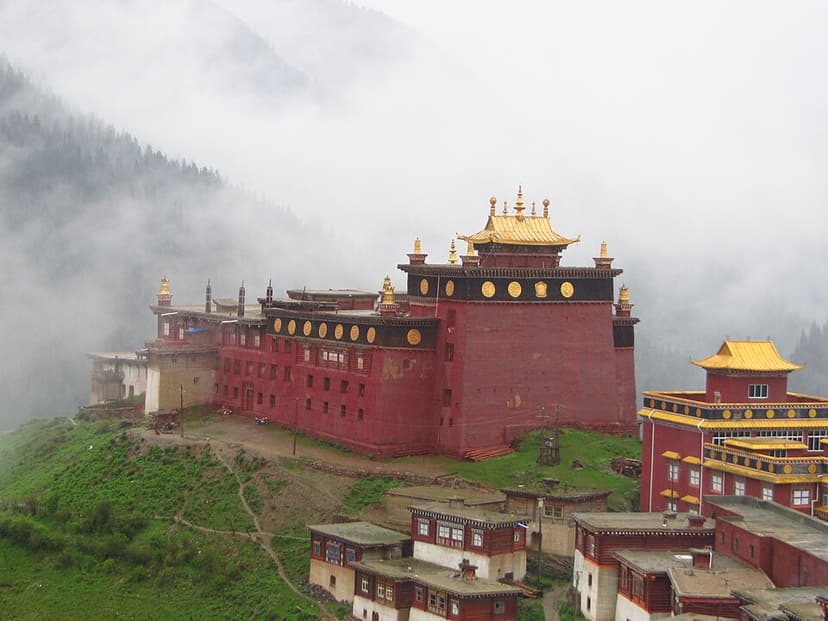
Palpung Monastery is the historic monastic seat of the Tai Situpas in Babang, Kham, and a significant center for Tibetan Buddhism. Founded in 1727, it was a preeminent hub for learning, scholarship, and artistic excellence, known for its extensive library and the Karma Gadri painting style. Once home to over 1000 monks, it continues to be a vital institution, with branches and a seat in exile in India.
Kagyu Samyé Ling Monastery and Tibetan Centre
Kagyu Samye Ling Monastery and Tibetan Centre is a significant Tibetan Buddhist complex located in Eskdalemuir, Scotland, closely associated with the Karma Kagyu school. Established in 1967, it emerged from humble beginnings in a former hunting lodge to become one of the oldest and most important Tibetan centers in Europe, attracting international visitors and fostering Tibetan art and culture.