
Phodang Monastery
Phodang Monastery is a significant Buddhist monastery located in Sikkim, India, approximately 28 kilometers from Gangtok. Founded in the early 18th century, it holds historical importance as one of three monasteries established by the 9th Karmapa at the invitation of the King of Sikkim. The monastery is known for its residence of around 260 monks and its collection of ancient murals.
Key Facts
- ›Established in the early 18th century, with an older monastery predating the current structure.
- ›Founded by the 9th Karmapa, alongside Rumtek and Ralang Monasteries.
- ›Reconstructed by Sidkeong Tulku Namgyal.
- ›Currently houses approximately 260 monks.
- ›Possesses a notable collection of ancient murals.
- ›Located 28 kilometers from Gangtok, Sikkim, India.
Important Relationships
- 9th Karmapa
- King of Sikkim
- Rumtek Monastery
- Ralang Monastery
- Sidkeong Tulku Namgyal
- Sidkeong Namgyal
- Palden Thondup Namgyal
Ancient Murals, Monastic Residence
Founded By the 9th Karmapa, Reconstructed By Sidkeong Tulku Namgyal
About Phodang Monastery
Phodang Monastery is a significant Buddhist monastic institution located in the northeastern Indian state of Sikkim. Situated approximately 28 kilometers from the state capital, Gangtok, it is a key site within the Karma Kagyu school of Tibetan Buddhism.
History and Foundation
The monastery's origins date back to the early 18th century, though it is noted that an older monastic structure predated the current edifice. Its establishment is attributed to the esteemed 9th Karmapa, who was invited to Sikkim by the then-king. As part of this royal invitation, the 9th Karmapa founded three important monasteries: Rumtek, Phodang, and Ralang. This historical connection underscores Phodang's importance in the propagation and consolidation of Tibetan Buddhism in the region.
Reconstruction and Continuity
In its history, Phodang Monastery underwent a significant reconstruction. This effort was led by Sidkeong Tulku Namgyal, who was recognized as the reincarnation of his uncle, Sidkeong Namgyal, the former abbot of the monastery. This lineage of recognized reincarnate abbots highlights the continuity of spiritual leadership and tradition within the monastery. The line of succession was intended to be continued by Palden Thondup Namgyal.
Current State and Features
Today, Phodang Monastery serves as a residence for approximately 260 monks, maintaining its role as an active monastic community. The monastery is also recognized for its collection of ancient murals, which are of considerable artistic and historical value, offering insights into the region's rich cultural and religious heritage.
Source: Wikipedia ↗
Frequently Asked Questions
When was Phodang Monastery founded?
Phodang Monastery was built in the early 18th century. However, historical records indicate that an older monastery existed at the site prior to the current structure.
Who founded Phodang Monastery?
The monastery was founded as part of the establishment of three monasteries by the 9th Karmapa, who was invited to Sikkim by its king. The 9th Karmapa is credited with establishing Rumtek, Phodang, and Ralang Monasteries.
What are some notable features of Phodang Monastery?
Phodang Monastery is known for its residence of approximately 260 monks. It also holds a numerous collection of ancient murals, which are a significant artistic and historical feature.
Has Phodang Monastery undergone reconstruction?
Yes, Phodang Monastery was reconstructed by Sidkeong Tulku Namgyal. He was recognized as the reincarnation of his uncle, Sidkeong Namgyal, who had served as the abbot of the monastery.
Where is Phodang Monastery located?
Phodang Monastery is situated in Sikkim, India. It is located approximately 28 kilometers away from the capital city, Gangtok.
Related Buddhist Temples

Rumtek Monastery
Rumtek Monastery, also known as the Dharma Chakra Centre, is a prominent Buddhist monastery located near Gangtok in Sikkim, India. It serves as the seat in exile for the Gyalwang Karmapa and was inaugurated in 1966 by the 16th Karmapa. The monastery is a significant center for the Karma Kagyu lineage and has been a focal point for sectarian tensions within the school.
Palpung Monastery
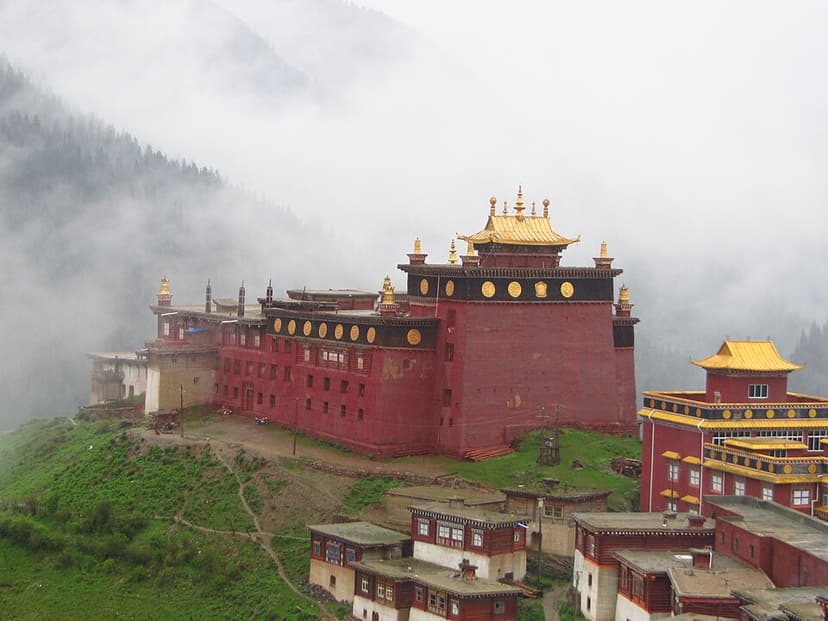
Palpung Monastery is the historic monastic seat of the Tai Situpas in Babang, Kham, and a significant center for Tibetan Buddhism. Founded in 1727, it was a preeminent hub for learning, scholarship, and artistic excellence, known for its extensive library and the Karma Gadri painting style. Once home to over 1000 monks, it continues to be a vital institution, with branches and a seat in exile in India.
Kagyu Samyé Ling Monastery and Tibetan Centre
Kagyu Samye Ling Monastery and Tibetan Centre is a significant Tibetan Buddhist complex located in Eskdalemuir, Scotland, closely associated with the Karma Kagyu school. Established in 1967, it emerged from humble beginnings in a former hunting lodge to become one of the oldest and most important Tibetan centers in Europe, attracting international visitors and fostering Tibetan art and culture.