
Kagyu Samyé Ling Monastery and Tibetan Centre
Kagyu Samye Ling Monastery and Tibetan Centre is a significant Tibetan Buddhist complex located in Eskdalemuir, Scotland, closely associated with the Karma Kagyu school. Established in 1967, it emerged from humble beginnings in a former hunting lodge to become one of the oldest and most important Tibetan centers in Europe, attracting international visitors and fostering Tibetan art and culture.
Key Facts
- ›Founded in 1967 by Tibetan lamas Chögyam Trungpa Rinpoche and Akong Rinpoche.
- ›It is the oldest Tibetan Buddhist centre in Europe.
- ›The centre is associated with the Karma Kagyu school of Tibetan Buddhism.
- ›It houses one of the first Tibetan temples constructed in Western Europe.
- ›Kagyu Samye Ling is also a center for the creation and restoration of thangkas in the Karma Gadri style.
- ›The centre is administered by the ROKPA Trust, which promotes Buddhism and inter-religious understanding.
Important Relationships
- 16th Gyalwa Karmapa
- Chögyam Trungpa Rinpoche
- Akong Rinpoche
- Sherab Palden Beru
- Lama Yeshe Losal Rinpoche
- ROKPA Trust
- David Bowie
- Leonard Cohen
Tibetan Temple, Large Stupa, Statues of Bodhisattvas and Buddhas, Thangka Art, Prayer Wheels
- Invitation To ChöGyam Trungpa Rinpoche and Akong Rinpoche To Take Over In 1967.
- David Bowie and Leonard Cohen Attended As Students In 1969.
- Visits From Eminent Teachers Like Kalu Rinpoche and the 16th Gyalwa Karmapa In the 1970s.
- the Center Became Part of the Rokpa Trust In 1995.
- Announcement of Suspected Involvement of Lama Thubten Kunsal In the Murders of Akong Rinpoche and Two Others In 2013.
Tibetan Buddhist
About Kagyu Samyé Ling Monastery and Tibetan Centre
Kagyu Samye Ling Monastery and Tibetan Centre
Kagyu Samye Ling Monastery and Tibetan Centre, located in Eskdalemuir, Scotland, is a prominent center for Tibetan Buddhism, affiliated with the Karma Kagyu school. Its origins trace back to 1965 with the formation of the Johnstone House Trust, which aimed to provide facilities for study and meditation based on Buddhist teachings. In 1967, the center was revitalized when Tibetan lamas Chögyam Trungpa Rinpoche and Akong Rinpoche were invited to lead the community, renaming it "Samye Ling" – a name signifying a place connected to Tibet's first monastic university.
History and Development
The early years saw significant developments, including the arrival of thangka master-artist Sherab Palden Beru and monk Samten. Chögyam Trungpa Rinpoche's tenure was marked by controversy, leading to his departure for America in 1970 to establish other centers, thus ending his direct association with Samye Ling. For the decade following 1970, Akong Rinpoche, Samten, and Beru formed the core Tibetan residents. During this period, Samye Ling served as a principal hub for Tibetan Buddhism in Europe, hosting visits from esteemed teachers like Kalu Rinpoche and the 16th Gyalwa Karmapa. The center has also been a place of personal exploration for individuals like musicians David Bowie and Leonard Cohen, who were students there.
Under the guidance of Akong Rinpoche and his brother Lama Yeshe Losal Rinpoche, who serves as Abbot and Retreat Master, the center has continued to flourish. In 1995, the Johnstone House Trust was succeeded by the ROKPA Trust, which broadened the center's objectives to include promoting Buddhism, fostering inter-religious dialogue, providing education, and relieving poverty. The ROKPA Trust also manages other projects globally, including the Holy Island Project.
Tibetan Art and Cultural Preservation
Kagyu Samye Ling is recognized as a vital center for the preservation and practice of Tibetan art and crafts. Under Sherab Palden Beru, it has become a hub for the creation, repair, and restoration of thangkas in the Karma Gadri style, with many western practitioners trained in these specialized techniques adorning the temple walls with their work. The center also engages in traditional deity sculpture and the creation of prayer wheels, with notable examples found on its grounds.
Community and Recognition
Listed as a tourist attraction by VisitScotland, Kagyu Samye Ling draws visitors interested in its striking gilded temple, stupas, and gardens featuring statues of Bodhisattvas and Buddhas. Despite initial challenges in relations with local residents, the center has cultivated cordial relationships with the surrounding community, with many original members now integrated into the local economy. Lama Yeshe Losal Rinpoche has noted the center's popularity, with the Scottish Tourist board once identifying it as the tenth-most-visited place in Scotland, suggesting a broad appeal for its spiritual teachings in the West.
The center has also embraced local culture, with Lama Yeshe Losal designing a Buddhist tartan in 2010 to express appreciation for Scotland's people, culture, and traditions. Plans are underway for a significant expansion of the Samye Ling temple project, which will include a museum, library, lecture theaters, offices, and accommodation.
Source: Wikipedia ↗
Frequently Asked Questions
When was Kagyu Samye Ling Monastery and Tibetan Centre established?
Kagyu Samye Ling Monastery and Tibetan Centre was established in 1967 by Tibetan lamas Chögyam Trungpa Rinpoche and Akong Rinpoche, who took over the existing community at Johnstone House.
What is the significance of the name 'Samye Ling'?
The name 'Samye Ling' combines 'Samye', referring to the first Buddhist monastic university in Tibet, with 'Ling', meaning 'Place', signifying its role as a significant Tibetan Buddhist center.
What artistic traditions are preserved at Samye Ling?
Under the guidance of thangka master-artist Sherab Palden Beru, Samye Ling is a center for the creation, repair, and restoration of thangkas, particularly in the Karma Gadri style. Traditional deity sculpture and prayer wheels are also created.
What is the ROKPA Trust and its connection to Samye Ling?
The ROKPA Trust administers Kagyu Samye Ling Monastery and Tibetan Centre. Its objectives include promoting Buddhism, fostering inter-religious dialogue, providing medical care and education, and relieving poverty.
Has Kagyu Samye Ling attracted any notable visitors or students?
Yes, in 1969, musicians David Bowie and Leonard Cohen were students at Samye Ling. Bowie considered becoming a monk there but ultimately decided against it.
What are some of the key features of the Samye Ling complex?
The complex includes one of the first Tibetan temples built in Western Europe, a large stupa, accommodation for courses, and grounds featuring statues of Bodhisattvas and Buddhas. There are plans for a significant expansion including a museum and library.
Related Buddhist Temples
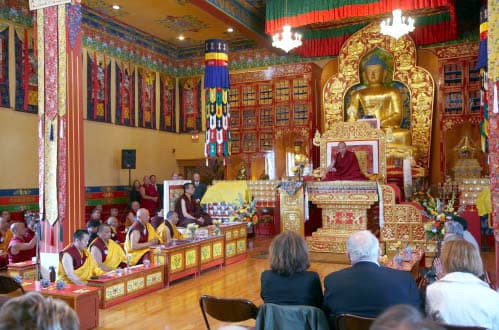
Karma Triyana Dharmachakra
Karma Triyana Dharmachakra is a Tibetan Buddhist monastery located in Woodstock, New York, serving as the North American headquarters for the 17th Gyalwa Karmapa, the spiritual leader of the Karma Kagyu lineage. Founded in 1976 by the 16th Gyalwa Karmapa, it has been a significant center for Tibetan Buddhism in North America, with Khenpo Karthar Rinpoche serving as its abbot for many years.
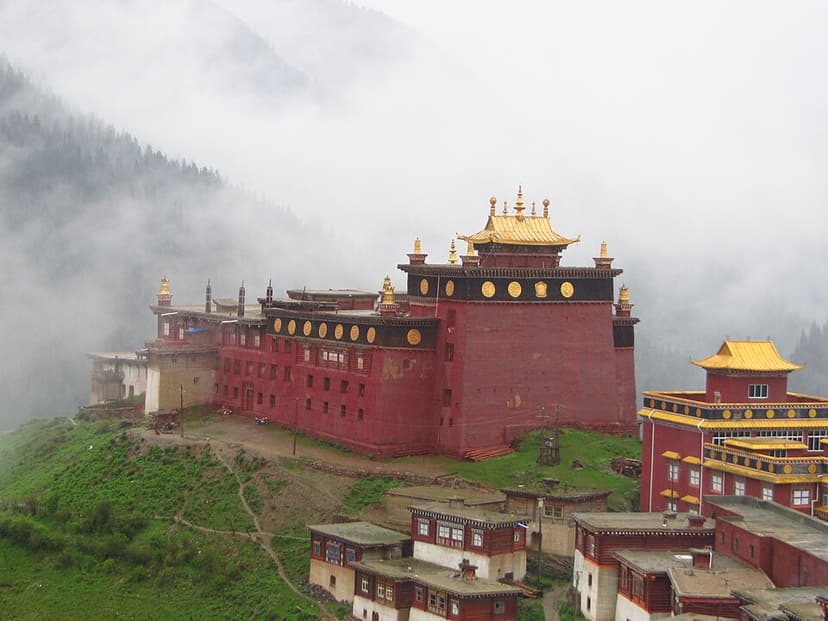
Palpung Monastery
Palpung Monastery is the historic monastic seat of the Tai Situpas in Babang, Kham, and a significant center for Tibetan Buddhism. Founded in 1727, it was a preeminent hub for learning, scholarship, and artistic excellence, known for its extensive library and the Karma Gadri painting style. Once home to over 1000 monks, it continues to be a vital institution, with branches and a seat in exile in India.

Rumtek Monastery
Rumtek Monastery, also known as the Dharma Chakra Centre, is a prominent Buddhist monastery located near Gangtok in Sikkim, India. It serves as the seat in exile for the Gyalwang Karmapa and was inaugurated in 1966 by the 16th Karmapa. The monastery is a significant center for the Karma Kagyu lineage and has been a focal point for sectarian tensions within the school.