
Tsurphu Monastery
Tsurphu Monastery, also known as Tölung Tsurphu, is the traditional seat of the Karmapa, the spiritual leader of the Karma Kagyu lineage of Tibetan Buddhism. Located in the Tibet Autonomous Region of China, it is situated at a high altitude within a valley surrounded by mountains. The monastery holds significant importance as the historical center for a major school of Tibetan Buddhism and has undergone periods of destruction and reconstruction.
Key Facts
- ›Founded in 1159 by Düsum Khyenpa, the 1st Karmapa Lama.
- ›Served as the main seat and grew to accommodate 1000 monks.
- ›Completely destroyed in 1966 during the Cultural Revolution.
- ›Rebuilding efforts began in 1980 under the 16th Karmapa, Rangjung Rigpe Dorje.
- ›The 17th Karmapa, Ogyen Trinley Dorje, was enthroned here and resided until 2000.
- ›Located at an altitude of approximately 4,300 meters (14,100 ft) above sea level.

Important Relationships
- Düsum Khyenpa, 1st Karmapa Lama
- Rangjung Rigpe Dorje, 16th Karmapa
- Ogyen Trinley Dorje, 17th Karmapa
- Tai Situpa
- The Dalai Lama
High Altitude Location, Surrounded By High Mountains, Thick Walls, Monks' Residences On the Eastern Side
- Founded By DüSum Khyenpa In 1159 and Established As Main Seat In 1189.
- Totally Destroyed During the Cultural Revolution In 1966.
- Rebuilding Began In 1980.
- Enthronement of the 17th Karmapa, Ogyen Trinley Dorje, Who Resided There Until 2000.
About Tsurphu Monastery
Tsurphu Monastery, known also by its Tibetan name Tölung Tsurphu, stands as the traditional spiritual seat of the Karmapa, the foremost leader of the Karma Kagyu school of Tibetan Buddhism. Nestled in Gurum, within the Doilungdêqên District of the Tibet Autonomous Region of China, the monastery is situated approximately 70 kilometers (43 miles) from Lhasa. Its location is remarkable, perched at an elevation of about 4,300 meters (14,100 feet) above sea level, embraced by high mountains within a valley that faces south.
History and Significance
The monastery's origins trace back to 1159 when Düsum Khyenpa, the 1st Karmapa Lama, founded the site after visiting and making offerings to local deities. He formally established Tsurphu as his main seat in 1189. Over time, it grew into a significant monastic center, capable of housing up to 1000 monks. Its historical importance is underscored by its role as the central hub for the Karma Kagyu lineage, a major tradition within Tibetan Buddhism.
However, the monastery faced a catastrophic event during the Cultural Revolution, being totally destroyed in 1966. The process of rebuilding began in 1980 under the guidance of Rangjung Rigpe Dorje, the 16th Karmapa. Following the recognition of Ogyen Trinley Dorje as the 17th Karmapa by key Tibetan Buddhist leaders and Chinese authorities, he was enthroned at Tsurphu and resided there until his departure for India in 2000, further solidifying the monastery's ongoing spiritual significance.
Source: Wikipedia ↗
Frequently Asked Questions
When was Tsurphu Monastery founded?
Tsurphu Monastery was founded in 1159 by Düsum Khyenpa, the 1st Karmapa Lama. He revisited the site in 1189 to establish it as his main seat.
What is the significance of Tsurphu Monastery?
Tsurphu Monastery is the traditional seat of the Karmapa, the head of the Karma Kagyu lineage of Tibetan Buddhism. It has historically been a central hub for this major school of Tibetan Buddhism.
What happened to Tsurphu Monastery during the Cultural Revolution?
The complex was totally destroyed in 1966 during the Cultural Revolution. Rebuilding efforts commenced later, beginning in 1980.
Who is the 17th Karmapa, and what is his connection to Tsurphu?
Ogyen Trinley Dorje was recognized as the 17th Karmapa and was enthroned at Tsurphu Monastery. He resided there until his departure from Tibet to India in 2000.
Where is Tsurphu Monastery located?
Tsurphu Monastery is located in Gurum in Doilungdêqên District, Tibet Autonomous Region, China, approximately 70 kilometers (43 miles) from Lhasa.
Related Buddhist Temples
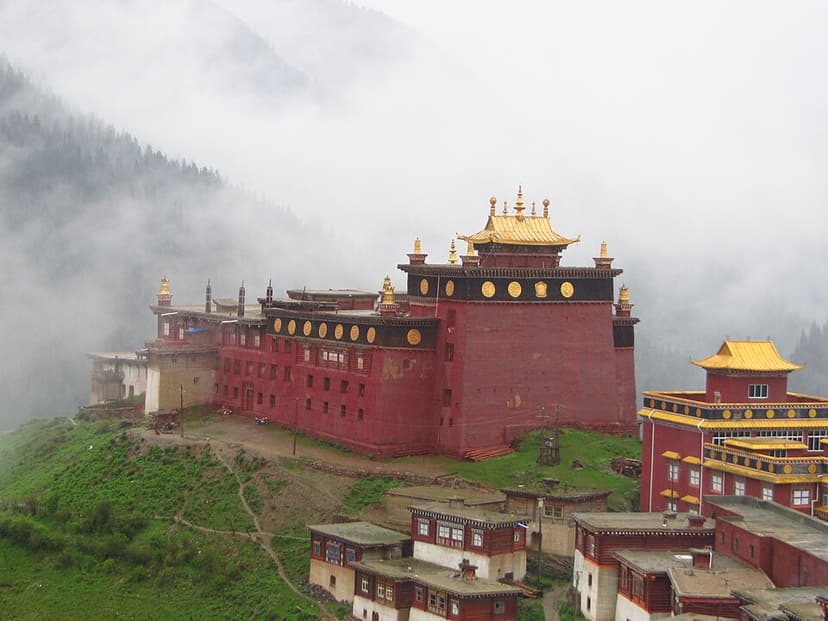
Palpung Monastery
Palpung Monastery is the historic monastic seat of the Tai Situpas in Babang, Kham, and a significant center for Tibetan Buddhism. Founded in 1727, it was a preeminent hub for learning, scholarship, and artistic excellence, known for its extensive library and the Karma Gadri painting style. Once home to over 1000 monks, it continues to be a vital institution, with branches and a seat in exile in India.
Kagyu Samyé Ling Monastery and Tibetan Centre
Kagyu Samye Ling Monastery and Tibetan Centre is a significant Tibetan Buddhist complex located in Eskdalemuir, Scotland, closely associated with the Karma Kagyu school. Established in 1967, it emerged from humble beginnings in a former hunting lodge to become one of the oldest and most important Tibetan centers in Europe, attracting international visitors and fostering Tibetan art and culture.
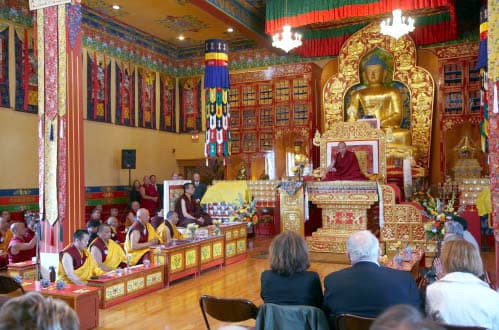
Karma Triyana Dharmachakra
Karma Triyana Dharmachakra is a Tibetan Buddhist monastery located in Woodstock, New York, serving as the North American headquarters for the 17th Gyalwa Karmapa, the spiritual leader of the Karma Kagyu lineage. Founded in 1976 by the 16th Gyalwa Karmapa, it has been a significant center for Tibetan Buddhism in North America, with Khenpo Karthar Rinpoche serving as its abbot for many years.