
Isle of May Priory
The Isle of May Priory was a Benedictine monastery established in 1153 on the Isle of May in Scotland, under the patronage of King David I. Originally founded for nine monks from Reading Abbey, it served as a center for the cult of St. Ethernan and later St. Adrian. The priory faced numerous challenges, including Viking raids and jurisdictional disputes, eventually passing to St. Andrews Cathedral Priory and its community relocating to Pittenweem in 1318.
Key Facts
- ›Founded in 1153 by monks from Reading Abbey.
- ›Established on the Isle of may in the Firth of Forth, Scotland.
- ›Endowed by King David I of Scotland.
- ›Served as a center for the cult of St. Ethernan and later St. Adrian.
- ›Community relocated to Pittenweem Priory in 1318.
- ›Remains listed as a scheduled monument since 1958.

- Shrine To St. Ethernan
- Shrine To St. Adrian
- Remains of Earlier Irish-Style Beehive-Shaped Houses
St. Adrian's Priory, Priory of St. Mary the Virgin
David I of Scotland, St. Ethernan, St. Adrian
- Viking Invasion and Slaughter of Monks Around 875
- Establishment of Benedictine Priory In 1153
- Sale To Bishop of St. Andrews In 1288
- English Forces Attacked and Destroyed the Monastery In 1313
- Community Relocated To Pittenweem Priory In 1318
About Isle of May Priory
The Isle of May Priory was a monastic institution of Benedictine monks situated on the remote Isle of May in Scotland's Firth of Forth. Established in 1153 by nine monks from Reading Abbey in England, it was founded under the royal patronage of King David I of Scotland. The priory played a role in religious life, housing a shrine to St. Ethernan, an early Scottish monk martyred by the Picts, and later becoming associated with St. Adrian of May.
History and Significance
Prior to the Benedictine foundation, the Isle of May was a site of religious pilgrimage, particularly for the cult of St. Ethernan, who was believed to be buried there. A monastery, possibly consisting of beehive-shaped cells and a chapel, existed earlier but was destroyed by Viking raiders around 875, leading to centuries of abandonment. In the 12th century, King David I granted the island to Reading Abbey, and the Benedictine monks established a new priory dedicated to St. Mary the Virgin, maintaining nine priests to pray for the souls of Scottish kings. The monks faced considerable hardship due to the island's isolation and ongoing raids by Scandinavian settlers. This led Reading Abbey to sell the property in 1288 to the Bishop of St. Andrews, who transferred it to the canons of St. Andrews.
Challenges and Transition
Ownership of the Isle of May became a point of contention between the Bishop of St. Andrews and Reading Abbey in the late 13th century. Following a declaration in 1313 that the island was part of the diocese of St. Andrews, English forces attacked and devastated the monastery. Although a new chapel was later built in honor of St. Adrian, the Benedictine community was ultimately dissolved. In 1318, the monks relocated to Pittenweem Priory on the Fife coast, marking the end of the Isle of May as an active monastic center.
Legacy
The upstanding and excavated remains of the Isle of May Priory were recognized for their historical importance and listed as a scheduled monument in 1958. The site continues to be of archaeological and historical interest, offering insights into medieval monastic life and pilgrimage in Scotland. The story of the priory is intertwined with the veneration of early Scottish saints and the turbulent history of the region.
Source: Wikipedia ↗
Frequently Asked Questions
When was the Isle of May Priory founded?
The Isle of May Priory was founded in 1153. It was established on the Isle of May in Scotland for nine monks from Reading Abbey under the patronage of King David I.
What religious order was associated with the Isle of May Priory?
The priory was established by Benedictine monks. These monks belonged to Reading Abbey, a significant Benedictine institution in England.
What happened to the monks and the priory in 1318?
In 1318, the monastic community of Isle of May Priory relocated to Pittenweem Priory on the Fife coast. This move occurred after the priory passed into the control of St Andrews Cathedral Priory.
Were there any earlier religious settlements on the Isle of May?
Yes, historical accounts suggest a monastery existed on the Isle of May prior to the Benedictine priory. This earlier settlement was associated with St. Adrian and was likely composed of beehive-shaped houses and a chapel, but it was destroyed by Vikings around 875.
What is the current status of the Isle of May Priory?
The upstanding and excavated remains of the Isle of May Priory were listed as a scheduled monument in 1958. While the priory is no longer an active monastic community, its historical remnants are preserved.
Related Monasteries
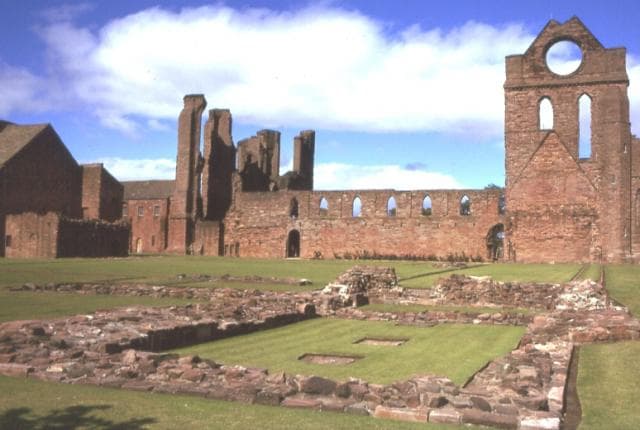
Arbroath Abbey
Arbroath Abbey, a ruined Cistercian monastery located in Arbroath, Scotland, was founded in 1178 by King William the Lion. It is renowned as the site where the Declaration of Scottish Independence was likely drafted in 1320. The Abbey, once the wealthiest in Scotland, is now managed by Historic Environment Scotland and is a popular tourist attraction, notable for its distinctive red sandstone ruins.

Dundrennan Abbey
Dundrennan Abbey was a Cistercian monastery established in 1142 in Dundrennan, Scotland. Known for its Romanesque architecture, the abbey reflects the austere Cistercian ideal and is noted for the preservation of its original forms due to its hard-weathering grey sandstone construction. Although extensively ruined, it holds historical significance as the site where Mary, Queen of Scots, spent her final night in Scotland in 1568 before fleeing.

Eynhallow Monastery
Eynhallow Church, a ruined medieval structure on the uninhabited Orkney island of Eynhallow, is believed to have originated as a monastery, possibly Benedictine, dating back to the 12th century. Its name, derived from Old Norse for "Holy Isle," suggests its former religious significance. The site, which also includes remains of a post-medieval settlement, is a scheduled monument and holds a place in Norse folklore.