
Eynhallow Monastery
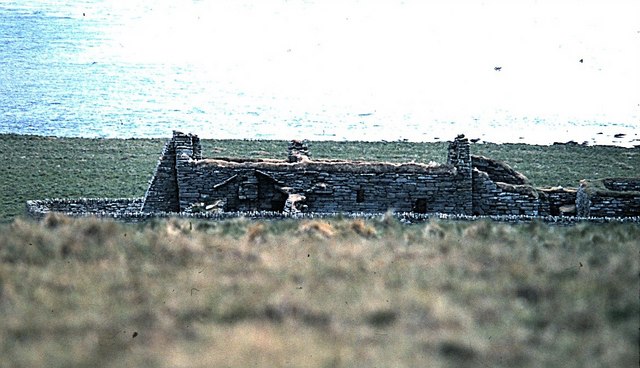
Eynhallow Church, a ruined medieval structure on the uninhabited Orkney island of Eynhallow, is believed to have originated as a monastery, possibly Benedictine, dating back to the 12th century. Its name, derived from Old Norse for "Holy Isle," suggests its former religious significance. The site, which also includes remains of a post-medieval settlement, is a scheduled monument and holds a place in Norse folklore.
Key Facts
- ›Ruined medieval church dating to the 12th century.
- ›Believed to have originally been a monastery.
- ›Located on the uninhabited island of Eynhallow in Orkney, Scotland.
- ›Island name "Eynhallow" means "Holy Isle" in Old Norse.
- ›Later modified and used as residential dwellings from the 16th century onwards.
- ›Scheduled monument status granted by Historic Environment Scotland in 1921.
Medieval
Ruins of A 12th-Century Church, Remains of A Post-Medieval Settlement, Possible Tower Addition On the West Porch
Eynhallow Church
Olaf
- Olaf Kidnapped From Eynhallow In 1155
- Island Abandoned By the 16th Century
- Residents Evacuated Due To Illness In 1851
- Medieval Church Foundations Discovered During Cottage Demolition
About Eynhallow Monastery
Eynhallow Monastery is understood to be the historical religious institution that once occupied the island of Eynhallow in Orkney, Scotland. While no monastic buildings survive in their entirety, the ruins of a 12th-century church on the island are believed to be the remnants of this monastery, possibly belonging to the Benedictine order. The island itself, whose name derives from the Old Norse "Eyin-Helha" meaning "Holy Isle," underscores the area's historical religious significance.
History and Description
The church at Eynhallow was built in the 12th century and later underwent modifications, including use as a residential dwelling from the 16th century onwards. The surviving fabric of the church includes visible walls of the porch, gables in the nave, and the foundations of the chancel. The site also features the remains of a 16th-century settlement comprising at least four adjoining houses, which may have been built upon earlier structures connected to the church. The island was abandoned as a religious and residential site by the 16th century. In 1851, the last residents were evacuated due to illness, and subsequent demolition of cottages led to the rediscovery of the medieval church's foundations.
Cultural Significance
Eynhallow holds a notable place in Norse folklore, reputedly as the home of the Finfolk, a mythical tribe of shapeshifters. The island is also mentioned in the "Orkneyinga Saga," an account of the history of Orkney and Shetland. One narrative recounts the kidnapping of Olaf, the foster son of Svein Asleifarson, from Eynhallow in 1155, suggesting he was likely a student at the monastery at the time. The site was first listed as a scheduled monument by Historic Environment Scotland in 1921.
Source: Wikipedia ↗
Frequently Asked Questions
What is Eynhallow Monastery?
Eynhallow Monastery is understood to be the original religious foundation on the island of Eynhallow. Today, only the ruins of a 12th-century church, believed to be part of this monastery, remain.
Where is Eynhallow Monastery located?
The ruins associated with Eynhallow Monastery are situated on the uninhabited island of Eynhallow, in Orkney, Scotland. The island lies between Rousay and Mainland, Orkney.
When was Eynhallow Monastery founded?
The church that is thought to have been part of Eynhallow Monastery was built in the 12th century. The exact founding date of the monastery itself is not precisely recorded.
Is Eynhallow Monastery still active?
No, Eynhallow Monastery is not an active monastic community. The site consists of ruins of a medieval church and later settlement, and the island is uninhabited.
Can I visit Eynhallow Monastery?
Currently, the site is listed as not open to visitors due to high-level masonry inspections. Access to the island is normally by private boat.
What is the historical significance of Eynhallow?
The island's name, "Holy Isle," indicates its importance as a religious center. It is also noted in the Orkneyinga Saga and is considered significant in Norse folklore as a potential home of the Finfolk.
Related Monasteries
Arbroath Abbey
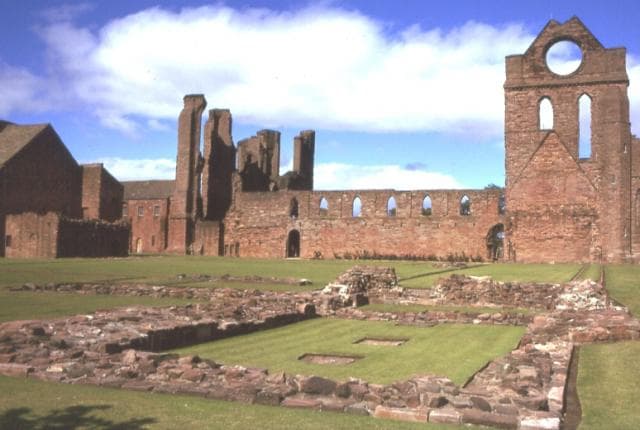
Arbroath Abbey, a ruined Cistercian monastery located in Arbroath, Scotland, was founded in 1178 by King William the Lion. It is renowned as the site where the Declaration of Scottish Independence was likely drafted in 1320. The Abbey, once the wealthiest in Scotland, is now managed by Historic Environment Scotland and is a popular tourist attraction, notable for its distinctive red sandstone ruins.

Dundrennan Abbey
Dundrennan Abbey was a Cistercian monastery established in 1142 in Dundrennan, Scotland. Known for its Romanesque architecture, the abbey reflects the austere Cistercian ideal and is noted for the preservation of its original forms due to its hard-weathering grey sandstone construction. Although extensively ruined, it holds historical significance as the site where Mary, Queen of Scots, spent her final night in Scotland in 1568 before fleeing.
Glenluce Abbey
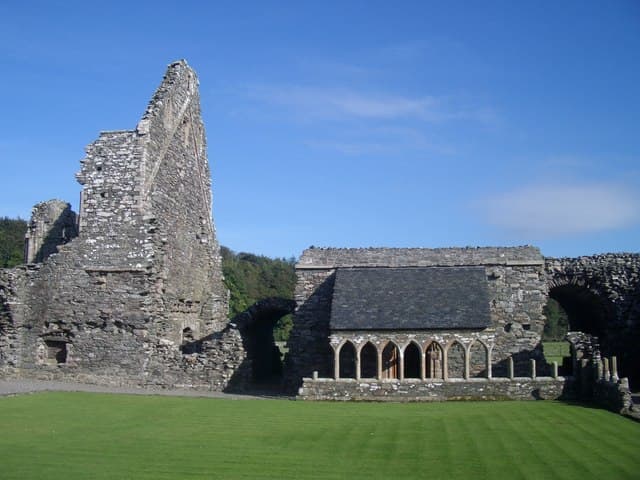
Glenluce Abbey was a Cistercian monastery founded around 1190 by Rolland, Lord of Galloway. After the Scottish Reformation in 1560, the abbey fell into disuse and its lands were controversially acquired by the Kennedy family. Today, the ruins of Glenluce Abbey are a scheduled monument, having undergone partial restoration.