
Grandselve Abbey
Grandselve Abbey was a prominent Cistercian monastery in south-west France, founded in 1114 as a Benedictine hermitage before becoming a daughter house of Clairvaux Abbey in 1145. It flourished by the fourteenth century, becoming one of the most important Cistercian abbeys in the region, known for its agricultural cultivation, vineyards, and establishment of the College of St. Bernard in Toulouse. The abbey suffered during the Hundred Years' War and was eventually suppressed during the French Revolution, with its structures later sold for building materials.
Key Facts
- ›Founded as a Benedictine hermitage in 1114 by Gerald of Sales.
- ›Became a Cistercian daughter house of Clairvaux Abbey in 1145.
- ›Was one of the most flourishing and famous abbeys in the south of France by the 14th century.
- ›Owned two wine cellars in Bordeaux by the fourteenth century.
- ›Founded the College of St. Bernard in Toulouse to teach theology.
- ›Suppressed during the French Revolution and sold for its building materials.

College of St. Bernard In Toulouse
Abbaye De Notre-Dame De Grandselve
Gerald of Sales, William Vi of Montpellier, William Vii of Montpellier, Raimond De Montpellier, Folquet De Marselha, Ildefonsus, Petrus
Suppressed During the French Revolution, Suffered During the Hundred Years' War
About Grandselve Abbey
Grandselve Abbey, officially known as Abbaye de Notre-Dame de Grandselve, was a historically significant Cistercian monastery situated in Bouillac, Tarn-et-Garonne, in south-west France. It rose to prominence as one of the most important Cistercian abbeys in the southern region of France.
History and Development
The foundation of Grandselve traces back to 1114 when it began as a hermitage operating under the Benedictine rule, placed under the spiritual guidance of Cadouin Abbey. Its formal recognition as a monastery occurred in 1117 with the authorization of Bishop Amelius Raymond du Puy of Toulouse, who also granted the monks land and mandated adherence to the practices of Cîteaux Abbey. Over time, the community gradually distanced itself from Cadouin and officially joined the Cistercian order in 1145 as a daughter house of Clairvaux Abbey.
By the fourteenth century, Grandselve Abbey had achieved considerable prosperity and renown. Its economic activities included extensive land cultivation, the establishment of mills along local rivers, and the planting of vineyards, leading to the ownership of two wine cellars in Bordeaux. To foster theological education, the abbey founded the College of St. Bernard in Toulouse.
The abbey's historical trajectory was marked by periods of hardship. It sustained damage during the Hundred Years' War, prompting King John II of France to grant it temporary tax exemptions. Later, in the late fifteenth century, the institution of commendatory abbots led to the depletion of its resources and a decline in maintenance. By 1790, only fourteen religious remained within its walls.
Suppression and Legacy
The French Revolution brought an end to Grandselve Abbey as a monastic institution. It was suppressed and subsequently sold in 1791 to private individuals. The purchasers proceeded to sell off the abbey's structures for use as building materials, leading to the site becoming largely ruins.
Several notable figures are associated with Grandselve Abbey. Counts William VI and William VII of Montpellier were interred there, and William VII's son was a monk at the abbey. Bishop Folquet de Marselha of Toulouse was also buried at Grandselve, near the tomb of William VII, in a location close to where his own sons had served as abbots.
Source: Wikipedia ↗
Frequently Asked Questions
When was Grandselve Abbey founded?
Grandselve Abbey was initially founded as a hermitage in 1114. It was later recognized as a monastery and formally joined the Cistercian movement in 1145.
What religious order was Grandselve Abbey part of?
Grandselve Abbey began under the Benedictine rule and later became a daughter house of Clairvaux Abbey, thereby becoming part of the Cistercian order.
What was the significance of Grandselve Abbey?
By the fourteenth century, Grandselve Abbey was one of the most important and flourishing Cistercian abbeys in the south of France. It was known for its agricultural activities and established a college for theological studies.
What happened to Grandselve Abbey after the French Revolution?
The abbey was suppressed during the French Revolution and sold to private owners in 1791. Its structures were subsequently dismantled and sold for construction materials.
Are there any notable figures associated with Grandselve Abbey?
Counts of Montpellier, including William VI and William VII, were buried at Grandselve. William VII's son was also a monk there, and the Bishop of Toulouse, Folquet de Marselha, was buried at the abbey alongside his sons who had served as abbots.
Related Monasteries

Abbaye Blanche
The Abbaye Blanche was a Benedictine nunnery founded in 1112 in Mortain, France, by Saint Vitalis. It was established for women with his sister, Adelina, as its first abbess. The community followed a strict interpretation of the Rule of Saint Benedict and later joined the Cistercian order in 1147. Though much has been lost to time, remnants of its Romanesque and Early Gothic architecture endure.
Barbeau Abbey
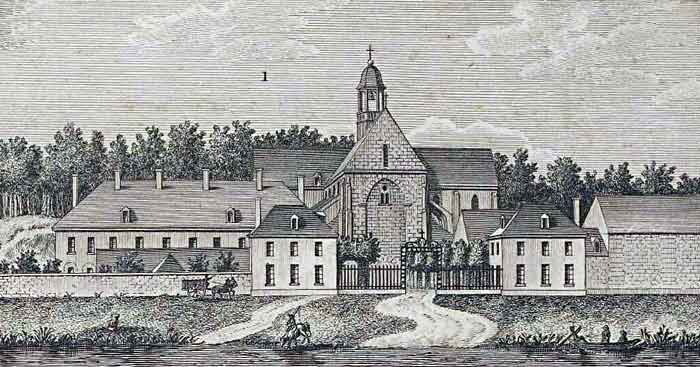
Barbeau Abbey was a Cistercian monastery founded in 1147 by King Louis VII of France. Located in Fontaine-le-Port, Seine-et-Marne, it was a site of royal burial and experienced periods of prosperity and destruction throughout its history, including the Hundred Years' War and the French Revolution. Today, few original structures remain, with a riding school occupying the former site.

Bellevaux Abbey
Bellevaux Abbey was a Cistercian monastery established in 1120 in Franche-Comté, France, by Pons de Morimond. It was a significant religious house, connected to local nobility and notable figures like Burchard of Bellevaux and Peter of Tarentaise. Though suppressed in 1790 and largely demolished shortly after, its history includes periods of destruction and rebuilding, with the final structures erected by Abbot Louis Albert de Lezay-Marnésia. The site later housed a Trappist community before being sold to private owners.