
Clairvaux Abbey
Christian·France·Under conversion to tourist destination·12th century
Clairvaux Abbey was a pivotal Cistercian monastery, founded in 1115 by Bernard of Clairvaux, and served as a significant center for the order, influencing monastic life across Europe. Dissolved during the French Revolution, its buildings were later repurposed as a high-security prison before its closure in 2023, with ongoing efforts to convert the site into a tourist destination.
Key Facts
- ›Founded in 1115 by Bernard of Clairvaux.
- ›Became the largest Cistercian abbey in France, with 700 members at its peak.
- ›Established over sixty daughter monasteries across Europe during Bernard's lifetime.
- ›Known for its extensive library, which housed 40,000 volumes at the time of its dissolution.
- ›Repurposed as Clairvaux Prison from 1808 to 2023.
- ›Undergoing conversion into a tourist destination as of 2024.

Romanesque, Gothic, Classical
Medieval Lay Brother's Building, Extensive Library Collection, Manuscript Collection, Site of A Former High-Security Prison
Clara Vallis
Bernard of Clairvaux, Hughes I, Count of Troyes, William of Champeaux, Eugene Iii, Denis Largentier, Pierre De Virey, Louis-Marie Rocourt, Henry of France, Archbishop of Reims, Philip I, Count of Flanders, Saint Malachy, Theresa of Portugal, Countess of Flanders, Giacomo Da Pecorara
Founding of the Abbey, Dedication of the Abbey Church, Dissolution During the French Revolution, Conversion To Clairvaux Prison, Closure of the Prison
About Clairvaux Abbey
Clairvaux Abbey, known in Latin sources as Clara Vallis, was a highly influential Cistercian monastery founded in 1115 in Ville-sous-la-Ferté, France, by Bernard of Clairvaux. It quickly rose to prominence, becoming the largest Cistercian abbey in France and serving as a model for other monasteries within the order across Europe. Its rapid development led to the establishment of over sixty daughter monasteries during Bernard's lifetime, solidifying Clairvaux's central role in the Cistercian world.
History and Significance
The abbey's founding was facilitated by a donation of land from Hughes I, Count of Troyes. Bernard of Clairvaux was installed as the first abbot, and under his leadership, the community grew significantly, eventually numbering 700 members. The manuscripts produced and copied at Clairvaux were of considerable importance, contributing to theological studies and literary works. The abbey also played a role in academic life, founding the Cistercian college at the University of Paris in the 13th century.
Construction of the abbey in a form that historians refer to as Clairvaux II began in 1135, with the abbey church dedicated in 1174. A significant 12th-century lay brother's building is the only structure surviving from this period. Later, in the early modern period, a movement toward stricter observance gained momentum at Clairvaux, particularly under Abbot Denis Largentier. Comprehensive reconstruction in the classical style, known as Clairvaux III, commenced in 1708 and continued for many years.
Clairvaux Abbey was renowned for its expansive library, which held 40,000 volumes at the time of its dissolution. A notable collection of medieval manuscripts, with over 1,100 surviving, is considered exceptionally well-preserved and is now housed in several French libraries.
Revolution to Present Day
Following the French Revolution, Clairvaux Abbey was dissolved and its assets became state property. The abbey church was sold for quarrying, and by 1808, the site was repurposed as Clairvaux Prison, a high-security correctional facility. This transformation saw the abbey holding thousands of prisoners, including women and children, and enduring deplorable conditions that inspired literature. The prison was gradually dismantled starting in the 2000s and officially closed in 2023. Renovation efforts are now underway to convert the historic site into a tourist destination, with plans to demolish 20th-century additions.
Source: Wikipedia ↗
Frequently Asked Questions
When was Clairvaux Abbey founded?
Clairvaux Abbey was founded in 1115 by Bernard of Clairvaux. The monastery was dedicated on October 13, 1115, which subsequently became the feast day of Our Lady of Clairvaux.
What was the significance of Clairvaux Abbey?
As a primary abbey of the Cistercian order, Clairvaux was one of its most significant monasteries. It served as an archetype for Cistercian monasteries and established numerous daughter abbeys across Europe.
What happened to Clairvaux Abbey after the French Revolution?
Following its dissolution during the French Revolution, the abbey became state property. It was converted into a glassworks and later, from 1808 to 2023, served as Clairvaux Prison, a high-security correctional facility.
What is the current status of Clairvaux Abbey?
Clairvaux Abbey was closed as a prison in 2023. The site is currently being converted into a tourist destination, with renovations underway to restore the historic buildings and demolish 20th-century correctional additions.
What notable figures are associated with Clairvaux Abbey?
Bernard of Clairvaux, the founder, is a central figure. The abbey also attracted and educated many scholars and church leaders; one abbot became Pope Eugene III, twelve became cardinals, and over thirty were elevated to bishoprics.
What architectural styles are present at Clairvaux Abbey?
Significant portions of the ancient abbey remain, although its layout was altered by construction in the 18th and 19th centuries. Comprehensive reconstruction in the classical style began in 1708, and a small chapel was built in the former refectory in 1828.
Related Monasteries

Abbaye Blanche
The Abbaye Blanche was a Benedictine nunnery founded in 1112 in Mortain, France, by Saint Vitalis. It was established for women with his sister, Adelina, as its first abbess. The community followed a strict interpretation of the Rule of Saint Benedict and later joined the Cistercian order in 1147. Though much has been lost to time, remnants of its Romanesque and Early Gothic architecture endure.

Abbaye du Paraclet
The Abbaye du Paraclet was a Benedictine monastery initially founded by Peter Abelard near Ferreux-Quincey, France. It was later transformed into a nunnery under the leadership of Héloïse, his wife, who served as its abbess for the remainder of her life. Though a significant portion of the abbey was demolished during the French Revolution, surviving structures and monuments continue to acknowledge its historical and religious importance.
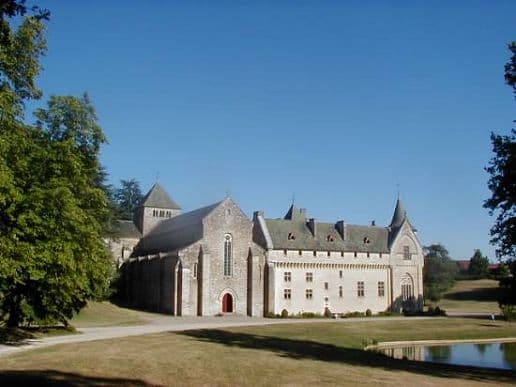
Abbey of Loc-Dieu
Abbey of Loc-Dieu is a Cistercian abbey situated in Aveyron, France, founded in 1123 on a site historically known as "devil's place" before being renamed "place of God" by its monastic inhabitants. Despite facing destruction and rebuilding, it became a significant Gothic architectural site and, during World War II, served as a safe haven for artworks from the Louvre, including the Mona Lisa. Today, the abbey and its park are open to the public.