
Foigny Abbey
Foigny Abbey was a significant Cistercian monastery founded in 1121 in the Aisne department of France. At its peak, it housed 100 monks and 200 lay brothers, playing a vital role in the economic development of the Thiérache region through land reclamation and mill establishment. Although it suffered destruction by fire and suppression during the French Revolution, parts of its structures, including a 12th-century mill, remain.
Key Facts
- ›Founded on July 11, 1121, by Bernard of Clairvaux and Barthélemy of Jur.
- ›Church floor plan was based on that of Clairvaux Abbey.
- ›At its height, it had 100 monks and 200 lay brothers.
- ›Owned 12,000 hectares of land, extending to the gates of Laon.
- ›Significantly contributed to the economic growth of the Thiérache region.
- ›A 12th-century MILL on the site was operational until 2000 and now produces hydroelectric power.

12th-Century Mill, Chapel In Former Choir, Church Floor Plan Based On Clairvaux Abbey
Abbaye De Foigny
Bernard of Clairvaux, BarthéLemy of Jur
- Founded In 1121
- Destroyed By Fire In 1542
- Suppressed and Pillaged During the French Revolution
- Buildings Used As A Military Hospital In 1794
About Foigny Abbey
Foigny Abbey, known in French as Abbaye de Foigny, was a significant Cistercian monastery located in La Bouteille, within the Thiérache region of the Aisne department in northeastern France. Its foundation on July 11, 1121, was a notable event, attributed to the efforts of Bernard of Clairvaux and Barthélemy of Jur, the bishop of Laon. Excavations in 1959 confirmed that the abbey church's floor plan was modeled after that of Clairvaux Abbey, a testament to its Cistercian heritage.
At its zenith, Foigny Abbey was a thriving monastic center, supporting a community of no less than 100 monks and 200 lay brothers. These individuals managed an extensive estate of 12,000 hectares, with lands reaching as far as the outskirts of Laon. The abbey played a pivotal role in the economic landscape of the Thiérache, spearheading deforestation efforts that converted forest land into valuable agricultural areas. This, in turn, fostered the establishment of new settlements and farms associated with the abbey's holdings. The development of numerous mills, supported by generous donations from local nobility and clergy, further underscored the abbey's economic influence.
The abbey's history was marked by periods of destruction and reconstruction. It was ravaged by fire in 1542, necessitating significant rebuilding efforts that began in 1722. However, reconstruction of the conventual buildings, initiated in 1736, was ultimately halted due to financial constraints. The French Revolution brought further upheaval, leading to the abbey's suppression and pillaging, by which time its community had reduced to just 11 monks. In 1794, the former abbey buildings were utilized as a military hospital. A chapel was later constructed in the choir of the former abbey church toward the end of the 19th century. The site also preserves a mill dating back to the 12th century, which remained operational until 2000 and has, since 1982, harnessed the River Thon for hydroelectric power generation.
Source: Wikipedia ↗
Frequently Asked Questions
When was Foigny Abbey founded?
Foigny Abbey was founded on July 11, 1121. Its establishment was a joint effort by Bernard of Clairvaux and Barthélemy of Jur, the bishop of Laon.
What was the significance of Foigny Abbey to its region?
The abbey was a major economic force in the Thiérache region. Through deforestation and land conversion to agriculture, it facilitated the growth of new settlements. It also established numerous mills, contributing to local prosperity.
What happened to Foigny Abbey during the French Revolution?
During the French Revolution, Foigny Abbey was suppressed and pillaged. By that time, its monastic community had dwindled to only 11 monks. Later, in 1794, the buildings were repurposed as a military hospital.
Are there any original structures of Foigny Abbey still standing?
While the abbey suffered destruction and suppression, a chapel was built in the former church choir in the late 19th century. Additionally, a mill on the site, with its oldest part dating to the 12th century, still exists and is notable for its modern use in hydroelectric power generation.
Related Monasteries
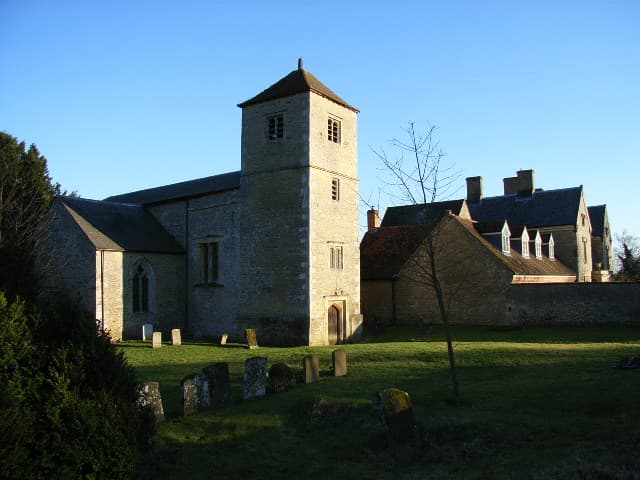
Chetwode Priory
Chetwode Priory was an Augustinian priory founded in 1244 by Sir Ralphe de Norwich in the village of Chetwode, Buckinghamshire. Due to poverty, it was dissolved in 1460 and annexed to Notley Abbey, with its former church becoming the parish church of Saint Mary and Saint Nicholas. The priory's former church is noted for its 13th-century stonework, including sedilia and windows with ancient stained glass.

Hogevank Monastery
Hogevank Monastery, also known as Karmir vank or Dzoragyughi vank, is a medieval monastic complex located near the village of Sarnaghbyur in Armenia's Shirak Province. Its main building, Saint Karapet Church, was completed in 1205, though initially named Saint Stepanos. The monastery features unique architectural elements and contains historical artifacts from earlier centuries.
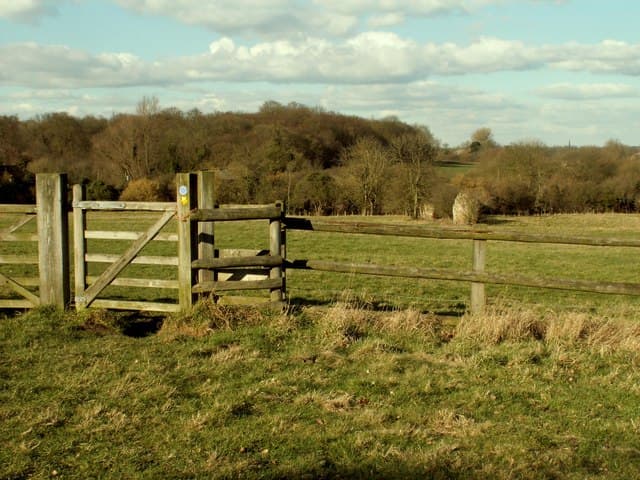
Tilty Abbey
Tilty Abbey was a Cistercian monastery located in Tilty, Essex, England. Founded in the 13th century, its chapel, dating from around 1220, has survived and is now a parish church. The abbey was dissolved on March 3, 1536, as part of the Dissolution of the Monasteries under Henry VIII.