
Chetwode Priory
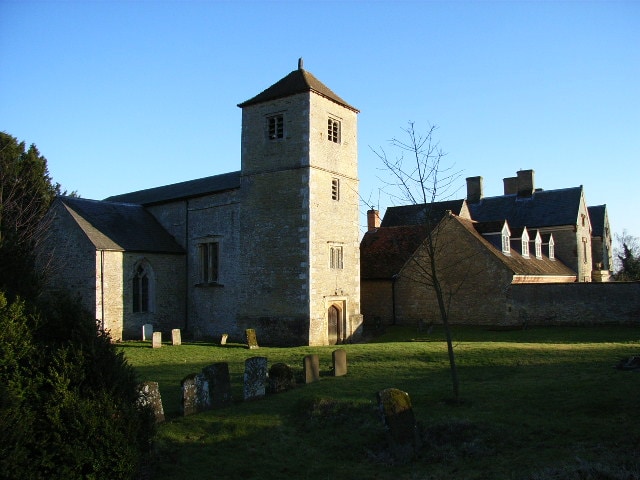
Chetwode Priory was an Augustinian priory founded in 1244 by Sir Ralphe de Norwich in the village of Chetwode, Buckinghamshire. Due to poverty, it was dissolved in 1460 and annexed to Notley Abbey, with its former church becoming the parish church of Saint Mary and Saint Nicholas. The priory's former church is noted for its 13th-century stonework, including sedilia and windows with ancient stained glass.
Key Facts
- ›Founded in 1244 by Sir Ralphe de Norwich.
- ›Was an Augustinian priory.
- ›Dissolved in 1460 due to poverty and annexed to Notley Abbey.
- ›Its former church is now the parish church of Saint Mary and Saint Nicholas.
- ›Features 13th-century stonework and 13th/14th-century stained glass.
- ›The manor at Chetwode has been held by the same family since the Domesday Book of 1086.
Gothic
- 13th-Century Sedilia
- 13th-Century East Window of Five Lancets
- 13th-Century Triple-Lancet Window On the South Side
- 13th and 14th-Century Stained Glass
- 14th-Century North Chapel
Nutley Abbey
Sir Ralphe De Norwich
Founded In 1244, Dissolved In 1460, Annexed To Notley Abbey In 1460, Former Church Became Parish Church In 1480
About Chetwode Priory
Chetwode Priory was an Augustinian monastic institution founded in 1244 by Sir Ralphe de Norwich in the village of Chetwode, Buckinghamshire. Situated approximately four miles southwest of Buckingham, the priory's history is intertwined with the manor of Chetwode, which has a lineage stretching back to the Domesday Book of 1086. The priory itself, however, had a relatively short independent existence.
History and Dissolution
By 1460, Chetwode Priory was suffering from poverty, a common affliction for smaller monastic houses. This led to its dissolution and subsequent annexation to the more substantial Notley Abbey, located in Long Crendon. Following this union, Chetwode transitioned from being primarily a monastic site to being recognized more distinctly as a village.
Parish Church and Architectural Legacy
The Church of England parish church of Saint Mary and Saint Nicholas was originally part of the Augustinian priory church. Although the priory church had fallen into disrepair by the 15th century, a new building was erected in 1480 to serve as the parish church. This structure preserves significant elements of 13th-century ecclesiastical architecture. Notable features include finely crafted sedilia, an impressive east window composed of five lancets, and a triple-lancet window on the south side, all adorned with stained glass dating from the 13th and 14th centuries. The north chapel, added in the 14th century, later served as the manor pew.
Source: Wikipedia ↗
Frequently Asked Questions
When was Chetwode Priory founded?
Chetwode Priory was founded in 1244. The village of Chetwode itself has an even older history, with its name attested as early as 949.
What religious order was Chetwode Priory part of?
Chetwode Priory was an Augustinian priory. The Augustinians were a monastic order following the Rule of Saint Augustine.
What happened to Chetwode Priory after its dissolution?
In 1460, Chetwode Priory was dissolved due to its poverty and annexed to the nearby Notley Abbey. This event also marked the first time Chetwode was recognized as a village rather than solely a priory.
What remains of Chetwode Priory today?
The former priory church, now the parish church of Saint Mary and Saint Nicholas, still stands. It showcases fine examples of 13th-century stonework, including notable sedilia and windows with ancient stained glass.
Where is Chetwode Priory located?
Chetwode Priory was located in the village of Chetwode, which is about 4 miles southwest of Buckingham in Buckinghamshire, England. The parish is bordered by a brook which also forms part of the county boundary with Oxfordshire.
Related Monasteries
Tilty Abbey
Tilty Abbey was a Cistercian monastery located in Tilty, Essex, England. Founded in the 13th century, its chapel, dating from around 1220, has survived and is now a parish church. The abbey was dissolved on March 3, 1536, as part of the Dissolution of the Monasteries under Henry VIII.

Hogevank Monastery
Hogevank Monastery, also known as Karmir vank or Dzoragyughi vank, is a medieval monastic complex located near the village of Sarnaghbyur in Armenia's Shirak Province. Its main building, Saint Karapet Church, was completed in 1205, though initially named Saint Stepanos. The monastery features unique architectural elements and contains historical artifacts from earlier centuries.

Foigny Abbey
Foigny Abbey was a significant Cistercian monastery founded in 1121 in the Aisne department of France. At its peak, it housed 100 monks and 200 lay brothers, playing a vital role in the economic development of the Thiérache region through land reclamation and mill establishment. Although it suffered destruction by fire and suppression during the French Revolution, parts of its structures, including a 12th-century mill, remain.