
Hogevank Monastery
Hogevank Monastery, also known as Karmir vank or Dzoragyughi vank, is a medieval monastic complex located near the village of Sarnaghbyur in Armenia's Shirak Province. Its main building, Saint Karapet Church, was completed in 1205, though initially named Saint Stepanos. The monastery features unique architectural elements and contains historical artifacts from earlier centuries.
Key Facts
- ›Main building, Saint Karapet Church, completed in 1205.
- ›Originally named Saint Stepanos Church.
- ›Features two entrances: western and northern.
- ›Dome was destroyed by an earthquake in 1939 and restored in 1980.
- ›Contains 4th and 5th-century commemorative markers and 13th-century Khachkar fragments.
- ›Includes ruins of a 5th-century chapel and a 7th-century sanctuary.

Medieval Armenian
Saint Karapet Church, 4th and 5th-Century Commemorative Markers, 13th-Century Khachkar Fragments, Ruins of A 5th-Century Chapel, 7th-Century Sanctuary
Karmir Vank, Dzoragyughi Vank, Saint Karapet Church, Saint Stepanos Church
Earthquake In 1939 Destroyed the Cupola.
About Hogevank Monastery
Hogevank Monastery, also known by the Armenian names Karmir vank and Dzoragyughi vank, is a medieval monastic complex situated near the village of Sarnaghbyur in the Shirak Province of Armenia. The most significant structure within the complex is Saint Karapet Church, which was completed in 1205. Historical inscriptions suggest that this church was originally dedicated to Saint Stepanos.
Architectural Features and History
The monastery's Saint Karapet Church is distinguished by its two entrances, located on the western and northern sides, and a semicircular main altar on the eastern facade. The church features arched vestries and a dome supported by a cylindrical drum. The original construction utilized red polished tuff, though brown and black tuffs were incorporated during later restorations. The dome, sadly, was destroyed by an earthquake in 1939 but was successfully restored in 1980.
Significant historical remnants are preserved within and around the monastery. Inside the church, visitors can find four-sided carved commemorative markers dating from the 4th and 5th centuries, alongside numerous broken fragments of 13th-century Khachkars (Armenian cross-stones). The inscriptions on these ancient markers are now illegible due to age.
To the north of Saint Karapet Church lie the remnants of older structures. These include the collapsed walls of a single-nave chapel from the 5th century and a 7th-century sanctuary characterized by four apses. These ruins provide a glimpse into the long and layered history of the site, predating the main church by several centuries.
Source: Wikipedia ↗
Frequently Asked Questions
What is the main church at Hogevank Monastery called?
The main building within the monastic complex is called Saint Karapet Church. However, inscriptions indicate it was initially named Saint Stepanos Church.
When was Saint Karapet Church completed?
Saint Karapet Church was completed in the year 1205. It serves as the primary structure of the Hogevank Monastery.
What historical artifacts can be found inside Hogevank Monastery?
Inside the church, visitors can find four-sided carved commemorative markers dating from the 4th and 5th centuries. Additionally, there are numerous broken pieces of Khachkar (Armenian cross-stones) from the 13th century.
Has the monastery's dome been damaged?
Yes, the cupola of the church was destroyed as a result of an earthquake in 1939. It was subsequently restored in 1980.
What other ancient structures are located near the main church?
To the north of Saint Karapet Church, the collapsed walls of a 5th-century single nave chapel can be observed. There is also a 7th-century sanctuary with four apses in the vicinity.
Related Monasteries
Chetwode Priory
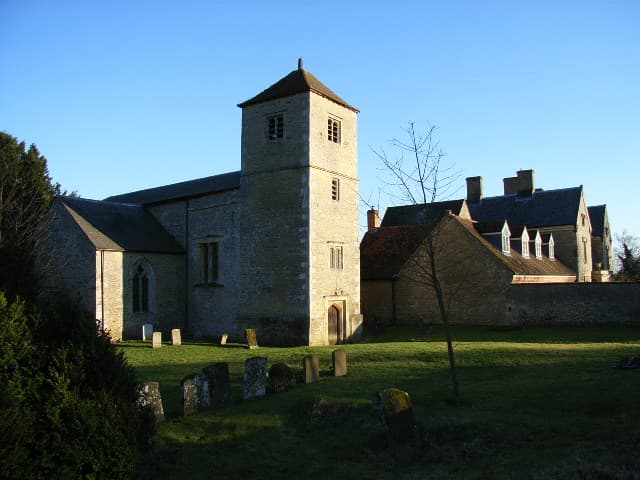
Chetwode Priory was an Augustinian priory founded in 1244 by Sir Ralphe de Norwich in the village of Chetwode, Buckinghamshire. Due to poverty, it was dissolved in 1460 and annexed to Notley Abbey, with its former church becoming the parish church of Saint Mary and Saint Nicholas. The priory's former church is noted for its 13th-century stonework, including sedilia and windows with ancient stained glass.

Foigny Abbey
Foigny Abbey was a significant Cistercian monastery founded in 1121 in the Aisne department of France. At its peak, it housed 100 monks and 200 lay brothers, playing a vital role in the economic development of the Thiérache region through land reclamation and mill establishment. Although it suffered destruction by fire and suppression during the French Revolution, parts of its structures, including a 12th-century mill, remain.
Tilty Abbey
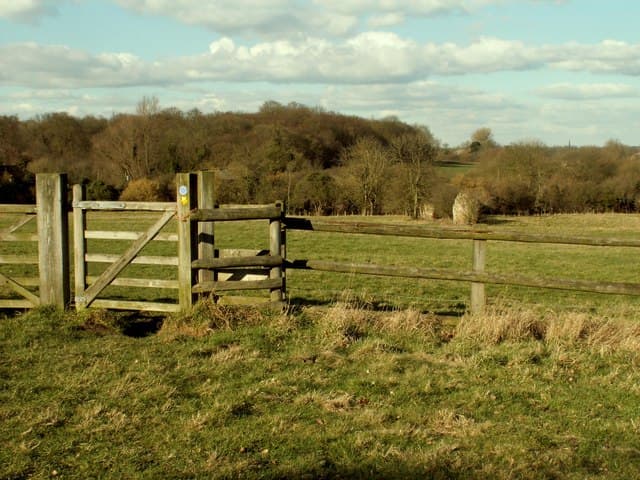
Tilty Abbey was a Cistercian monastery located in Tilty, Essex, England. Founded in the 13th century, its chapel, dating from around 1220, has survived and is now a parish church. The abbey was dissolved on March 3, 1536, as part of the Dissolution of the Monasteries under Henry VIII.