
Congregation of Saint-Victor
Christianity·France·Ruins (destroyed), Site occupied by universities and botanical garden·12th century
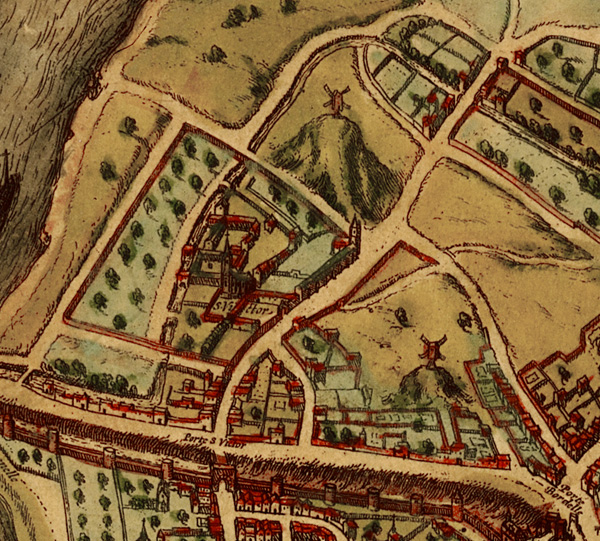
The Abbey of Saint Victor, Paris, was a significant monastic institution founded around 1108 by William of Champeaux, following the Augustinian Rule. It quickly became a renowned center of piety and learning, contributing to the development of the University of Paris and influencing numerous other abbeys across Europe. Though dissolved and destroyed during the French Revolution, its legacy endures through its intellectual contributions and the surviving street name on its former site.
Key Facts
- ›Founded around 1108 by William of Champeaux, following the Augustinian Rule.
- ›Became a major center for theology and liberal arts, influencing the creation of the University of Paris.
- ›Known for its rich library, which was open to the public.
- ›Influenced and reformed many other houses of canons regular across Europe.
- ›Dissolved and destroyed during the French Revolution.
- ›Its former site is now largely occupied by Paris VI and VII Universities and the Muséum and Jardin des Plantes.
School of Saint Victor, Rich Library, Scriptorium
Royal Abbey and School of Saint Victor
William of Champeaux, Peter Abelard, Gilduin, Hugh of St. Victor, Richard of St. Victor, Peter Lombard, Thomas Becket, William De Braose, 4th Lord of Bramber
- Dissolved and Destroyed During the French Revolution
- Acquired the College of Sainte-GenevièVe In 1148
About Congregation of Saint-Victor
The Abbey of Saint Victor, Paris
The Abbey of Saint Victor, located near Paris, France, was a historically significant monastic institution that played a crucial role in the intellectual and religious life of the Middle Ages. Founded around 1108 by William of Champeaux, an Archdeacon of Paris, the abbey initially began as a small hermitage. William and his disciples adopted the life and observances of the Canons Regular, adhering to the Augustinian Rule.
Formation and Growth
William of Champeaux's reputation as a teacher drew many disciples, including Peter Abelard, to his hermitage. In 1113, after William was elected Bishop of Châlons-sur-Marne, King Louis VI transformed the hermitage into an abbey, which was richly endowed the following year and its foundation was consecrated by the Pope. Under the leadership of Abbot Gilduin, the abbey vigorously promoted the canonical order. Through generous donations from royalty and nobility, Saint-Victor became a wealthy institution and a center of learning. Many houses of canons regular were influenced by its leadership and reformed according to its standards.
Intellectual Hub and Legacy
The Abbey of Saint Victor developed into a renowned center of piety and learning, attracting prominent students, scholars, and intellectuals such as Hugh of St. Victor, Peter Lombard, and Thomas Becket. Its school was instrumental in the development of the University of Paris, standing as one of its foundational institutions. The abbey also boasted a rich library, which was open to the public, and a scriptorium known for its unique formatting of biblical texts with commentaries. The philosophies developed by Victorine masters like Hugh and Richard of St. Victor provided a rational basis for mystical thought and promoted spiritual life.
Decline and Destruction
Despite its early prominence, the abbey later faced difficulties, being associated with the Jansenist movement in the 17th and 18th centuries. Ultimately, the Abbey of Saint Victor was dissolved and destroyed during the French Revolution. Today, the site of the former abbey is primarily occupied by Paris VI and VII Universities and the Muséum and Jardin des Plantes, with its name preserved in a neighboring street.
Source: Wikipedia ↗
Frequently Asked Questions
When was the Abbey of Saint Victor founded?
The Abbey of Saint Victor was founded around 1108 when William of Champeaux retired to a hermitage near Paris with his disciples. The small retreat was transformed into an abbey and richly endowed in 1113 by King Louis VI.
What religious order did the Abbey of Saint Victor belong to?
The community at the Abbey of Saint Victor followed the Augustinian Rule and were known as Canons Regular. The abbey became a prominent center for the Victorines, a significant congregation of the twelfth century.
What was the significance of the Abbey of Saint Victor's school?
The school of Saint Victor, alongside those of Ste Geneviève and Notre-Dame de Paris, is considered a cradle of the University of Paris. It attracted famous students and scholars, becoming a public school of theology and liberal arts.
Who were some notable figures associated with the Abbey of Saint Victor?
Notable figures associated with the abbey include its founder William of Champeaux, Peter Abelard, Hugh of St. Victor, Peter Lombard, and Thomas Becket. Hugh and Richard of St. Victor are particularly recognized as influential masters of the scholarly abbey.
What happened to the Abbey of Saint Victor?
The abbey later fell on hard times and was identified with the Jansenist movement in the 17th and 18th centuries. It was eventually dissolved and destroyed during the French Revolution.
What remains of the Abbey of Saint Victor today?
Today, the site of the former abbey is largely occupied by Paris VI and VII Universities and the Muséum and Jardin des Plantes. The name of the abbey survives in a neighboring street.
Related Monasteries

Aillon Charterhouse
Aillon Charterhouse, also known as Mont-Sainte-Marie Charterhouse, was a former Carthusian monastery established in the Bauges Mountains in the latter half of the 12th century. Founded by Count Humbert III of Savoy, it played a significant role in the region's history, with its monks involved in land cultivation, ironworking, and managing local estates. Though largely in ruins after its suppression during the French Revolution, one remaining building, the former guesthouse, now houses the Heritage Center of the Bauges Massif Regional Natural Park.
L'Aumône Abbey
L'Aumône Abbey was a significant Cistercian monastery founded in 1121 as a daughter house of Cîteaux Abbey. It played a crucial role in the expansion of Cistercian influence, becoming the mother house to numerous other abbeys, including Waverley Abbey in England. The monastery endured considerable damage during the Hundred Years' War and was ultimately suppressed during the French Revolution, with its ruins later repurposed as building material.

Montmartre Abbey
Montmartre Abbey was a significant 12th-century Benedictine nunnery located in the Montmartre district of Paris. Founded by King Louis VI, its church was consecrated by Pope Eugenius III in 1147. Though the abbey was suppressed and largely demolished during the French Revolution, its church, Saint-Pierre de Montmartre, endures as the oldest parish church in Paris and a remnant of the original monastic complex.