
Aillon Charterhouse
Christianity·France·Ruins / Heritage Center·12th century
Aillon Charterhouse, also known as Mont-Sainte-Marie Charterhouse, was a former Carthusian monastery established in the Bauges Mountains in the latter half of the 12th century. Founded by Count Humbert III of Savoy, it played a significant role in the region's history, with its monks involved in land cultivation, ironworking, and managing local estates. Though largely in ruins after its suppression during the French Revolution, one remaining building, the former guesthouse, now houses the Heritage Center of the Bauges Massif Regional Natural Park.
Key Facts
- ›Founded in the second half of the 12th century by Count Humbert III of Savoy.
- ›Located in the Bauges Mountains, within the commune of Aillon-le-Jeune, France.
- ›Involved in ironworking, operating trip-hammers and foundries in the region.
- ›Suppressed during the French Revolution, leading to its ruin and sale of possessions.
- ›The sole remaining building, the former guesthouse, was listed as a historic monument in 1994.
- ›Since 2008, the site has housed the Heritage Center of the Bauges Massif Regional Natural Park.

17th-Century
- Entrance Building
- Chapel of the Correrie
- Heritage Center of the Bauges Massif Regional Natural Park
Mont-Sainte-Marie Charterhouse, Chartreuse D'Aillon, Chartreuse Notre-Dame D'Aillon, Chartreuse De Mont-Sainte-Marie, Monte Sancte-Marie De Allione
Humbert Iii of Savoy, Dom Fiacre Billard, Abbé Laurent Morand, Canon Gros, Jean-Pierre Aniel, Pierre Jacques Le Seigneur
- Founded By Count Humbert Iii of Savoy
- Donations and Confirmations By Successive Counts of Savoy
- Suppressed and Expelled During the French Revolution
- Site Used As A Quarry
- Restoration Efforts Began In the 1980s
- Became Heritage Center In 2008
About Aillon Charterhouse
Aillon Charterhouse, also known by its dedication as Mont-Sainte-Marie Charterhouse, was a significant monastery of the Carthusian Order situated in the Bauges Mountains, in the modern-day commune of Aillon-le-Jeune within the Savoie department of France.
History and Significance
The monastery's foundation is generally attributed to Count Humbert III of Savoy in the second half of the 12th century, with scholarly consensus often pointing to the year 1178 for its initial charter. Count Humbert III provided substantial endowments, including lands, rights, and his personal lake, to ensure the monastery's establishment and the salvation of his soul and those of his family. Successive Counts of Savoy continued to support Aillon Charterhouse, granting further privileges and endowments, solidifying its place among the important Carthusian houses in the region. The monastery was noted for its economic activities, which included agricultural endeavors, iron ore extraction, and the operation of trip-hammers and foundries, contributing to the local economy.
During the French Revolution, following the annexation of Savoy by France in 1792, Aillon Charterhouse faced suppression. The monks were expelled for refusing to swear allegiance to the Civil Constitution of the Clergy, and their property was confiscated. The monastery was subsequently dismantled, and its stones were used as a local quarry, leading to its near-total ruin by the early 19th century. Only the entrance building, serving as a guesthouse, and the chapel of the Correrie were largely preserved.
Present Day
In the late 20th century, renewed interest in the site led to preservation efforts, culminating in the listing of the remaining structures as a historic monument in 1994. Since 2008, the preserved entrance building has served as the Maison du Patrimoine culturel rural, the Heritage Center of the Bauges Massif Regional Natural Park, highlighting the monastic heritage and the rural cultural history of the region. However, the center ceased operations at the end of the 2024 tourist season due to funding challenges.
Source: Wikipedia ↗
Frequently Asked Questions
When was Aillon Charterhouse founded?
The exact founding date is uncertain, with historical sources suggesting various dates. While some propose 1143, more recent scholarship generally agrees on 1178 for the first charter. Count Humbert III of Savoy's significant donation is considered to mark the foundation.
What is the current status of Aillon Charterhouse?
Aillon Charterhouse is largely in ruins. However, its sole remaining building, the former guesthouse, was listed as a historic monument in 1994 and has housed the Heritage Center of the Bauges Massif Regional Natural Park since 2008. This center ceased operations at the end of the 2024 tourist season.
What was the economic activity of Aillon Charterhouse?
The monks were involved in various economic activities to support the monastery. They cultivated land, managed large herds, and were notably involved in ironworking, extracting ore and operating trip-hammers and foundries in the Bauges region.
What happened to Aillon Charterhouse during the French Revolution?
Following the annexation of the Duchy of Savoy by France in 1792, the monks were expelled and their property confiscated. The monastery was dismantled, its stones used as a quarry, and by 1804, it was largely in ruins.
What parts of Aillon Charterhouse still exist?
The main structure that remains is the 17th-century entrance building, also known as the guesthouse. This building was reused for the new parish church of Aillon-le-Jeune. The chapel of the Correrie, located downhill, was also preserved.
Related Monasteries

Montmartre Abbey
Montmartre Abbey was a significant 12th-century Benedictine nunnery located in the Montmartre district of Paris. Founded by King Louis VI, its church was consecrated by Pope Eugenius III in 1147. Though the abbey was suppressed and largely demolished during the French Revolution, its church, Saint-Pierre de Montmartre, endures as the oldest parish church in Paris and a remnant of the original monastic complex.

Vauclair Abbey
Vauclair Abbey, also known as Vauclerc Abbey, was a Cistercian monastery founded in 1134 by Saint Bernard of Clairvaux. Situated in the Aisne department of France, it served as the 15th daughter house of Clairvaux Abbey. Despite periods of damage during various wars, it endured until the French Revolution and was later almost entirely destroyed by artillery fire in 1917, leaving only ruins which are now a protected historical monument.
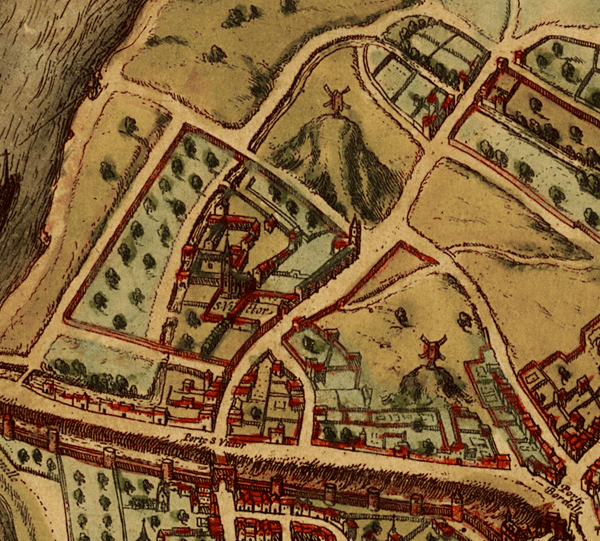
Congregation of Saint-Victor
The Abbey of Saint Victor, Paris, was a significant monastic institution founded around 1108 by William of Champeaux, following the Augustinian Rule. It quickly became a renowned center of piety and learning, contributing to the development of the University of Paris and influencing numerous other abbeys across Europe. Though dissolved and destroyed during the French Revolution, its legacy endures through its intellectual contributions and the surviving street name on its former site.