
L'Aumône Abbey
L'Aumône Abbey was a significant Cistercian monastery founded in 1121 as a daughter house of Cîteaux Abbey. It played a crucial role in the expansion of Cistercian influence, becoming the mother house to numerous other abbeys, including Waverley Abbey in England. The monastery endured considerable damage during the Hundred Years' War and was ultimately suppressed during the French Revolution, with its ruins later repurposed as building material.
Key Facts
- ›Founded in 1121 by Count Theobald IV of Blois.
- ›Seventh daughter house of Cîteaux Abbey.
- ›Mother house to 29 other abbeys, including Waverley Abbey in England.
- ›Suffered significant damage during the Hundred Years' War.
- ›Suppressed in 1791 during the French Revolution.
- ›Surviving medieval structures include a 13th-century dovecote and 15th-century buildings.
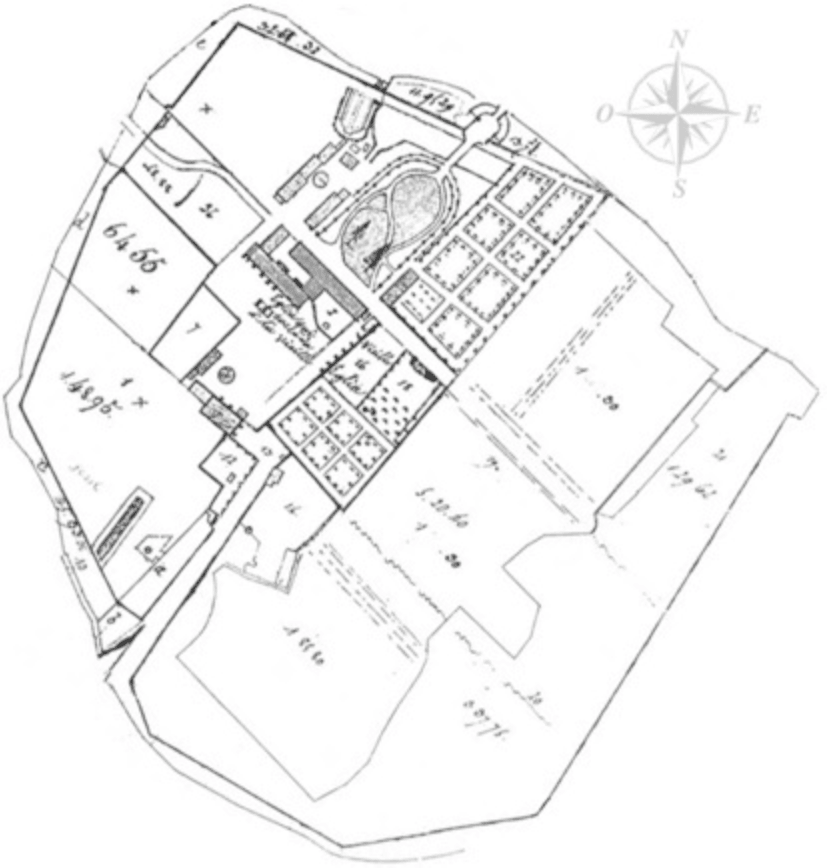
13th-Century Dovecote, Fragments of the Cloister
Abbaye Notre-Dame De L’AumôNe, Petit-CîTeaux, Cistercium Minus
Count Theobald Iv of Blois
- Founded In 1121
- Suffered Greatly During the Hundred Years' War
- Suppressed In 1791 During the French Revolution
About L'Aumône Abbey
L'Aumône Abbey, also known by its Latin name Eleemosynae and in French as Petit-Cîteaux (Latin: Cistercium minus), is a former Cistercian monastery situated in the commune of La Colombe, Loir-et-Cher, France. It lies about 34 kilometers north of Blois, nestled within the Forêt de Cîteaux, which is part of the Forêt de Marchenoir.
History and Significance
The abbey's foundation dates to 1121, facilitated by a donation from Count Theobald IV of Blois. It quickly rose to prominence as the seventh daughter house of the renowned Cîteaux Abbey. L'Aumône Abbey played a pivotal role in the expansion of the Cistercian order, serving as the mother house for an extensive network of 29 other abbeys. Among its notable foundations was Waverley Abbey in England, which marked the very first Cistercian establishment in the British Isles. The abbey's history was marked by significant hardship, particularly during the Hundred Years' War, which left it largely in ruins by 1396. Subsequent efforts at reconstruction and the imposition of commendatory abbots placed a substantial strain on its resources. The French Revolution brought an end to its monastic life, with the abbey being suppressed in 1791. The site's land was eventually sold in 1818, and the remaining debris from its ruined structures was utilized as building material.
Surviving Structures
While the abbey no longer stands in its full glory, several vestiges of its medieval past remain. These include a dovecote dating from the 13th century, two buildings from the 15th century, and a surviving section of the church wall. Furthermore, fragments that once belonged to the cloister are now housed in the museum in Blois, offering a tangible connection to the abbey's former grandeur.
Source: Wikipedia ↗
Frequently Asked Questions
When was L'Aumône Abbey founded?
L'Aumône Abbey was founded in 1121. Its establishment was made possible by a gift from Count Theobald IV of Blois.
What was the significance of L'Aumône Abbey in the Cistercian order?
L'Aumône Abbey was the seventh daughter house of Cîteaux Abbey and became a prominent mother house itself. It was the origin for 29 subsequent abbeys, notably Waverley Abbey in England, marking the first Cistercian foundation in the British Isles.
What happened to L'Aumône Abbey during the French Revolution?
During the French Revolution, L'Aumône Abbey was suppressed in 1791. Following its suppression, the land was sold, and the materials from its ruins were used for construction.
What remains of L'Aumône Abbey today?
Of the original medieval structures, a 13th-century dovecote, two 15th-century buildings, and a section of the church wall still survive. Fragments from the cloister are also preserved in the museum in Blois.
Related Monasteries

Morimond Abbey
Morimond Abbey, founded in 1115, was a pivotal Cistercian monastery and one of the four great daughter abbeys of Cîteaux. It played a significant role in the expansion of the Cistercian Order across Europe, establishing numerous daughter houses and extending spiritual jurisdiction over several military orders. Although largely destroyed by conflict and the French Revolution, remnants of its 18th-century structures and a fragment of its medieval church still exist.

Vauclair Abbey
Vauclair Abbey, also known as Vauclerc Abbey, was a Cistercian monastery founded in 1134 by Saint Bernard of Clairvaux. Situated in the Aisne department of France, it served as the 15th daughter house of Clairvaux Abbey. Despite periods of damage during various wars, it endured until the French Revolution and was later almost entirely destroyed by artillery fire in 1917, leaving only ruins which are now a protected historical monument.

Abbey of Saint-Roman
The Abbey of Saint-Roman is a unique cave monastery situated in the Gard département of France, near Beaucaire and Comps. Its history spans several centuries, with constructions dating from the 9th to the 15th centuries, and it encompasses the ruins of the château de Saint-Roman-d'Aiguille. The site is recognized as a monument historique and features a rock-hewn chapel containing the tomb of St. Roman, along with cloisters, cells, and walls, offering a captivating simplicity and panoramic views.