
Abbey of Saint-Roman
The Abbey of Saint-Roman is a unique cave monastery situated in the Gard département of France, near Beaucaire and Comps. Its history spans several centuries, with constructions dating from the 9th to the 15th centuries, and it encompasses the ruins of the château de Saint-Roman-d'Aiguille. The site is recognized as a monument historique and features a rock-hewn chapel containing the tomb of St. Roman, along with cloisters, cells, and walls, offering a captivating simplicity and panoramic views.
Key Facts
- ›Cave monastery located in Beaucaire and Comps, Gard, France.
- ›Includes ruins of the château de Saint-Roman-D'Aiguille.
- ›Protected as a monument historique since 1990.
- ›Construction periods include the 9th, 10th, 12th, and 15th centuries.
- ›Features a chapel carved out of rock containing the tomb of St. Roman.
- ›Offers panoramic views over the Rhône, Avignon, and Mont Ventoux.

Cave Monastery, Rock-Hewn Chapel, Tomb of St. Roman, Cloisters, Monks' Cells, Terrace With Panoramic Views, Ruins of ChâTeau De Saint-Roman-D'Aiguille
Abbaye De Saint-Roman
St. Roman
About Abbey of Saint-Roman
The Abbey of Saint-Roman is a remarkable cave monastery situated in the communes of Beaucaire and Comps, within the Gard département of France. Its historical significance is underscored by its designation as a monument historique by the French Ministry of Culture since 1990. The site showcases a fascinating blend of monastic and defensive architecture, incorporating the ruins of the château de Saint-Roman-d'Aiguille.
History and Construction
The abbey's structures bear witness to a long period of development, with constructions dating back to the 9th, 10th, 12th, and 15th centuries. This extended timeline reflects its evolution and adaptation over the centuries.
Key Features and Accessibility
Visitors can reach the abbey via a signposted path from Beaucaire. The journey leads through a vast chamber and past the monks' cells to the distinctive chapel, which is carved directly out of the rock. Within this chapel lies the tomb of St. Roman, the monastery's patron figure. From the abbey's terrace, visitors are treated to a sweeping panorama encompassing the Rhône River, the city of Avignon, the Mont Ventoux area, and Tarascon in the foreground. The Michelin Guide has described the site as possessing a "captivating simplicity."
Source: Wikipedia ↗
Frequently Asked Questions
Where is the Abbey of Saint-Roman located?
The Abbey of Saint-Roman is a cave monastery located in the communes of Beaucaire and Comps, within the Gard département of France. It is accessible via a signposted path from Beaucaire.
What are the main historical periods of construction for the Abbey of Saint-Roman?
The construction of the Abbey of Saint-Roman occurred across several centuries. Significant periods of construction and development took place in the 9th, 10th, 12th, and 15th centuries.
What notable features can be found at the Abbey of Saint-Roman?
The site includes the ruins of the château de Saint-Roman-d'Aiguille, a chapel carved directly into the rock which houses the tomb of St. Roman, monastic cells, cloisters, terrace, tombs, and defensive walls. The terrace provides a notable view.
Is the Abbey of Saint-Roman recognized for its historical significance?
Yes, the site of the Abbey of Saint-Roman has been protected by the French Ministry of Culture as a monument historique since 1990, acknowledging its historical and architectural importance.
Related Monasteries

Maroilles Abbey
Maroilles Abbey was a significant Benedictine monastery located in Maroilles, France, founded around 650 by Count Chonebert. It played a notable role in the region for over a millennium, housing relics and following the Rule of St. Benedict. Despite periods of damage and repair, the abbey reached its zenith in the 18th century before being suppressed and largely destroyed during the French Revolution.
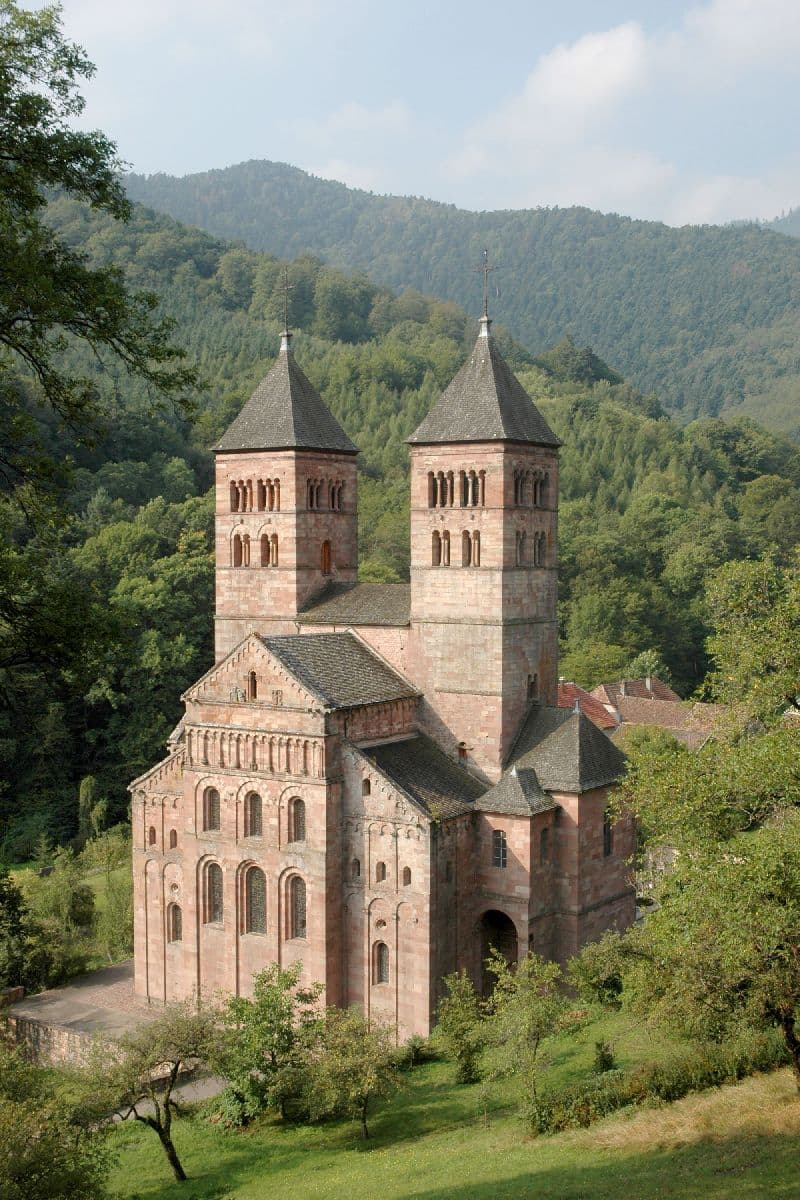
Murbach Abbey
Murbach Abbey was a significant Benedictine monastery founded in 727 by Count Eberhard of Alsace and established by Saint Pirmin. It became an important political and intellectual center, with a notable library that preserved classical texts. The abbey's territory was extensive, and it held imperial immediacy for a period. The monastery was dissolved and its buildings largely destroyed during the French Revolution.

Vauclair Abbey
Vauclair Abbey, also known as Vauclerc Abbey, was a Cistercian monastery founded in 1134 by Saint Bernard of Clairvaux. Situated in the Aisne department of France, it served as the 15th daughter house of Clairvaux Abbey. Despite periods of damage during various wars, it endured until the French Revolution and was later almost entirely destroyed by artillery fire in 1917, leaving only ruins which are now a protected historical monument.