
Saint-Victor
The Abbey of Saint Victor in Paris was a significant center of piety and learning, founded around 1108 by William of Champeaux. Following the Augustinian Rule, it became a prominent intellectual hub, attracting renowned scholars and contributing to the foundation of the University of Paris. Despite its intellectual prestige and rich endowment, the abbey later faced difficulties and was dissolved during the French Revolution, with its site now occupied by universities and a botanical garden.
Key Facts
- ›Founded in 1108 by William of Champeaux, Archdeacon of Paris.
- ›Followed the Augustinian Rule and was a center for Canons Regular.
- ›Became a cradle of the University of Paris alongside Ste Geneviève and Notre-Dame de Paris.
- ›Attracted famous scholars like Hugh of St. Victor, Peter Abelard, and Thomas Becket.
- ›Had a rich, publicly accessible library with chained manuscripts.
- ›Dissolved and destroyed during the French Revolution.
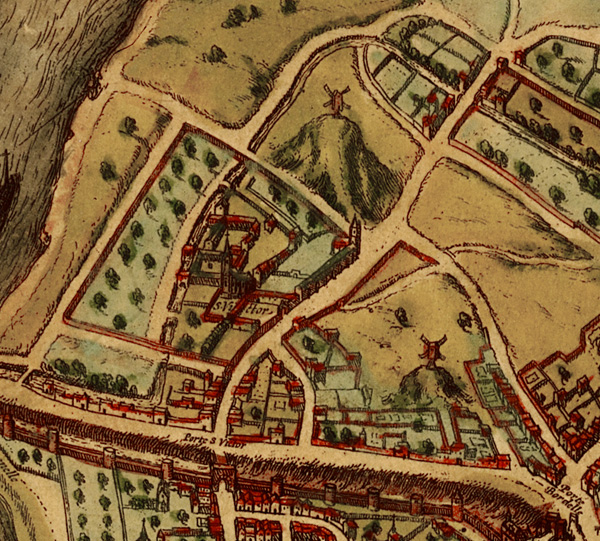
- Publicly Accessible Library With Chained Manuscripts
- Scriptorium With Unique Text Formatting
- Center For Theology and Liberal Arts Education
Royal Abbey and School of Saint Victor
William of Champeaux, Peter Abelard, Gilduin, Hugh of St. Victor, Richard of St. Victor, Peter Lombard, Thomas Becket, Bernard of Clairvaux, William De Braose
- Founded As A Hermitage In 1108
- Transformed Into An Abbey and Endowed In 1113
- Acquired the College of Sainte-GenevièVe In 1148
- Identified With the Jansenist Movement In the 17th and 18th Centuries
- Dissolved and Destroyed During the French Revolution
About Saint-Victor
Abbey of Saint Victor, Paris
The Abbey of Saint Victor, also known as the Royal Abbey and School of Saint Victor, was a prominent monastery located near Paris, France. Its foundation is traced to 1108 when William of Champeaux, the Archdeacon of Paris, retired to a hermitage with his disciples, adopting the life of Canons Regular under the Augustinian Rule. The community flourished, attracting numerous students and scholars, and became a significant intellectual center.
Intellectual and Religious Hub
Under the abbacy of Gilduin, the abbey was richly endowed and its influence spread, reforming many other houses of canons regular. The school of Saint Victor, alongside those of Ste Geneviève and Notre-Dame de Paris, played a crucial role in the development of the University of Paris. Renowned intellectuals such as Hugh of St. Victor, Peter Abelard, and Thomas Becket were associated with the abbey, contributing to its reputation for piety and learning. The abbey also boasted a substantial library, open to the public, with manuscripts chained in its consulting room.
Decline and Legacy
Despite its early prestige and intellectual contributions, the Abbey of Saint Victor later faced challenges, including an association with the Jansenist movement in the 17th and 18th centuries. The abbey was ultimately dissolved and destroyed during the French Revolution. Today, the site is largely occupied by Paris VI and VII Universities and the Muséum and Jardin des Plantes, though the name Saint-Victor endures in a nearby street, a reminder of its historical significance.
Source: Wikipedia ↗
Frequently Asked Questions
When was the Abbey of Saint Victor founded?
The origins of the Abbey of Saint Victor are connected to William of Champeaux's decision to retire to a hermitage near Paris in 1108. This small retreat was transformed into an abbey and richly endowed in 1113.
What religious tradition did the Abbey of Saint Victor follow?
The community at Saint Victor followed the Augustinian Rule and adhered to the observances of the Canons Regular. The abbey was a prominent part of the congregation of Victorines.
What was the significance of the Abbey of Saint Victor's school?
The school of Saint Victor, along with those of Ste Geneviève and Notre-Dame de Paris, is considered the cradle of the University of Paris. It was a center for theology and liberal arts, attracting famous students and scholars.
What happened to the Abbey of Saint Victor?
The abbey later fell on hard times and was identified with the Jansenist movement in the 17th and 18th centuries. It was eventually dissolved and destroyed during the French Revolution.
What remains of the Abbey of Saint Victor today?
The site of the former abbey is now largely occupied by Paris VI and VII Universities and the Muséum and Jardin des Plantes. The name of the abbey survives in a neighboring street.
What notable figures were associated with the Abbey of Saint Victor?
Key figures include founder William of Champeaux, scholars Hugh of St. Victor and Richard of St. Victor, and students like Peter Abelard and Thomas Becket. Hugh of St. Victor is recognized as the true founder of the school.
Related Monasteries

Abbaye Blanche
The Abbaye Blanche was a Benedictine nunnery founded in 1112 in Mortain, France, by Saint Vitalis. It was established for women with his sister, Adelina, as its first abbess. The community followed a strict interpretation of the Rule of Saint Benedict and later joined the Cistercian order in 1147. Though much has been lost to time, remnants of its Romanesque and Early Gothic architecture endure.
Barbeau Abbey
Barbeau Abbey was a Cistercian monastery founded in 1147 by King Louis VII of France. Located in Fontaine-le-Port, Seine-et-Marne, it was a site of royal burial and experienced periods of prosperity and destruction throughout its history, including the Hundred Years' War and the French Revolution. Today, few original structures remain, with a riding school occupying the former site.

Bellevaux Abbey
Bellevaux Abbey was a Cistercian monastery established in 1120 in Franche-Comté, France, by Pons de Morimond. It was a significant religious house, connected to local nobility and notable figures like Burchard of Bellevaux and Peter of Tarentaise. Though suppressed in 1790 and largely demolished shortly after, its history includes periods of destruction and rebuilding, with the final structures erected by Abbot Louis Albert de Lezay-Marnésia. The site later housed a Trappist community before being sold to private owners.