
Mahagauri
Mahagauri is a form of the Hindu goddess Mahadevi, revered as the deity of beauty and purity. She is the eighth of the Navadurga and is specifically worshipped on the eighth day of the Navaratri festival. Mahagauri is known for her fair complexion, a transformation achieved through penance.
Key Facts
- ›Mahagauri is the eighth form of the Navadurga, a group of nine goddesses.
- ›She is worshipped on the eighth day of Navaratri.
- ›Her name, Mahagauri, translates to 'the great fair-complexioned one'.
- ›She is depicted with four arms, holding a trident, a damaru, and making the abhayamudra and varadamudra gestures.
- ›Mahagauri is associated with purity and beauty.
- ›She is a form of the goddess Mahadevi.

The great fair-complexioned one
- Riding On A White Bull
- Four Arms
- Upper Right Hand Holds A Trident
- Upper Left Hand Holds A Damaru
- Lower Right Hand In Abhayamudra
- Lower Left Hand Holds A Japamala Or Performs Varadamudra
Shiva Purana, Devi Mahatmya
Form of Mahadevi, Associated With Parvati, Mother of Kartikeya and Ganesha
Navaratri
Trident
About Mahagauri
Mahagauri: The Goddess of Purity and Beauty
Mahagauri is a significant form of the Hindu goddess Mahadevi, revered as the embodiment of beauty and purity. She holds the esteemed position as the eighth of the Navadurga, a collective of nine divine feminine forms, and her worship is particularly prominent on the eighth day of the Navaratri festival, a major nine-night celebration dedicated to the goddess.
Iconography and Symbolism
Mahagauri is visually represented with a distinctive fair complexion, a characteristic that gives her name its meaning: 'the great fair-complexioned one'. Her iconography typically portrays her seated or riding a white bull, a symbol of steadfastness and purity. She is depicted with four arms, holding key divine implements: a trident (trishula), signifying her power, and a damaru (a small hand drum), representing the primal sound of creation. Her other hands are often shown in the abhayamudra, a gesture of fearlessness and protection, and the varadamudra, which bestows blessings and boons upon her devotees.
Legend of Transformation
The mythology surrounding Mahagauri, as detailed in scriptures like the Shiva Purana and the Devi Mahatmya, explains the origin of her fair complexion. According to these texts, the goddess Parvati, in her original form, possessed a dark complexion. To appease Shiva, who playfully called her 'Kali' (black), Parvati undertook severe penance to Brahma to attain a fairer hue. After successfully defeating the formidable asuras Shumbha and Nishumbha, she bathed in the Ganga River. During this ritual bath, her dark skin washed away entirely, and she emerged as Mahagauri, radiant and fair. This transformation underscores her divine power and her role as a protector against malevolent forces, ultimately allowing her to reunite with Shiva and her sons, Kartikeya and Ganesha.
Source: Wikipedia ↗
Frequently Asked Questions
Who is Mahagauri?
Mahagauri is a form of the Hindu goddess Mahadevi, venerated as the goddess of beauty and purity. She is the eighth of the Navadurga and is worshipped on the eighth day of Navaratri.
What does Mahagauri's name mean?
Mahagauri's name in Sanskrit translates to 'the great fair-complexioned one'. This epithet refers to her appearance and is a significant aspect of her mythology.
What is Mahagauri known for?
Mahagauri is known as the goddess of beauty and purity. Her legend details her transformation from a dark complexion to a fair one through penance.
How is Mahagauri depicted in iconography?
Mahagauri is typically depicted riding a white bull. She has four arms, holding a trident and a damaru, with her other hands in the abhayamudra and varadamudra gestures.
What is the story behind Mahagauri's fair complexion?
According to legend, Parvati performed severe penance to Brahma to gain a fair complexion after Shiva repeatedly called her Kali. Upon completing her penance and slaying the asuras Shumbha and Nishumbha, her dark skin washed off in the Ganga, revealing her fair form as Mahagauri.
Related Hindu deities
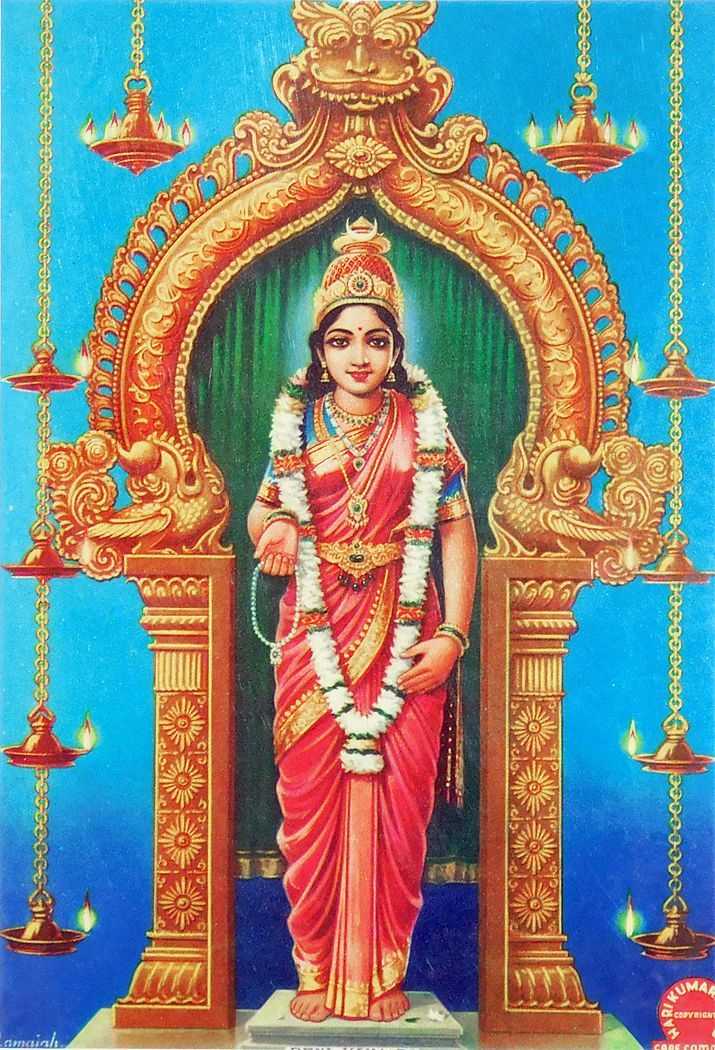
Devi Kanya Kumari
Devi Kanya Kumari is a prominent Hindu goddess, a manifestation of Mahadevi in the form of an adolescent girl. She is revered as a form of Parvati or Lakshmi, and is particularly known for her role in slaying the demon Banasura. Her worship is deeply tied to the town of Kanyakumari at the southernmost tip of India.

Chandraghanta
Chandraghanta is a powerful form of the Hindu goddess Mahadevi, revered as the destroyer of demons and the protector of her devotees. She is the third of the Navadurga and is prominently worshipped on the third day of Navaratri. Her name, meaning 'adorned with the moon as her bell,' refers to the crescent moon on her forehead, and she is depicted with ten arms holding various weapons and a bell.
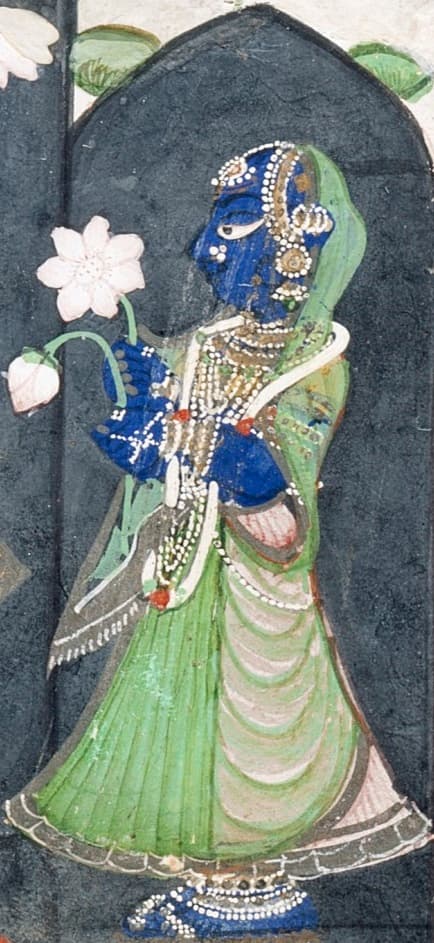
Revati
Revati is a goddess in Hindu scriptures, known as the consort of Balarama and the daughter of King Kakudmi. Her myth involves a significant temporal displacement, where she and her father traveled to Brahmaloka, returning to find 27 Chatur-yugas had passed on Earth. She is also associated with mother goddesses, fortune, and prosperity.