
Brahmani
Brahmani is a prominent Hindu mother goddess, one of the Sapta Matrikas, and is considered the Shakti of the creator god Brahma. She embodies the Rajas Guna and is seen as the source of Brahma's creative power, often depicted as a form of Saraswati.
Key Facts
- ›Brahmani is one of the seven Hindu mother goddesses known as the Sapta Matrikas.
- ›She is considered the Shakti (divine energy) of the creator god Brahma.
- ›Brahmani possesses the Rajas Guna, making her the source of Brahma's creative power.
- ›She is often depicted as a form of Saraswati, the goddess of knowledge and arts.
- ›Her iconography typically includes four heads and four or six arms.
- ›She is the Kuldevi (clan deity) for several communities, including some Rajputs and Nagar Brahmins.
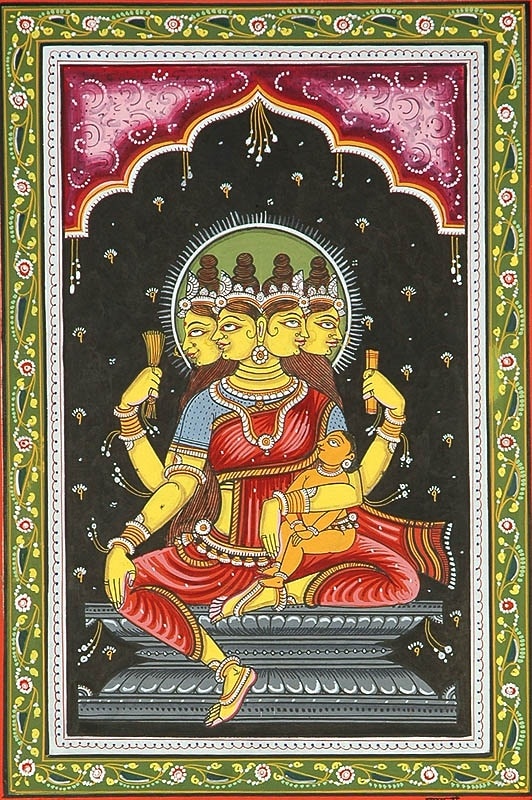
Brahmi
- Yellow In Color
- Four Heads
- Four Or Six Arms
- Holds Japamala, Kamandalu, Lotus Stalk, Bells, Vedas, Trident
- Wears A Basket-Shaped Crown
- Seated On A Hamsa
- Sometimes Shown Seated On A Lotus With A Swan On Her Banner
Shakti of Brahma
- Brahmani Mataji Temple At Baran, Rajasthan
- Brahmani Mataji Temple At Pallo Near Hanumangarh, Rajasthan
- Brahmani Mata Temple At Village Brahmani, Hanumanganj, Near Ballia In Uttar Pradesh
- Brahmani Mata Temple At Bharmour Near Chamba, Himachal Pradesh
- Brahmani Mata Temple At Dingucha Near Kalol, Gujarat
- Brahmani Mata Temple At Jamiyatpura, Gandhinagar
- Brahmani Mata Temple At Sorsan, Rajasthan
- Brahmani Mata Temple At Anjar
- Brahmani Mata Temple At Visnagar
- Brahmani Mata Temple At Narsoli Village of Bhiloda District, Gujarat
- Brahmani Devi Temple At Mollem, Goa
Trident
Swan, Goose
About Brahmani
Brahmani (Sanskrit: ब्रह्माणी), also known as Brahmi, is a significant Hindu mother goddess and one of the seven divine mothers collectively known as the Sapta Matrikas. She is revered as the personification of the divine energy, or Shakti, of the creator god Brahma, and is considered a manifestation of the supreme cosmic feminine power, Adi Shakti. Brahmani embodies the Rajas Guna, one of the three fundamental qualities of nature, which is associated with passion, activity, and creation. This makes her the intrinsic source of Brahma's power and his ability to manifest the universe.
Legends and Origins
According to Hindu legends, during Brahma's deep meditation for the creation of the universe, his being was divided into male and female components. From these divisions emerged various gods and goddesses, including female deities like Gayatri, Savitri, and Saraswati. Brahmani is understood to have arisen from this divine proliferation, symbolizing the feminine aspect necessary for cosmic generation.
Iconography and Symbolism
Brahmani is typically depicted with a radiant yellow complexion, signifying purity and spiritual illumination. Her iconography often features four heads, representing her connection to Brahma and her omnipresence, and she is usually shown with four or six arms, each holding symbolic implements. These commonly include a japamala (rosary for meditation), a kamandalu (water pot symbolizing asceticism and purity), a lotus stalk (representing spiritual growth and detachment), bells (signifying divine sound), and the Vedas (sacred scriptures). She is also sometimes shown with a trident, a weapon associated with divine power. Her mount, or vahana, is the hamsa, a swan or goose, which symbolizes discernment, purity, and the ability to transcend the material world.
Worship and Significance
Brahmani holds a special place in the traditions of various communities in India, serving as the Kuldevi, or clan deity, for several groups. These include the Prajapati samaj (Gurjar), Kshatriya Kadiya, Golvadiyas (a sub-caste of Leuva Patels), Nagar Brahmins, and the Darji samaj, as well as some Rajputs and the KGK Community, particularly in Rajasthan and Kutch. Numerous temples are dedicated to Brahmani across India, with notable sites in Rajasthan, Gujarat, Uttar Pradesh, Himachal Pradesh, and Goa, attesting to her enduring veneration.
Source: Wikipedia ↗
Frequently Asked Questions
Who is Brahmani in Hinduism?
Brahmani is a significant Hindu mother goddess and one of the Sapta Matrikas (seven divine mothers). She is revered as the Shakti, or divine energy, of the creator god Brahma, and is considered an aspect of Adi Shakti.
What is Brahmani known for?
Brahmani is known as the divine feminine power that energizes Brahma for the creation of the universe. She embodies the Rajas Guna, a fundamental quality of nature associated with passion, activity, and creation, making her the source of Brahma's creative force.
What is Brahmani's iconography?
Brahmani is typically depicted as yellow in color, with four heads and four or six arms. She often holds symbolic items such as a japamala, a kamandalu (water pot), a lotus stalk, bells, the Vedas, and a trident. Her mount is a hamsa (swan or goose).
Which communities consider Brahmani their Kuldevi?
Brahmani is venerated as the Kuldevi by various communities, including the Prajapati samaj (Gurjar), Kshatriya Kadiya, Golvadiyas (a sub-caste of Leuva Patels), Nagar Brahmins, and the Darji samaj. She is also a clan deity for some Rajputs and the KGK Community in Rajasthan and Kutch.
Where are important temples dedicated to Brahmani located?
Significant temples dedicated to Brahmani are found across India, including in Baran, Pallo, Sorsan, and Anjar in Rajasthan; in Uttar Pradesh near Ballia; in Bharmour, Himachal Pradesh; in Dingucha, Jamiyatpura, Visnagar, and Narsoli in Gujarat; and in Mollem, Goa.
Related Hindu deities
Devi Kanya Kumari
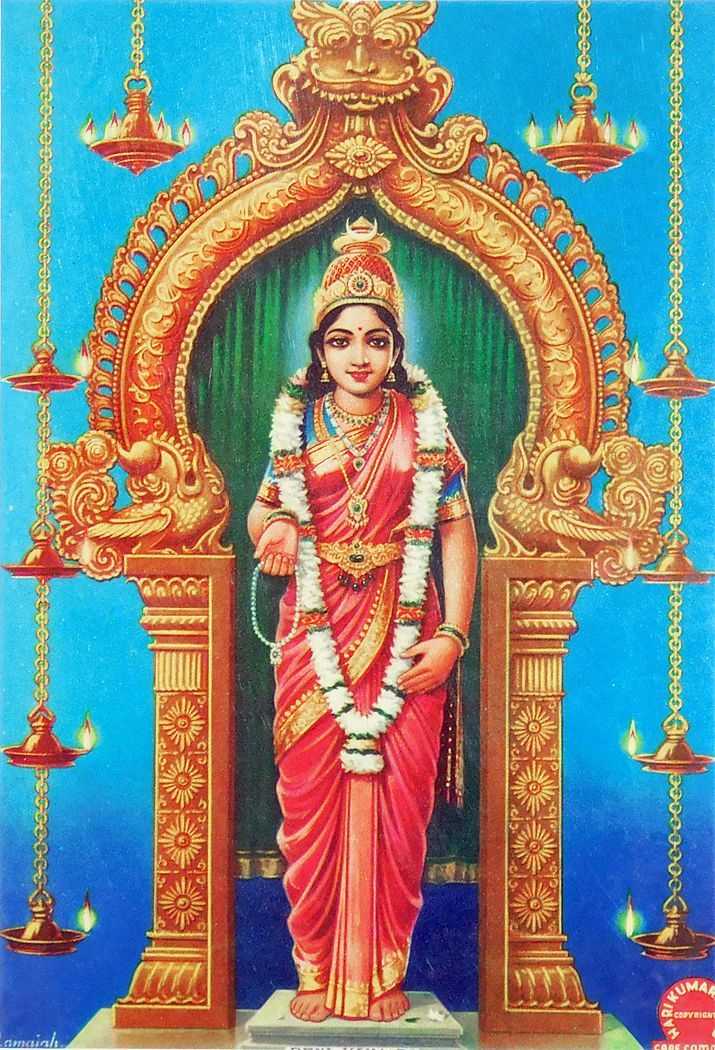
Devi Kanya Kumari is a prominent Hindu goddess, a manifestation of Mahadevi in the form of an adolescent girl. She is revered as a form of Parvati or Lakshmi, and is particularly known for her role in slaying the demon Banasura. Her worship is deeply tied to the town of Kanyakumari at the southernmost tip of India.

Chandraghanta
Chandraghanta is a powerful form of the Hindu goddess Mahadevi, revered as the destroyer of demons and the protector of her devotees. She is the third of the Navadurga and is prominently worshipped on the third day of Navaratri. Her name, meaning 'adorned with the moon as her bell,' refers to the crescent moon on her forehead, and she is depicted with ten arms holding various weapons and a bell.
Gayatri
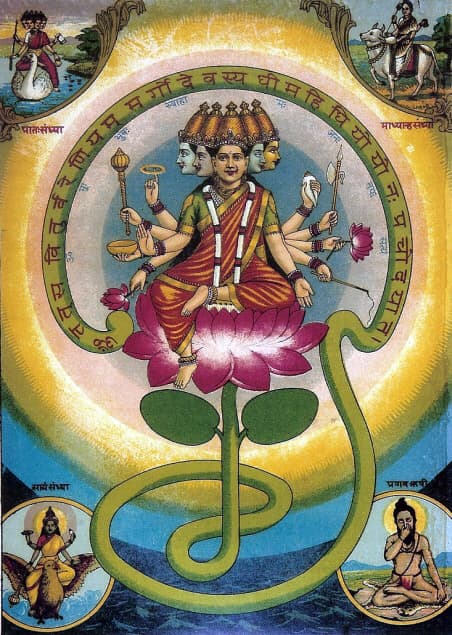
Gayatri is the personified form of the Gayatri Mantra, a significant hymn from Vedic texts, and is also known as Savitri and Vedamata ('mother of the Vedas'). She is considered a manifestation of Saraswati and is often associated with the solar deity Savitṛi, with whom she is sometimes depicted as the consort of the creator god Brahma in Puranic traditions. Gayatri is revered as the Supreme pure consciousness and a powerful goddess.