
Shinran
Shinran was a pivotal Japanese Buddhist figure and the founder of the Jōdo Shinshū school during the Kamakura Period. A disciple of Hōnen, Shinran developed a Pure Land vision emphasizing absolute faith in Amida Buddha's "other-power" rather than personal merit. He lived as a married teacher, distinguishing himself from traditional monasticism and profoundly influencing East Asian religious thought.
Key Facts
- ›Considered the founder of the Jōdo Shinshū school of Japanese Buddhism.
- ›A key disciple of Hōnen, the founder of the Japanese Pure Land movement.
- ›Authored the major work Kyōgyōshinshō, a systematic exposition of Pure Land doctrine.
- ›Taught that liberation comes from faith and Amida's compassion, not personal effort.
- ›Lived much of his life as a married Buddhist teacher, describing himself as 'neither monk nor layman'.
- ›Was exiled to Echigo for five years after a ban on Hōnen's nembutsu community.

Important Relationships
- Eshinni (wife)
- Hōnen (teacher)
- Jien (Tendai prelate)
- Prince Shōtoku (visionary figure)
- Avalokiteśvara (visionary figure)
- Zenran (son)
- Kakushinni (daughter)
KyōGyōShinshō, Wasan, Yuishinshō-Mon’I, Ichinen-Tannen-Mon’I, Compass For the Pure Land In the West
Mount Hiei, Kyoto, Echigo Province, Hitachi Province, Kanto Region
HōNen, Shandao, Genshin, Vasubandhu, Tanluan
Literary Chinese, Japanese
Monastic Vows, Bodhisattva Vows
About Shinran
Shinran (1173–1263) was a pivotal figure in Japanese Buddhism, recognized as the founder of the Jōdo Shinshū school. A disciple of Hōnen, the pioneer of the Japanese Pure Land movement, Shinran articulated a distinctive vision of Pure Land Buddhism that centered on faith and absolute reliance on Amida Buddha's "other-power." This approach marked a significant departure from traditional Buddhist practices that emphasized personal merit and rigorous asceticism.
Life and Historical Context
Born Matsuwakamaro into the Hino family, a lesser branch of the Fujiwara clan, Shinran's early life was marked by the loss of his parents. He was educated by his uncles and ordained as a Tendai monk on Mount Hiei at the age of nine, receiving the Buddhist name Han'en. For twenty years, he lived on Mount Hiei, engaging in Buddhist liturgy and practices centered on Amida Buddha. Dissatisfied with his spiritual progress, he sought out Hōnen in 1201, becoming his disciple and adopting the name Shakkū. Under Hōnen's guidance, Shinran embraced the practice of reciting the nembutsu as the sole path to salvation.
In 1207, following an incident involving Hōnen's followers, Shinran was defrocked and exiled to Echigo Province for five years. This period of exile, where he lived with his wife Eshinni and their children, proved to be a crucial time for his spiritual development. He came to understand himself as "neither monk nor layman," adopting the name Gutoku Shinran. After his pardon, Shinran chose not to return to Kyoto but instead moved to the Kantō region, where he spent twenty years preaching Pure Land teachings to people from all social classes. He did not establish formal temples but fostered informal groups known as "montos."
In his later years, Shinran returned to Kyoto, where he continued to write and study. He produced his magnum opus, the Kyōgyōshinshō, a comprehensive defense of Pure Land doctrine, as well as numerous didactic poems and commentaries in vernacular Japanese. He died in Kyoto in 1263, famously rejecting elaborate funerary rites and requesting his body be cast into the river, emphasizing his belief in salvation through faith alone. Despite not appointing a successor or founding a formal school, Shinran's teachings were preserved and eventually led to the establishment of the Hongan-ji temple by his descendants.
Teaching and Legacy
Shinran's core teaching revolved around the "entrusting mind" (shinjin), awakened through Amida's compassionate power, which he believed was the sole means to attain birth in the Pure Land. He emphasized that all beings, regardless of their past actions or spiritual capabilities, could be saved through sincere faith in Amida's Original Vow. His interpretation profoundly reshaped Japanese Buddhism, moving away from the complex rituals and practices of older schools towards a more accessible path centered on devotion and faith. The Jōdo Shinshū school, which he founded, became one of the most influential branches of Buddhism in Japan and continues to have a significant impact on East Asian religious thought.
Source: Wikipedia ↗
Frequently Asked Questions
What is Jōdo Shinshū?
Jōdo Shinshū, meaning 'True Pure Land Teaching,' is a school of Japanese Buddhism founded by Shinran. It emphasizes faith and reliance on Amida Buddha's compassionate vow for salvation.
Who was Hōnen and what was Shinran's relationship to him?
Hōnen was the founder of the Japanese Pure Land movement. Shinran became Hōnen's disciple in 1201 and was deeply influenced by his teachings, considering himself a lifelong defender of Hōnen's doctrine.
What is the Kyōgyōshinshō?
The Kyōgyōshinshō is Shinran's magnum opus, meaning 'Teaching, Practice, Faith, and Realization.' It is a systematic exposition and defense of Pure Land doctrine, drawing from Buddhist texts and Shinran's own commentaries.
What did Shinran mean by 'other-power'?
Shinran's concept of 'other-power' refers to the power of Amida Buddha's compassionate vow, which he believed was sufficient for liberation. This contrasted with practices relying on one's own merit or effort.
Why did Shinran call himself 'neither monk nor layman'?
Shinran adopted the self-deprecating name 'Gutoku' (Bald Fool) to signify his status as 'neither monk nor layman.' This reflected his departure from strict monastic rules, such as marriage, while still dedicating his life to Buddhist teachings.
What was Shinran's experience with exile?
In 1207, Shinran was defrocked and exiled to Echigo for five years due to a ban on Hōnen's nembutsu community. He viewed this exile as an opportunity to spread Pure Land teachings to remote areas.
Related Buddhists
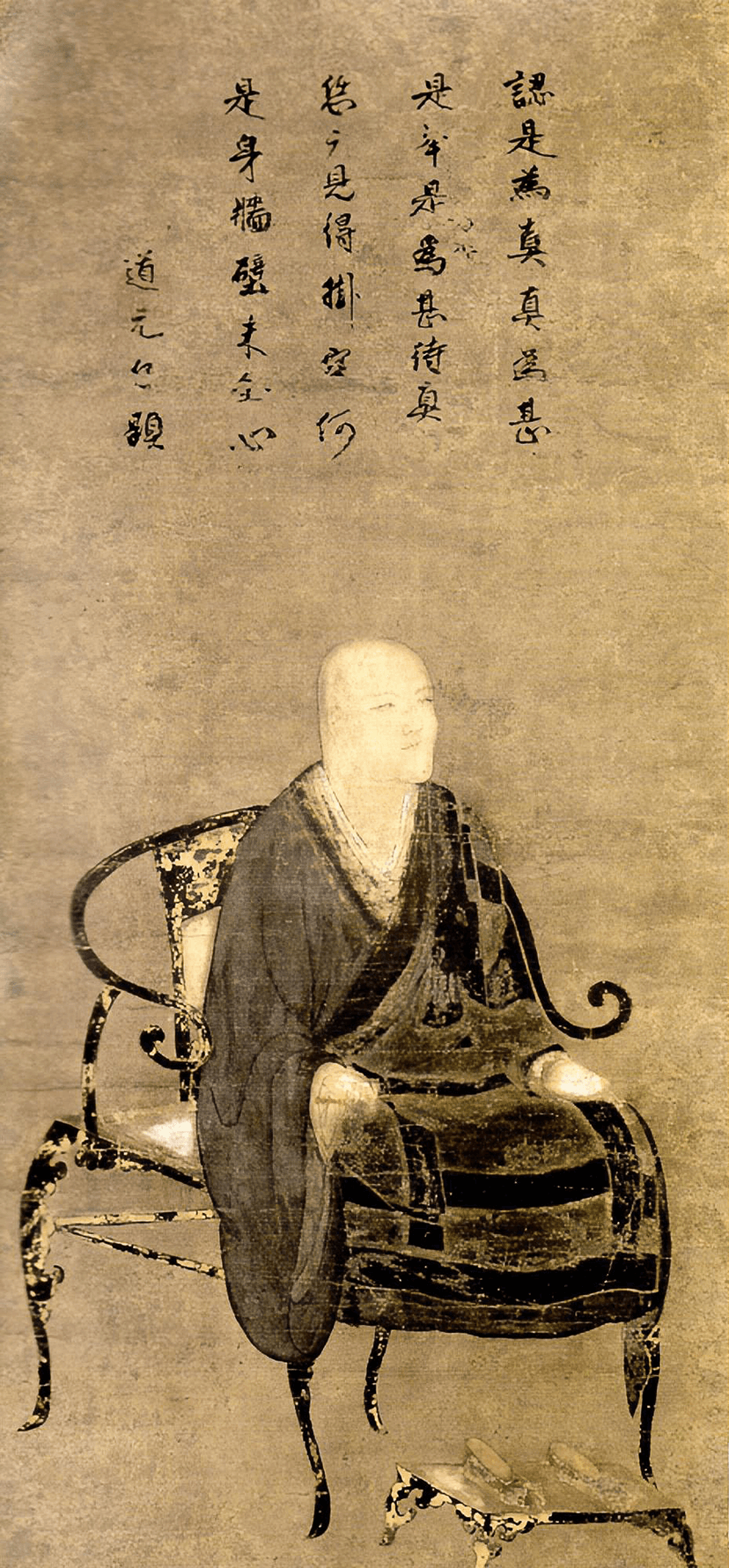
Dōgen
Dōgen was a pivotal Japanese Zen Buddhist monk, philosopher, and poet who founded the Sōtō school of Zen in Japan. Dissatisfied with existing Buddhist teachings, he traveled to China and studied under Tiāntóng Rújìng, an eminent master of the Cáodòng lineage. Upon his return, Dōgen introduced and emphasized the practice of zazen (sitting meditation) through his extensive writings, most notably the Shōbōgenzō, which remain central to contemporary Sōtō Zen.
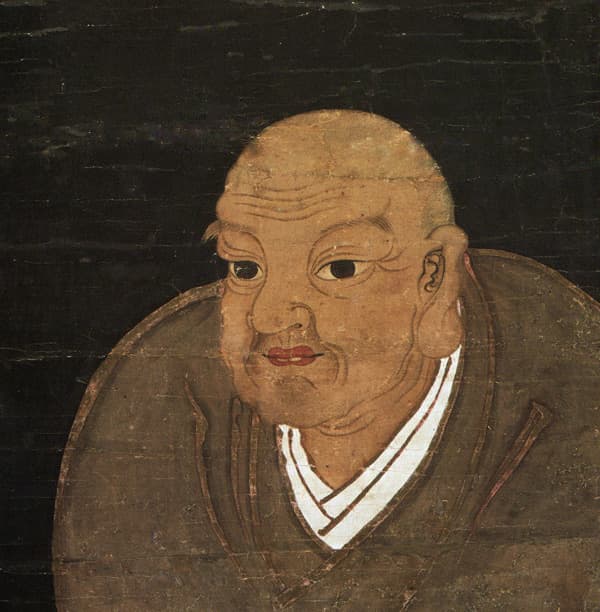
Nichiren
Nichiren was a Japanese Buddhist monk and philosopher of the Kamakura period, known as the founder of Nichiren Buddhism, a branch of Mahayana Buddhism centered on the Lotus Sutra. He proclaimed the Lotus Sutra as the ultimate truth and advocated reciting its title, Nam Myoho Renge Kyo, as the sole path to Buddhahood in this lifetime. His teachings, emphasizing the Lotus Sutra's supremacy and the necessity of its propagation, led to significant persecution but ultimately formed one of Japan's largest Buddhist traditions.
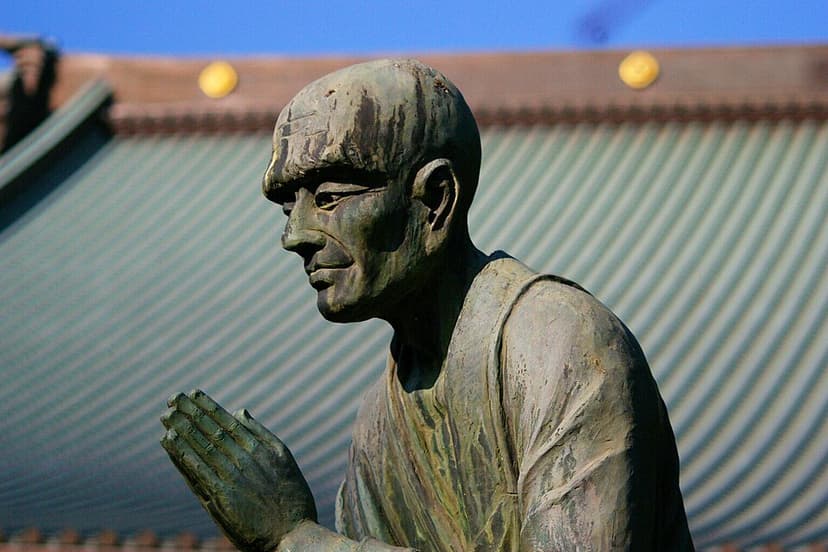
Ippen
Ippen Shōnin was a highly influential Japanese Buddhist itinerant preacher (hijiri) of the 13th century, known for founding the Ji-shū ("Time sect") movement. His teachings emphasized salvation through the single-minded invocation of Amida Buddha's Name, believing that each recitation instantly united the practitioner with the Buddha's timeless enlightenment. Ippen's radical vision and ecstatic practices, including the "dancing nembutsu," attracted a broad following across all social classes and significantly shaped medieval Japanese Pure Land Buddhism.