
Dōgen
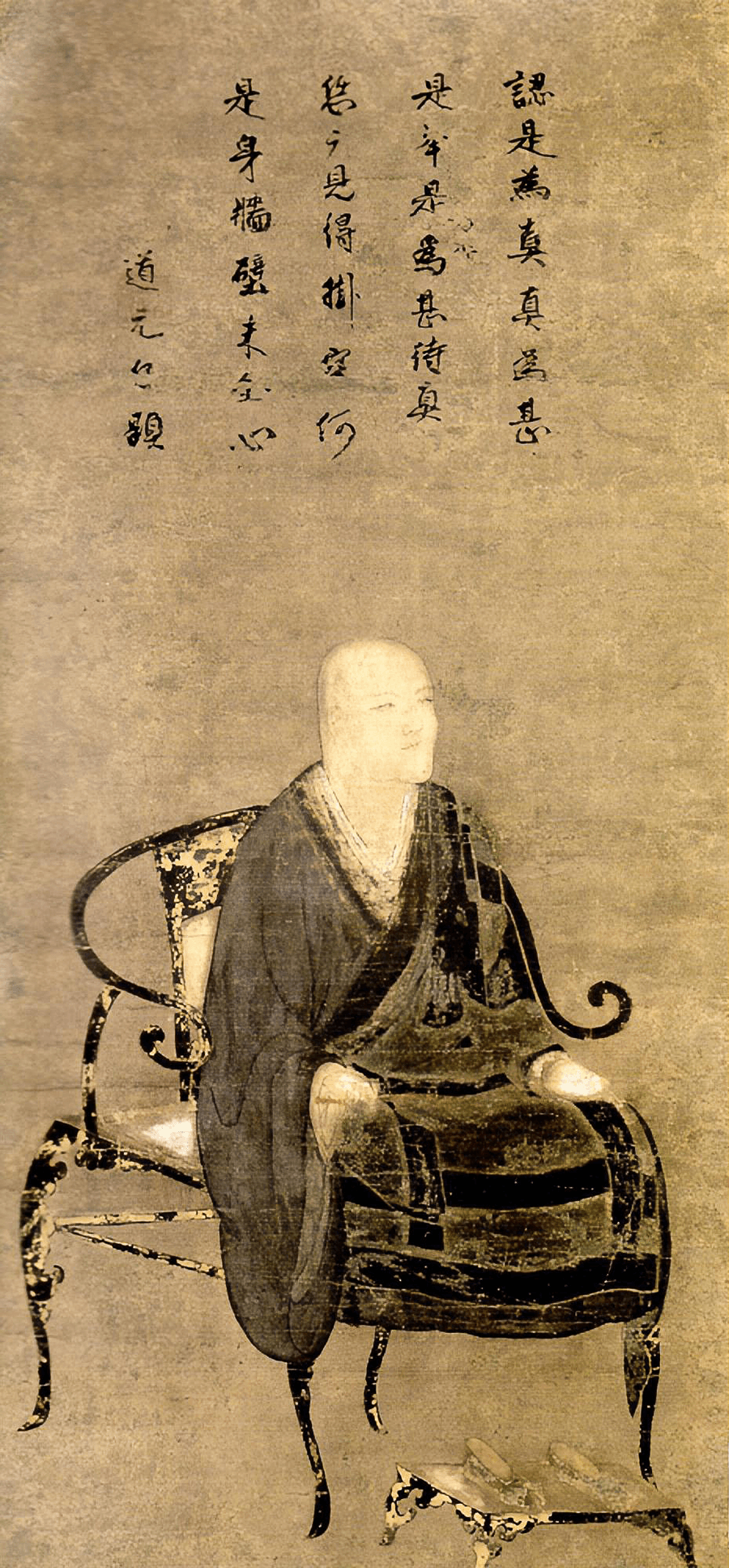
Dōgen was a pivotal Japanese Zen Buddhist monk, philosopher, and poet who founded the Sōtō school of Zen in Japan. Dissatisfied with existing Buddhist teachings, he traveled to China and studied under Tiāntóng Rújìng, an eminent master of the Cáodòng lineage. Upon his return, Dōgen introduced and emphasized the practice of zazen (sitting meditation) through his extensive writings, most notably the Shōbōgenzō, which remain central to contemporary Sōtō Zen.
Key Facts
- ›Founded the Sōtō school of Zen Buddhism in Japan.
- ›Authored the Shōbōgenzō, considered his magnum opus.
- ›Emphasized zazen (sitting meditation) as the core practice of Buddhism.
- ›Studied under Tiāntóng Rújìng in China, a master of the Cáodòng lineage.
- ›Established Eihei-ji, one of the two head temples of Sōtō Zen in Japan.
- ›His philosophy of 'oneness of practice-verification' (shushō-ittō) is a core tenet of his teachings.
Important Relationships
- Myōzen
- Rujing
- Hatano Yoshishige
- Hōjō Tokiyori
- Koun Ejō
ShōBōGenzō, Fukanzazengi, BendōWa, Eihei KōRoku, Eihei Shingi
Mount Hiei, Kennin-Ji Temple, Jing-De-Si Monastery, Mount TiāNtóNg, Eihei-Ji, Uji, Fukakusa, Kamakura
TiāNtóNg RúJìNg, CáOdòNg Lineage of Chinese Chan, Tendai School
Japanese, Classical Chinese
Monastic Vows
About Dōgen
Dōgen Zenji
Dōgen Zenji (1200–1253), also known as Dōgen Kigen, was a highly influential Japanese Zen Buddhist monk, writer, poet, and philosopher. He is primarily recognized as the founder of the Sōtō school of Zen in Japan, a lineage that continues to be one of the most prominent forms of Buddhism in the country.
Life and Historical Context
Born into a noble family, Dōgen initially trained within the Tendai school on Mount Hiei. However, he became disillusioned with its doctrines and the school's internal politics, particularly concerning the concept of original enlightenment. This led him on a quest for a more authentic Buddhist practice, culminating in his journey to China in 1223. There, he studied under the esteemed Chan master Tiāntóng Rújìng of the Cáodòng lineage. This period in China was transformative, leading Dōgen to a profound realization upon hearing Rújìng's instruction to 'cast off body and mind.'
Upon his return to Japan around 1227, Dōgen began to disseminate his understanding of Zen. He initially stayed at Kennin-ji temple in Kyoto and authored the "Fukanzazengi" (Universally Recommended Instructions for Zazen). Facing tensions with the established Tendai school, he eventually relocated and established practice centers, including Kōshōhōrin-ji. In 1243, he accepted an offer to move to Echizen province, where his followers built a monastic center that he would later name Eihei-ji. This temple, along with Sōji-ji, remains one of the two head temples of the Sōtō school today. Dōgen spent the remainder of his life teaching and writing at Eihei-ji, though he made a notable journey to Kamakura in 1247 to teach the shōgun's regent. He died in Kyoto in 1253.
Major Contributions and Teachings
Dōgen's most significant contribution is the establishment and articulation of the Sōtō school, which emphasizes zazen (sitting meditation) as the core practice. He viewed zazen not merely as a means to an end but as the direct expression of enlightenment itself, a concept encapsulated in his teaching of the "oneness of practice-verification" (shushō-ittō).
His extensive writings are seminal to Zen Buddhism. The "Shōbōgenzō" (Treasury of the True Dharma Eye) is considered his magnum opus, a collection of essays that delve into the depths of Zen philosophy, including concepts such as "Time-Being" (Uji) and Buddha-nature (Busshō). He also authored the "Eihei Kōroku" (Extensive Record), a compilation of his talks, and the "Eihei Shingi" (Pure Standards for the Zen Community), the first Japanese Zen monastic code. Dōgen's teachings emphasize a non-dualistic understanding of reality, where all phenomena, including impermanence, are manifestations of Buddha-nature, and where the practice of 'just sitting' (shikantaza) allows for the direct realization of this truth.
Legacy
Dōgen's philosophical insights and his systematization of Zen practice have had a lasting impact. The Sōtō school, founded by him, continues to flourish, and his writings are studied not only within his tradition but also by scholars and practitioners of Buddhism worldwide for their profound wisdom and unique perspective on the nature of existence and enlightenment.
Source: Wikipedia ↗
Frequently Asked Questions
What is Dōgen best known for?
Dōgen is best known for founding the Sōtō school of Zen Buddhism in Japan and for his extensive writings, particularly the Shōbōgenzō, which expound on his philosophical insights and teachings on zazen (sitting meditation).
Why did Dōgen travel to China?
Dōgen traveled to China because he was dissatisfied with the teachings of the Tendai School in Japan and sought what he believed to be a more authentic form of Buddhism. He aimed to find answers to fundamental questions about enlightenment and practice.
What is zazen according to Dōgen?
For Dōgen, zazen, or sitting meditation, is the central practice of Buddhism and is considered identical to studying Zen. He emphasized 'shikantaza,' or 'just sitting,' a state of alert attention free from conceptual thought, and the concept of 'hishiryō' (non-thinking).
What is the 'oneness of practice-verification'?
The 'oneness of practice-verification' (shushō-ittō) is a core concept in Dōgen's teachings, asserting that practice and realization are not separate but are fundamentally the same. Beginner's practice is seen as the substance of original verification, and verification is endless while practice has no beginning.
How did Dōgen interpret Buddha-nature?
Dōgen interpreted Buddha-nature (busshō) as all of reality, including inanimate objects, and rejected views that saw it as a permanent, substantial inner self. He described it as 'vast emptiness' and inherent in impermanence, stating that 'whole-being is the Buddha-nature'.
Related Buddhists
Ippen
Ippen Shōnin was a highly influential Japanese Buddhist itinerant preacher (hijiri) of the 13th century, known for founding the Ji-shū ("Time sect") movement. His teachings emphasized salvation through the single-minded invocation of Amida Buddha's Name, believing that each recitation instantly united the practitioner with the Buddha's timeless enlightenment. Ippen's radical vision and ecstatic practices, including the "dancing nembutsu," attracted a broad following across all social classes and significantly shaped medieval Japanese Pure Land Buddhism.
Hulagu Khan
Hulagu Khan was a Mongol ruler who significantly expanded the Mongol Empire into West Asia, founding the Ilkhanate in Persia. He is primarily known for leading the devastating sack of Baghdad, which ended the Islamic Golden Age and the Abbasid Caliphate. His campaigns also weakened Damascus, leading to a shift in Islamic power towards Cairo.
Harada Daiun Sogaku
Harada Daiun Sogaku was a Sōtō Zen monk renowned for integrating Rinzai koan study with Sōtō practice, departing from traditional sectarian boundaries. His teaching methods, particularly through his disciple Hakuun Yasutani, significantly influenced the spread of Zen in the West via the Harada–Yasutani lineage. Despite his innovative approach, he remained within the Sōtō sect throughout his life.