
Huangbo Xiyun
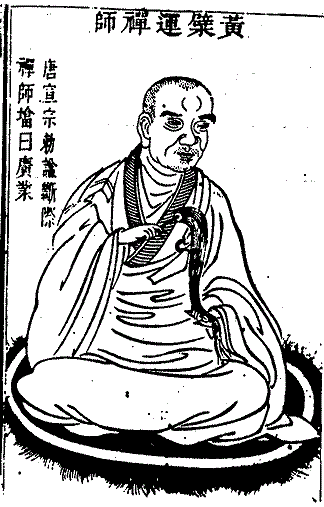
Huangbo Xiyun was an influential Chan Buddhist master during the Tang dynasty, known for his teachings on the "One Mind" and the inherent Buddha-nature within all beings. He was a key figure in the Hongzhou school of Chan, a student of Baizhang Huaihai, and the teacher of Linji Yixuan, who founded the Rinzai school of Zen. His teachings emphasized direct experience and the rejection of dualistic thinking, famously encapsulated in the phrase "mind is the Buddha."
Key Facts
- ›An influential Chan Buddhist master of the Tang dynasty.
- ›A student of Baizhang Huaihai and teacher of Linji Yixuan.
- ›Known for his teachings on "one Mind" and "mind is the Buddha."
- ›Associated with the Hongzhou school of Chan Buddhism.
- ›His teachings are preserved in the "Essentials of Mind Transmission" and the "Record of Wan-ling."
- ›Noted for his direct teaching methods, including shouting and hitting.
Important Relationships
- Baizhang Huaihai (teacher)
- Linji Yixuan (student)
- Pei Xiu (student and compiler of his teachings)
Chuanxin Fayao, Wanling Lu
Mount Huangbo, Fujian Province, Longxing Monastery, Jiangxi Province
Mazu Daoyi, Baizhang Huaihai
Classical Chinese
Monastic Vows
Influential Master
About Huangbo Xiyun
Huangbo Xiyun (died 850) was a pivotal master of Chan Buddhism during the Tang dynasty in China. He was a prominent figure within the Hongzhou school, founded by Mazu Daoyi. His teachings, particularly those centered on the concept of "One Mind," profoundly influenced the development of Zen Buddhism, especially through his most notable student, Linji Yixuan.
Life and Historical Context
Very little is definitively known about Huangbo Xiyun's early life or precise birth year. He was born in Fuzhou, China, and began his monastic life on Mount Huangbo in Fujian province, from which he derived his name. He is recorded as having been exceptionally tall. Huangbo followed the custom of his time by traveling to seek instruction from various Chan masters, including Nanyang Huizhong, and possibly Nanquan Puyuan. His primary teacher, however, was Baizhang Huaihai, another student of Mazu, from whom Huangbo received Dharma transmission.
In 842, the official Pei Xiu, an ardent Chan practitioner, invited Huangbo to reside at Longxing Monastery in Jiangxi province. Pei Xiu received teachings from Huangbo and later established a monastery for him, which Huangbo named after his novice mountain home. Huangbo is known to have died in 850, with some accounts placing his death on Mount Huangbo during the Dazhong era of the Tang dynasty. He named thirteen successors before his death, with Linji Yixuan being the most significant.
Teachings
What is known of Huangbo Xiyun's teachings comes primarily from two texts: the "Chuanxin Fayao" (Essentials of Mind Transmission) and the "Wanling Lu" (Record of Wan-ling). These were compiled by his student Pei Xiu from his notes and later edited and published. Huangbo's core teaching emphasized the "One Mind," stating that "mind is the Buddha" and that all Buddhas and sentient beings are manifestations of this singular, formless mind. He rejected dualism, asserting that concepts of "ordinary" and "enlightened" states are illusory and that true Buddha-nature is inherent within one's own mind.
He connected this concept to the idea of a "single spiritual brilliance," likening the mind's spontaneous functioning to sunlight that illuminates without effort. Huangbo also reflected the Indian concept of tathāgatagarbha, teaching that the Buddha-nature resides within all beings, making external seeking futile. He cautioned strongly against clinging to written texts or doctrines, advocating for direct experience over intellectual study. His teaching style was notable for its directness, incorporating the hitting and shouting methods pioneered by Mazu, which were intended to jolt students out of conceptual attachments and towards immediate realization.
Legacy
Huangbo Xiyun's influence is most profoundly seen in the lineage he established through his student Linji Yixuan, who founded the Rinzai school of Zen in Japan. His emphasis on the inherent Buddha-nature and the direct apprehension of mind continues to be a cornerstone of Chan and Zen Buddhist practice. Despite the scarcity of biographical details, his teachings remain a vital source for understanding the development of East Asian Buddhism.
Source: Wikipedia ↗
Frequently Asked Questions
Who was Huangbo Xiyun?
Huangbo Xiyun was an influential Chan Buddhist master during China's Tang dynasty. He was a significant figure in the Hongzhou school of Chan and is renowned for his teachings on the nature of mind and Buddha-nature.
What were Huangbo Xiyun's main teachings?
Huangbo Xiyun's central teaching revolved around the concept of "One Mind," asserting that "mind is the Buddha" and that all sentient beings are inherently one with enlightenment. He emphasized direct realization and the transcendence of dualistic concepts.
Who were Huangbo Xiyun's key disciples or teachers?
Huangbo Xiyun was a student of Baizhang Huaihai, from whom he received Dharma transmission. His most prominent student was Linji Yixuan, who later founded the Rinzai school of Zen Buddhism.
What are the primary texts associated with Huangbo Xiyun's teachings?
The main texts preserving Huangbo Xiyun's teachings are "Chuanxin Fayao" (Essentials of Mind Transmission) and "Wanling Lu" (Record of Wan-ling). These were compiled by his student Pei Xiu and later edited and included in Song dynasty Buddhist canons.
What was Huangbo Xiyun's teaching style like?
Huangbo Xiyun was known for his direct and often forceful teaching methods, which included shouting and physical actions like hitting. This approach, pioneered by his predecessor Mazu, aimed to shock students into direct realization.
Related Buddhists
Guifeng Zongmi
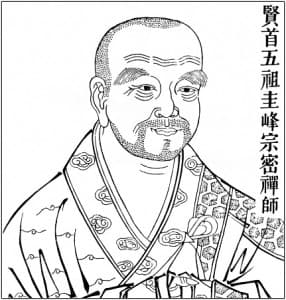
Guifeng Zongmi was a highly influential Tang dynasty Chinese Buddhist monk, scholar, and patriarch of both the Huayan and Chan schools. He is renowned for his efforts to harmonize various Buddhist teachings, particularly Chan and Huayan, with Taoism and Confucianism, aiming to create a comprehensive spiritual vision. His extensive writings serve as a crucial resource for understanding the diverse Chan schools of his era.
Mazu Daoyi
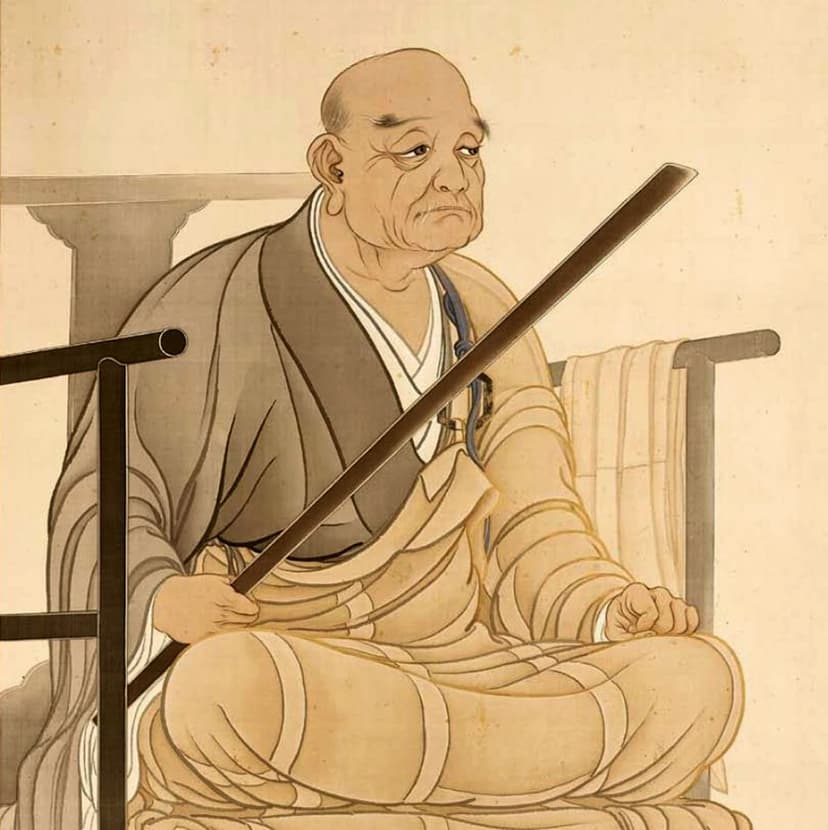
Mazu Daoyi was an influential Chan (Zen) Buddhist abbot during China's Tang dynasty, recognized as the founder of the Hongzhou school. He is famously known for his teachings, particularly "This Mind is Buddha" and "Ordinary Mind is the Way," which emphasized direct insight and the inherent Buddha-nature within everyday life. His teachings significantly shaped the development of Chan Buddhism, particularly during the "golden age" of the Tang dynasty.
Hsu Yun
Hsu Yun (1840?-1959) was a highly influential Chinese Chan Buddhist master known for his extensive teachings, restoration of temples, and enduring spiritual practice throughout the 19th and 20th centuries. Despite facing persecution and imprisonment, he played a significant role in the revival of Buddhism in modern China and was recognized as an honorary chairman of the Chinese Buddhist Association.