
Mazu Daoyi
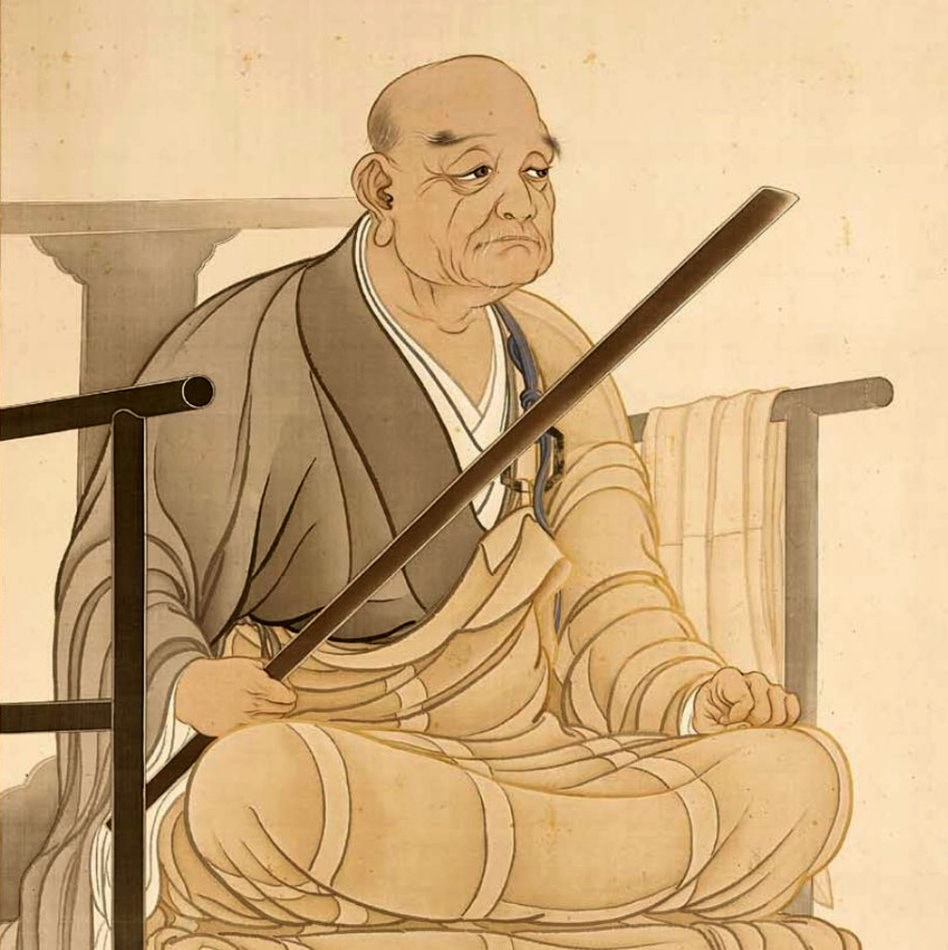
Mazu Daoyi was an influential Chan (Zen) Buddhist abbot during China's Tang dynasty, recognized as the founder of the Hongzhou school. He is famously known for his teachings, particularly "This Mind is Buddha" and "Ordinary Mind is the Way," which emphasized direct insight and the inherent Buddha-nature within everyday life. His teachings significantly shaped the development of Chan Buddhism, particularly during the "golden age" of the Tang dynasty.
Key Facts
- ›Founder of the Hongzhou school of Chan Buddhism.
- ›Known for the teachings "this Mind is Buddha" and "Ordinary Mind is the Way."
- ›A dharma successor to Nanyue Huairang.
- ›His school developed shock techniques like shouting and beating to aid student realization.
- ›His teachings influenced the lineage leading to the Rinzai school in Japan.
- ›His Hongzhou school faced criticism for its radical subitism and potential antinomianism.
Important Relationships
- Nanyue Huairang (teacher)
- Baizhang Huaihai (student)
- Nanquan Puyuan (student)
- Fenzhou Wuye (student)
- Danxia Tianran (student)
- Damei Fachang (student)
Extensive Records, Jiangxi Daoyi Chanshi Yulu
Sichuan, Jiangxi, Kung-Kung Mountain By Nankang
Nanyue Huairang, Huayan Doctrine, Vimalakirti Sutra, Platform Sutra
Chinese
About Mazu Daoyi
Mazu Daoyi (709–788) was a pivotal figure in the history of Chan (Zen) Buddhism, considered the founder of the influential Hongzhou school. During the Tang dynasty, his teachings and leadership significantly shaped the development and popularization of Chan practice and philosophy in China.
Life and Historical Context
Mazu Daoyi was born in Sichuan and later established his primary base of activity in Jiangxi, earning him the name "Jiangxi Daoyi." He was a dharma successor to Nanyue Huairang and, through him, is traditionally linked to the lineage of Huineng. Mazu's Hongzhou school emerged during a period of political upheaval following the An Lushan Rebellion, a time when metropolitan Chan faced challenges, allowing provincial schools like Mazu's to rise to prominence. His teachings and those of his school were collected in works like the "Oral Records of Chan Master Daoyi from Jiangxi."
Major Contributions and Teachings
Mazu Daoyi is most famous for his profound yet direct teachings, encapsulated in the phrases "This Mind is Buddha" and "Ordinary Mind is the Way." These teachings emphasized the inherent Buddha-nature within all beings and suggested that enlightenment is not something to be attained through arduous cultivation but is present in the ordinary, uncreated state of mind. He advocated for a non-dualistic understanding where the absolute and the phenomenal are indistinguishable, and the entirety of daily life is seen as the manifestation of ultimate truth.
The Hongzhou school developed unique and sometimes startling teaching methods, including shouting, beating, and unconventional dialogues, intended to jolt disciples out of conventional thinking and directly into realization. These techniques, while later sometimes misunderstood, aimed to reveal the spontaneous functioning of the Buddha-mind. Mazu's approach offered a critique of purely gradualist or meditative practices, emphasizing direct insight over formal cultivation.
Legacy and Criticism
Mazu Daoyi's influence extended through his numerous disciples, including prominent figures like Baizhang Huaihai and Nanquan Puyuan, whose lineages led to the formation of major Chan schools, including the Rinzai school in Japan. His Hongzhou school is considered a high point of Chan Buddhism during the Tang dynasty. However, the school also faced criticism, notably from Guifeng Zongmi, who argued that its radical emphasis on nondualism and subitism could lead to antinomianism, potentially negating the need for moral discipline and distinguishing between wholesome and unwholesome actions.
Source: Wikipedia ↗
Frequently Asked Questions
Who was Mazu Daoyi?
Mazu Daoyi (709–788) was an influential abbot of Chan (Zen) Buddhism during the Tang dynasty in China. He is renowned as the founder of the Hongzhou school of Chan Buddhism.
What are Mazu Daoyi's most famous teachings?
Mazu Daoyi is most famously known for two teaching statements: "This Mind is Buddha" (ji xin shi fo) and "Ordinary Mind is the Way." These teachings emphasized the inherent Buddha-nature within sentient beings and the value of everyday experience.
What was the Hongzhou school of Chan?
The Hongzhou school, founded by Mazu Daoyi, was a significant development in Chan Buddhism during the Tang dynasty. It became known for its direct approach to enlightenment and its innovative, sometimes unconventional, teaching methods.
What kind of teaching methods did Mazu Daoyi employ?
Mazu Daoyi is depicted as having used "shock techniques" such as shouting, beating, and irrational retorts to startle his students into realization. He also utilized silent gestures and non-responsive answers to break through habitual thinking.
Who was Mazu Daoyi's teacher?
Mazu Daoyi was a student of Nanyue Huairang, from whom he received dharma transmission. A famous story illustrates their master-disciple relationship concerning the nature of practice and enlightenment.
What is the significance of Mazu Daoyi in Chan Buddhism?
Mazu Daoyi is considered one of the most influential teaching masters in the formation of Chan Buddhism. His Hongzhou school contributed significantly to the "golden age" of Chan during the Tang dynasty, and his lineage led to prominent schools like the Rinzai school.
Related Buddhists
Huangbo Xiyun
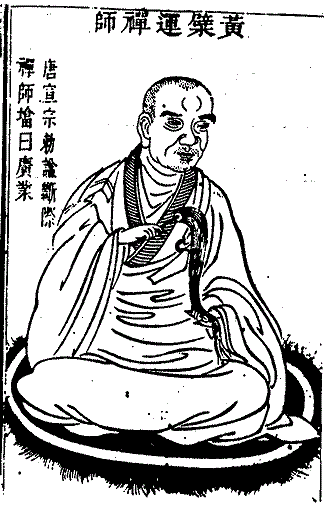
Huangbo Xiyun was an influential Chan Buddhist master during the Tang dynasty, known for his teachings on the "One Mind" and the inherent Buddha-nature within all beings. He was a key figure in the Hongzhou school of Chan, a student of Baizhang Huaihai, and the teacher of Linji Yixuan, who founded the Rinzai school of Zen. His teachings emphasized direct experience and the rejection of dualistic thinking, famously encapsulated in the phrase "mind is the Buddha."
Guifeng Zongmi
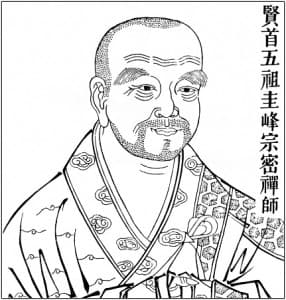
Guifeng Zongmi was a highly influential Tang dynasty Chinese Buddhist monk, scholar, and patriarch of both the Huayan and Chan schools. He is renowned for his efforts to harmonize various Buddhist teachings, particularly Chan and Huayan, with Taoism and Confucianism, aiming to create a comprehensive spiritual vision. His extensive writings serve as a crucial resource for understanding the diverse Chan schools of his era.

Śāntarakṣita
Śāntarakṣita was an influential Indian Buddhist philosopher and monk, particularly significant for the Tibetan Buddhist tradition. He is renowned for synthesizing Madhyamaka philosophy with Yogācāra and Dharmakirtian epistemology, creating the Yogācāra-Mādhyamika school. Śāntarakṣita founded Samye, the first Buddhist monastery in Tibet, and played a crucial role in establishing Buddhism there.