
Śāntarakṣita
India·Madhyamaka, Yogācāra-Mādhyamika·Male·8th century
Śāntarakṣita was an influential Indian Buddhist philosopher and monk, particularly significant for the Tibetan Buddhist tradition. He is renowned for synthesizing Madhyamaka philosophy with Yogācāra and Dharmakirtian epistemology, creating the Yogācāra-Mādhyamika school. Śāntarakṣita founded Samye, the first Buddhist monastery in Tibet, and played a crucial role in establishing Buddhism there.
Key Facts
- ›Indian Buddhist philosopher of the Madhyamaka school.
- ›Founder of Samye, the first Buddhist monastery in Tibet.
- ›Synthesized Madhyamaka, YogāCāra, and Dharmakirtian epistemology.
- ›Authored important works such as the Madhyamakālaṃkāra and Tattvasaṅgraha.
- ›Invited to Tibet by King Trisong Detsen to help establish Buddhism.
- ›Ordained the first seven Tibetan Buddhist monastics.

Important Relationships
- King Trisong Detsen
- Padmasambhava
- Kamalaśīla
- Jamgon Ju Mipham Gyatso
MadhyamakāLaṃKāRa, MadhyamakāLaṃKāRavṛTti, TattvasaṅGraha, VāDanyāYaṭīKā VipañCitāRthā, SatyadvayavibhaṅGapañJikā
Nalanda Monastery, Samye Monastery, Tibet, Nepal, Zahor
Dharmakirti, JñāNagarbha, YogāCāRa School, Madhyamaka School
Sanskrit
Monastic Vows
About Śāntarakṣita
Śāntarakṣita: Indian Buddhist Philosopher and Founder of Samye
Śāntarakṣita (c. 725–788 CE) was a pivotal Indian Buddhist philosopher and monk, whose intellectual contributions profoundly shaped the development of Tibetan Buddhism. He is celebrated for forging a unique philosophical synthesis that integrated the Madhyamaka school with the tenets of Yogācāra and the rigorous epistemology of Dharmakirti, a system often referred to as Yogācāra-Mādhyamika.
Life and Historical Context
Historical records of Śāntarakṣita's life are primarily drawn from hagiographic sources, with some details emerging from 19th-century Tibetan commentaries. According to these accounts, he was born in Zahor, a region identified with eastern Bihar in India, and was the son of a king. He studied at the renowned Nalanda monastery under Jñānagarbha and eventually became its abbot after mastering a wide array of knowledge. Śāntarakṣita lived during the era of the Pala Empire in India.
His pivotal role in Tibet began when he was invited by King Trisong Detsen to aid in the establishment of Buddhism. His initial journey to Tibet in 763 CE was reportedly unsuccessful due to the interference of local spirits, leading him to spend six years in Nepal before returning. Upon his return, accompanied by the tantric adept Padmasambhava, who appeased the spirits, Śāntarakṣita commenced the construction of Samye monastery, Tibet's first Buddhist monastic institution, around 775 CE. He subsequently ordained the first seven Tibetan monks, assisted by twelve Indian monks, and served as the abbot of Samye for thirteen years, overseeing the translation of Buddhist scriptures into Tibetan and establishing a monastic curriculum.
Philosophy and Teachings
Śāntarakṣita's philosophical legacy is largely defined by his syncretic approach. In his seminal work, the Madhyamakālaṃkāra (The Ornament of the Middle Way) and its autocommentary, he presented a nuanced view of reality based on the doctrine of the "two truths": ultimate truth and conventional truth. While acknowledging the Madhyamaka concept of emptiness (shunya) as ultimate truth, he incorporated Yogācāra perspectives to explain conventional reality, particularly the concept of mind-only (cittamatra) and self-reflective awareness (svasamvedana) on a conventional level.
His philosophical system emphasized the importance of understanding "lower" Buddhist schools as foundational steps toward a more comprehensive view. This doxographical hierarchy influenced Tibetan Buddhist thought significantly. Śāntarakṣita also employed the "neither-one-nor-many argument" to demonstrate the emptiness of phenomena, arguing against inherent existence by showing that entities cannot be proven to exist as either singular or manifold.
Major Contributions and Works
Beyond his philosophical treatises, Śāntarakṣita authored numerous works, some of which survive in Tibetan translation and others in Sanskrit. His Tattvasaṅgraha (Compendium on Reality/Truth) is a monumental encyclopedic work that systematically outlines and refutes the views of various non-Buddhist Indian philosophical traditions of his time, alongside certain Buddhist ones. The Madhyamakālaṃkāra is his primary exposition of his integrated Madhyamaka and Yogācāra views, positioning Yogācāra idealism as a superior method for analyzing conventional truth while maintaining Madhyamaka emptiness as the ultimate truth.
Influence and Legacy
Śāntarakṣita's teachings were carried forward by his Indian students, including Kamalaśīla and Haribhadra, and subsequently by Tibetan scholars. His philosophy became the dominant interpretation of Madhyamaka in Tibet until the rise of Prasaṅgika-Madhyamaka. In the late 19th century, the scholar Ju Mipham Gyatso revived interest in Śāntarakṣita's Madhyamakālaṃkāra as part of the Rimé movement, re-establishing it as a core text in the Nyingma monastic curriculum. His work continues to be studied and debated, attesting to his enduring impact on Buddhist thought.
Source: Wikipedia ↗
Frequently Asked Questions
Who was Śāntarakṣita?
Śāntarakṣita was an important Indian Buddhist philosopher and monk who lived from approximately 725 to 788 CE. He is particularly renowned for his significant contributions to Tibetan Buddhism and for founding the first Buddhist monastery in Tibet.
What is Śāntarakṣita's most notable philosophical contribution?
Śāntarakṣita is best known for his syncretic philosophy, which combined the Madhyamaka school with Yogācāra doctrines and the logico-epistemology of Dharmakirti. This synthesis, known as Yogācāra-Mādhyamika, is considered a major development in Indian Buddhist philosophy.
What role did Śāntarakṣita play in Tibet?
Śāntarakṣita was invited to Tibet by King Trisong Detsen to help establish Buddhism. He oversaw the construction of Samye monastery, ordained the first Tibetan monks, and established a monastic curriculum based on the Indian model.
What are some of Śāntarakṣita's key works?
Among Śāntarakṣita's most important works are the Madhyamakālaṃkāra (The Ornament of the Middle Way) and its autocommentary, which expound his synthetic philosophy. He also authored the Tattvasaṅgraha, a comprehensive compendium of Indian philosophical views.
How did Śāntarakṣita's philosophy influence later Buddhist traditions?
Śāntarakṣita's philosophy became the main interpretation of Madhyamaka in Tibetan Buddhism for centuries. Although later challenged by Prasaṅgika-Madhyamaka, his ideas were revitalized in the 19th century and continue to be studied, particularly within the Nyingma monastic curriculum.
Related Buddhists
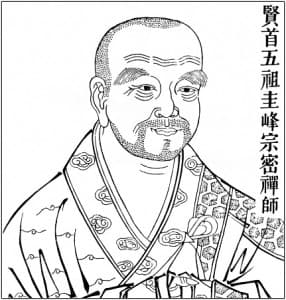
Guifeng Zongmi
Guifeng Zongmi was a highly influential Tang dynasty Chinese Buddhist monk, scholar, and patriarch of both the Huayan and Chan schools. He is renowned for his efforts to harmonize various Buddhist teachings, particularly Chan and Huayan, with Taoism and Confucianism, aiming to create a comprehensive spiritual vision. His extensive writings serve as a crucial resource for understanding the diverse Chan schools of his era.
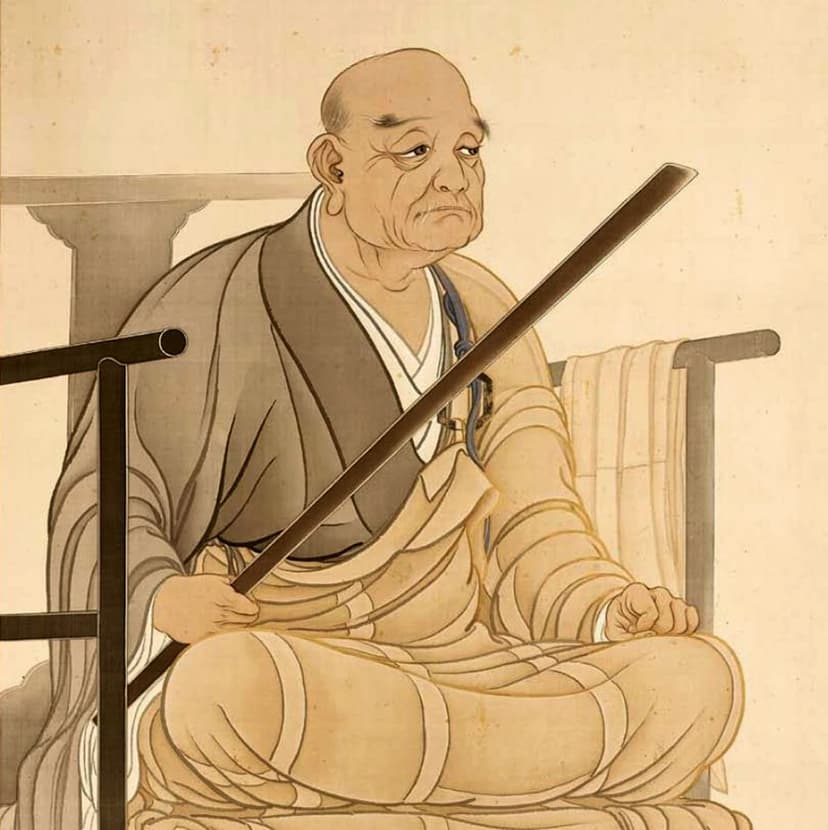
Mazu Daoyi
Mazu Daoyi was an influential Chan (Zen) Buddhist abbot during China's Tang dynasty, recognized as the founder of the Hongzhou school. He is famously known for his teachings, particularly "This Mind is Buddha" and "Ordinary Mind is the Way," which emphasized direct insight and the inherent Buddha-nature within everyday life. His teachings significantly shaped the development of Chan Buddhism, particularly during the "golden age" of the Tang dynasty.
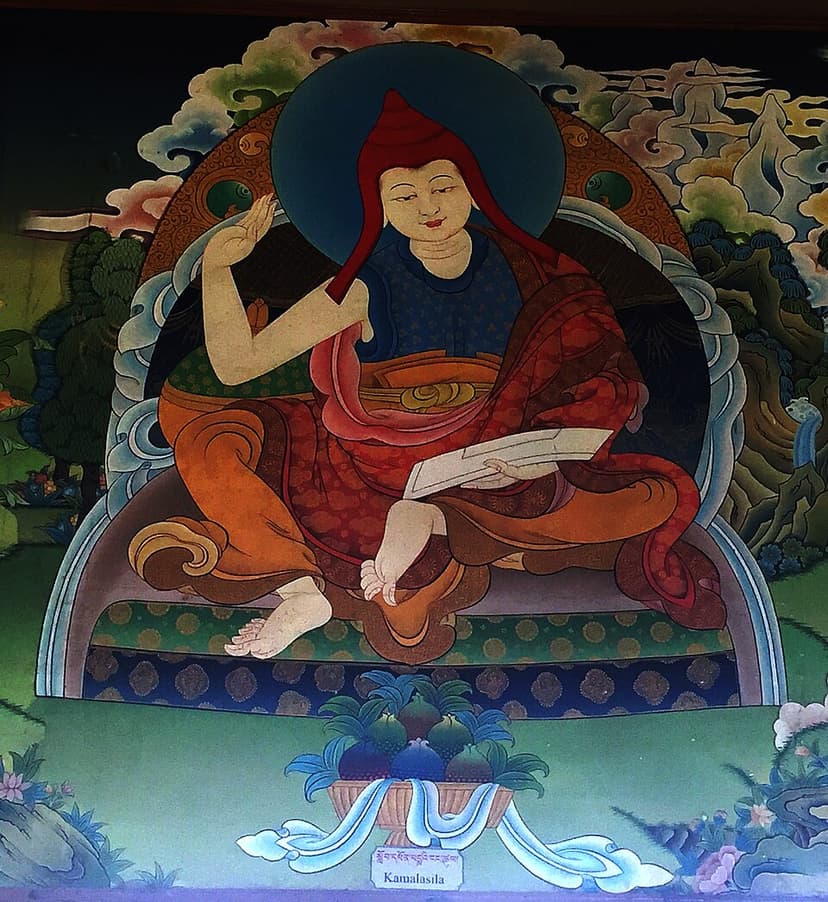
Kamalaśīla
Kamalaśīla was an influential Indian Buddhist monk and philosopher from Nalanda Mahavihara, active around the 8th century CE. He is renowned for his role in the development of Indian Mahayana thought and his significant contributions to Buddhist philosophy. His participation and supposed victory in the Debate of Samye played a crucial role in shaping the direction of Tibetan Buddhism.