
Guifeng Zongmi
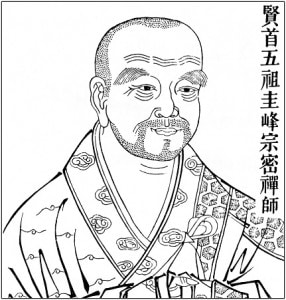
Guifeng Zongmi was a highly influential Tang dynasty Chinese Buddhist monk, scholar, and patriarch of both the Huayan and Chan schools. He is renowned for his efforts to harmonize various Buddhist teachings, particularly Chan and Huayan, with Taoism and Confucianism, aiming to create a comprehensive spiritual vision. His extensive writings serve as a crucial resource for understanding the diverse Chan schools of his era.
Key Facts
- ›Considered a patriarch of both the Huayan school and Chan Buddhism.
- ›Authored significant works on Mahayana Sutras, Chan, and Huayan, also discussing Taoism and Confucianism.
- ›His writings are a primary source for studying Tang dynasty Chan schools.
- ›Deeply interested in both practical and doctrinal aspects of Mahayana Buddhism.
- ›Attempted to integrate Confucian ethics with Buddhist teachings.
- ›His philosophy sought to create a comprehensive worldview that harmonized Buddhist and non-Buddhist teachings.
Important Relationships
- Emperor Wenzong
- Pei Xiu
- Bai Juyi
- Li Xun
- Zheng Zhu
Collected Writings On the Source of Chan, Inquiry Into the Origin of Humanity, Chan Preface
Sichuan, Chang'An, Zhongnan Mountains, Cottage Temple
Chengguan, Tiantai Zhiyi, Fazang, Kim Hwasang, Shenhui, Suizhou Daoyuan
Chinese
Bhikkhu
About Guifeng Zongmi
Guifeng Zongmi (780–1 February 841) was a prominent Tang dynasty Chinese Buddhist monk and scholar, widely recognized as a patriarch of both the Huayan school and Chan Buddhism. His intellectual legacy is immense, particularly for his masterful synthesis of various Buddhist traditions and his efforts to harmonize them with contemporary Taoist and Confucian thought. Zongmi's extensive writings provide invaluable insights into the diverse landscape of Chan Buddhism during the Tang period and continue to be studied for their philosophical depth and spiritual guidance.
Life and Historical Context
Born into the influential He family in Sichuan, Zongmi's early life was marked by a classical education aimed at a career in government. However, following his father's death, he turned to Buddhist studies. His intellectual journey was complex, involving periods of deep engagement with both Confucian classics and Buddhist scriptures. He was ordained as a monk in 807 after training in Chan Buddhism under Suizhou Daoyuan. A pivotal moment in his life was his profound awakening upon reading the Sutra of Perfect Enlightenment, which solidified his commitment to scriptural study within Chan practice. Later, he studied extensively with the renowned Huayan master Chengguan, integrating Huayan doctrine with his Chan understanding.
Scholarly Contributions and Philosophy
Zongmi's philosophical project centered on creating an integrated framework that harmonized diverse teachings, particularly Chan practice and Huayan doctrine. He sought to provide a philosophical and ethical basis for Chan that could withstand critiques from Confucianism and address the antinomian tendencies found in some Chan lineages. A key aspect of his work was doctrinal classification (p’an chiao), through which he organized Buddhist teachings into a hierarchical schema that validated and synthesized different traditions. His mature classification system culminates in the "teaching of the one vehicle" that reveals the intrinsically enlightened true mind, which he identified with Buddha-nature and the "one mind" of the Mahayana Awakening of Faith.
Key Works and Influence
Among Zongmi's most significant works are the Collected Writings on the Source of Chan (Chanyuan zhuquanji), Inquiry into the Origin of Humanity, and his Chan Preface. These texts, along with his commentaries on the Sutra of Perfect Enlightenment and the Diamond Sutra, are crucial for understanding his thought. Zongmi's influence extended far beyond his lifetime, shaping subsequent developments in Chinese Buddhism, including the Song dynasty Chan and Tiantai schools. His ideas also resonated deeply in Korean Seon and Japanese Zen Buddhism, where his emphasis on the unity of Chan and Buddhist teachings, and the concept of "sudden awakening, gradual cultivation," remained central for centuries. His critique of certain Chan practices also foreshadowed later Neo-Confucian critiques of Buddhism.
Source: Wikipedia ↗
Frequently Asked Questions
What is Guifeng Zongmi known for?
Guifeng Zongmi is known for being a patriarch of both the Huayan and Chan schools of Buddhism. He is also recognized for his scholarly efforts to harmonize various Buddhist traditions with Taoism and Confucianism, creating a comprehensive spiritual philosophy. His works are essential for understanding the Chan schools of the Tang dynasty.
When and where was Guifeng Zongmi born?
Guifeng Zongmi was born in 780 into the influential He family in what is now central Sichuan, China.
What were Zongmi's early life and education?
In his youth, Zongmi studied Chinese classics with aspirations for a government career. After his father's death, he turned to Buddhist studies. Later, he delved into Confucian classics at the Yixueyuan Confucian Academy, developing a deep familiarity with texts like the Analects.
How did Zongmi become a Buddhist monk?
At the age of twenty-four, Zongmi encountered the Chan master Suizhou Daoyuan and trained in Chan for several years. He was fully ordained as a Buddhist monk in 807, receiving Daoyuan's recognition.
What was Zongmi's experience with the Sutra of Perfect Enlightenment?
After reading only a few pages of the Sutra of Perfect Enlightenment, Zongmi experienced a profound spiritual awakening. This event deeply impacted his scholarly career, leading him to extensively study the sutra and its commentaries.
What was Zongmi's connection to the Huayan school?
In 810, Zongmi met Lingfeng, a disciple of the prominent Huayan scholar Chengguan. He studied Chengguan's commentaries on the Avatamsaka Sutra intensely and later spent two years studying directly with Chengguan in Chang'an, solidifying his connection to the Huayan tradition.
What significant events marked Zongmi's later life?
In 828, Zongmi was summoned to the capital and honored by Emperor Wenzong. He engaged with literati like Pei Xiu and Bai Juyi, and began collecting Chan texts for a canon. However, his association with a failed plot in 835 led to his arrest and trial, though he was ultimately spared.
What is the legacy of Guifeng Zongmi's teachings?
Zongmi's work influenced later Chinese, Korean, and Japanese Buddhism. His ecumenical vision of Chan and his account of Tang Chan lineages were pivotal for Song dynasty Chan scholars. His ideas on sudden awakening and gradual cultivation, and the importance of scripture, continued to be studied and debated for centuries.
Related Buddhists
Hong Yi
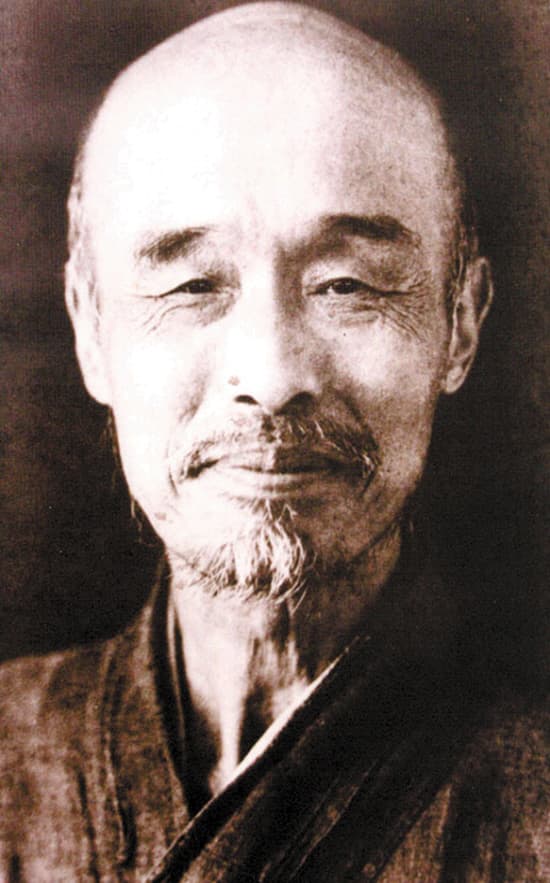
Hong Yi (1880–1942) was a highly influential Chinese Buddhist monk, artist, and musician of the Nanshan Vinaya school. Initially celebrated for his diverse artistic talents, he ordained as a monk in 1918 and dedicated his later life to revitalizing the study and practice of Buddhist Vinaya in modern China. He is revered as the eleventh patriarch of the Nanshan Vinaya school and is recognized as one of the four eminent monks of the Republic of China.
Huangbo Xiyun
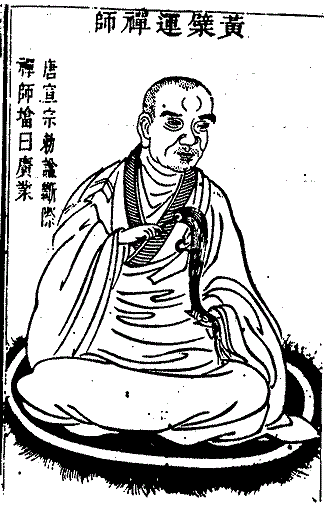
Huangbo Xiyun was an influential Chan Buddhist master during the Tang dynasty, known for his teachings on the "One Mind" and the inherent Buddha-nature within all beings. He was a key figure in the Hongzhou school of Chan, a student of Baizhang Huaihai, and the teacher of Linji Yixuan, who founded the Rinzai school of Zen. His teachings emphasized direct experience and the rejection of dualistic thinking, famously encapsulated in the phrase "mind is the Buddha."
Huineng
Huineng was a pivotal, though semi-legendary, figure in early Chinese Chan Buddhism, revered as the Sixth Patriarch. Despite his illiteracy and humble origins, tradition states he attained sudden enlightenment upon hearing the Diamond Sutra and was secretly chosen as the successor to the Fifth Patriarch, Daman Hongren. He is credited with founding the "Sudden Enlightenment" Southern Chan school, emphasizing immediate insight over gradual practice, and his teachings, recorded in the influential Platform Sutra, continue to shape East Asian Buddhist thought.