
Hsu Yun
Hsu Yun (1840?-1959) was a highly influential Chinese Chan Buddhist master known for his extensive teachings, restoration of temples, and enduring spiritual practice throughout the 19th and 20th centuries. Despite facing persecution and imprisonment, he played a significant role in the revival of Buddhism in modern China and was recognized as an honorary chairman of the Chinese Buddhist Association.
Key Facts
- ›Born in Fujian, Qing China, with the birth name Xiao Guyan.
- ›Ordained as a monk at Gu Shan monastery at the age of nineteen.
- ›Undertook extensive pilgrimages across China and Asia, including Tibet, India, and Burma.
- ›Known for his tireless work in teaching precepts, explaining sutras, and restoring Buddhist temples.
- ›Endured torture and imprisonment during the "Yunmen Incident" in 1951.
- ›Served as an Honorary President of the Chinese Buddhist Association established in 1953.
Important Relationships
- Xiao Yutang (father)
- Yan (mother)
- Fu Guo (first cousin)
- Yong-jing (old master)
- Wen Ji (beggar, possibly Manjushri incarnation)
- Pu Zhao (Venerable Master)
- Yue Xia (Venerable Master)
- Yin Lian (Venerable Master)
- Yue Lang (Abbot of Gaomin Temple)
- Fayun (attendant)
- Kuanchun (attendant)
- Li Jishen (Vice President of the PRC)
- Zhou Enlai (Premier of the PRC)
- Yuan Ying (Dharma Master)
- Nan Tong (Dharma Master)
- Dalai Lama (Honorary Chairman)
- Panchen Lama (Honorary Chairman)
- Grand Lama of Inner Mongolia (Honorary Chairman)
- Empty Cloud: the Autobiography of the Chinese Zen Master Xu Yun
Fujian, Mount Heng, Gu Shan Monastery, Mount Putuo, Temple of King Ashoka, Mount Wutai, Mount Emei, Potala Palace, Tashilhunpo Monastery, Gaomin Temple, Yunmen Monastery, Guangji Monastery
Chinese
Monastic Vows
Renowned Master, Living
About Hsu Yun
Hsu Yun (1840?-1959) was a preeminent Chinese Chan Buddhist master and an exceptionally influential teacher throughout the 19th and 20th centuries. Born Xiao Guyan in Fujian, Qing China, his life was dedicated to the rigorous pursuit of Buddhist enlightenment and the revival of monastic traditions.
Life and Historical Context
Hsu Yun's early life was marked by family arrangements and early exposure to Buddhist teachings. Despite an arranged marriage, he eventually renounced worldly life, ordained as a monk at Gu Shan monastery, and embarked on extensive pilgrimages across China and Asia. These journeys, often undertaken with extreme asceticism, included visits to sacred sites like Mount Heng, Mount Wutai, and Mount Emei, as well as locations in Tibet, India, and Burma. During his middle age, he experienced profound spiritual insights, particularly during periods of intense meditation and pilgrimage, leading him to believe he had achieved a high level of realization.
Major Contributions
Hsu Yun was renowned for his tireless efforts in teaching Buddhist precepts, expounding sutras, and restoring dilapidated temples. He actively worked to revitalize Buddhist communities across Asia, including Burma, Thailand, Malaya, and Vietnam, in addition to China and Tibet. He remained in China during World War II and the rise of the People's Republic of China, supporting Buddhist communities.
Persecution and Advocacy
In 1951, Hsu Yun and other monks were arrested and tortured during the "Yunmen Incident" in Guangdong province, a harsh experience that resulted in injuries and the destruction of some of his writings. Despite this, he later played a pivotal role in the establishment of the Chinese Buddhist Association in 1953, serving as its Honorary President. Through this association, he advocated for the cessation of temple destruction, the protection of monastic orders, and the return of monastic properties. His final years were spent continuing his spiritual work until his death in 1959.
Source: Wikipedia ↗
Frequently Asked Questions
When was Hsu Yun born and when did he die?
Hsu Yun was purportedly born on September 5, 1840, and he died on October 13, 1959. His lifespan spanned much of the 19th and the first half of the 20th century.
What was Hsu Yun's birth name and where was he born?
Hsu Yun's birth name was Xiao Guyan. He was born in Fujian province, which was part of Qing China at the time of his birth.
What significant events marked Hsu Yun's early life and renunciation?
Hsu Yun's early life was marked by the death of his mother during childbirth and an arranged marriage. Despite his father's initial disapproval and attempts to steer him toward Taoism, Hsu Yun was deeply influenced by Buddhist sutras and the story of Guanyin, leading him to renounce the material world and seek monastic life.
What were some of Hsu Yun's notable spiritual practices and achievements?
During his middle age, Hsu Yun engaged in extreme asceticism and made profound discoveries while living as a hermit. He undertook a seven-year pilgrimage to Mount Putuo and later embarked on a vow-laden pilgrimage to Mount Wutai, making one full prostration every three steps. He is also noted for his intense meditation practice, which led to a profound realization of enlightenment.
What role did Hsu Yun play in the Chinese Buddhist Association?
Hsu Yun was instrumental in the formation of the Chinese Buddhist Association in 1953, where he served as Honorary President. He participated in proposing crucial resolutions to the government aimed at protecting Buddhist temples, monks, and their properties.
What was the "Yunmen Incident" and how did it affect Hsu Yun?
In 1951, Hsu Yun and twenty-five monks were arrested, accused of hiding weapons and treasure, and subjected to torture in Yunmen Monastery. Hsu Yun himself endured severe beatings, resulting in fractured ribs, but remained in samādhi for nine days. The incident led to the destruction of some of his works and the death of some monks before Premier Zhou Enlai intervened.
Related Buddhists
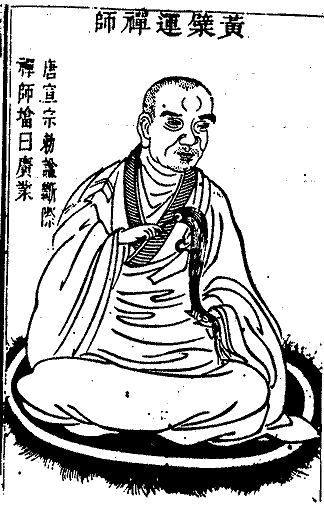
Huangbo Xiyun
Huangbo Xiyun was an influential Chan Buddhist master during the Tang dynasty, known for his teachings on the "One Mind" and the inherent Buddha-nature within all beings. He was a key figure in the Hongzhou school of Chan, a student of Baizhang Huaihai, and the teacher of Linji Yixuan, who founded the Rinzai school of Zen. His teachings emphasized direct experience and the rejection of dualistic thinking, famously encapsulated in the phrase "mind is the Buddha."
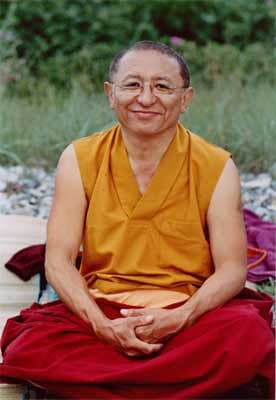
Chökyi Nyima Rinpoche
Chökyi Nyima Rinpoche is a contemporary Tibetan Buddhist teacher and meditation master, recognized as the seventh incarnation of Gar Drubchen. He is widely known as the abbot of Ka-Nying Shedrub Ling Monastery in Kathmandu, Nepal, and as an international teacher who has founded numerous meditation centers worldwide.
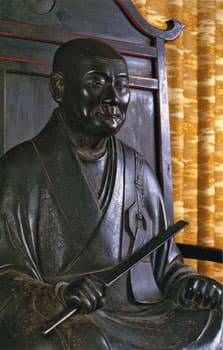
Jakushitsu Genkō
Jakushitsu Genkō was a significant Japanese Rinzai Zen master, poet, and musician, renowned for his exceptional Zen poetry. He studied Ch'an Buddhism in China and later returned to Japan, eventually becoming the first abbot of Eigen-ji, a temple built specifically for him to teach Zen.