
Jakushitsu Genkō
Jakushitsu Genkō was a significant Japanese Rinzai Zen master, poet, and musician, renowned for his exceptional Zen poetry. He studied Ch'an Buddhism in China and later returned to Japan, eventually becoming the first abbot of Eigen-ji, a temple built specifically for him to teach Zen.
Key Facts
- ›Jakushitsu Genkō was a Japanese Rinzai Zen master, poet, and flute player.
- ›He studied Ch'an Buddhism in China from 1320 to 1326.
- ›He was the first abbot of Eigen-ji, a temple constructed for him to teach Zen.
- ›His poetry is considered among the finest examples of Zen poetry.
- ›He lived as a hermit for many years before deciding to teach Zen later in his life.
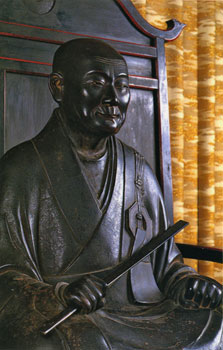
Eigen-Ji
Linji School
About Jakushitsu Genkō
Jakushitsu Genkō (1290–1367) was a prominent Japanese Rinzai Zen master, celebrated for his skill as a poet and musician, particularly his flute playing. His literary contributions are highly regarded, with his Zen poetry considered among the finest in the tradition.
Life and Historical Context
Born in 1290, Jakushitsu Genkō embarked on a significant period of study in China, immersing himself in the Ch'an Buddhist teachings of the Linji school. This journey lasted from 1320 to 1326. Upon his return to Japan, he lived for many years as a hermit, dedicating himself to solitary practice. It was only later in his life that he chose to share his profound understanding and teachings with others.
Major Contributions
Jakushitsu Genkō's most enduring legacy lies in his poetry, which exemplifies the depth and aesthetic principles of Zen literature. He was also instrumental in the establishment of Eigen-ji, a temple specifically constructed for him to disseminate Zen teachings. He served as the first abbot of this significant monastic institution, solidifying his role as a foundational figure in the Rinzai lineage during his time.
Source: Wikipedia ↗
Frequently Asked Questions
Who was Jakushitsu Genkō?
Jakushitsu Genkō (1290–1367) was a Japanese Rinzai Zen master, poet, and flute player. He is recognized for his significant contributions to Zen poetry and his role as the first abbot of Eigen-ji.
Where did Jakushitsu Genkō study Buddhism?
Jakushitsu Genkō traveled to China, where he studied Ch'an Buddhism with masters of the Linji school. This period of study lasted from 1320 to 1326.
What is Jakushitsu Genkō known for?
He is best known for his poetry, which is considered among the finest examples of Zen poetry. He also founded Eigen-ji, a temple dedicated to his teachings, and was its first abbot.
When did Jakushitsu Genkō teach Zen?
After studying in China and living as a hermit for many years in Japan, Jakushitsu Genkō decided to teach Zen to others relatively late in his life.
Related Buddhists
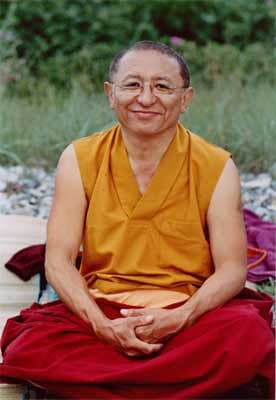
Chökyi Nyima Rinpoche
Chökyi Nyima Rinpoche is a contemporary Tibetan Buddhist teacher and meditation master, recognized as the seventh incarnation of Gar Drubchen. He is widely known as the abbot of Ka-Nying Shedrub Ling Monastery in Kathmandu, Nepal, and as an international teacher who has founded numerous meditation centers worldwide.
Bassui Tokushō
Bassui Tokushō (1327–1387) was a Rinzai Zen master from Japan, known for his intense spiritual quest and emphasis on the question "Who is the one that sees, hears, and understands?" This central inquiry became a hallmark of his teachings, continuing to inspire Zen practitioners. Despite his significant spiritual insights and the following he garnered, Bassui preferred reclusive hermitages over large monasteries, reflecting his unique approach to Buddhist practice.
Hsu Yun
Hsu Yun (1840?-1959) was a highly influential Chinese Chan Buddhist master known for his extensive teachings, restoration of temples, and enduring spiritual practice throughout the 19th and 20th centuries. Despite facing persecution and imprisonment, he played a significant role in the revival of Buddhism in modern China and was recognized as an honorary chairman of the Chinese Buddhist Association.