
Bassui Tokushō
Bassui Tokushō (1327–1387) was a Rinzai Zen master from Japan, known for his intense spiritual quest and emphasis on the question "Who is the one that sees, hears, and understands?" This central inquiry became a hallmark of his teachings, continuing to inspire Zen practitioners. Despite his significant spiritual insights and the following he garnered, Bassui preferred reclusive hermitages over large monasteries, reflecting his unique approach to Buddhist practice.
Key Facts
- ›Born in Sagami (modern-day Kanagawa Prefecture), Japan, in 1327 during a period of CIVIL war.
- ›His life's central inquiry revolved around the question "who is the one that sees, hears, and understands?"
- ›He trained with both Sōtō and Rinzai Zen masters, including Tokukei Jisha and Koho Kakumyo.
- ›Experienced a significant spiritual breakthrough around age 30, confirmed by Kozan Mongo in 1358.
- ›Founded the hermitage-temple Kogakuan in Enzan, where he taught and lived until his death in 1387.
- ›His teachings, particularly the "who is hearing the sound?" practice, are still studied and practiced today.
Important Relationships
- Tokukei Jisha
- Kozan Mongo
- Koho Kakumyo
- Jakushitsu Genkō
- Gasan Jōseki
Wadeigassi
Sagami, Jufukuji Temple, Nanasawa, Eigenji Temple, Kii Province, Kai Province, Enzan, Kogakuan
Chuho Myohon
Japanese
Monastic Vows
About Bassui Tokushō
Bassui Tokushō (1327–1387) was a significant Rinzai Zen master in Japan, renowned for his profound spiritual quest and his unique teachings. Born in Sagami, which is now part of Kanagawa Prefecture, Bassui's early life was marked by abandonment and the profound existential questions that arose from his father's death at a young age. These experiences fueled a lifelong pursuit of understanding the nature of the soul and the self.
Life and Spiritual Quest
Bassui's spiritual journey began earnestly in his youth, driven by the question, "What is a soul?" This evolved into the central inquiry that would define his practice and teachings: "Who is the one that hears, sees, and understands?" He trained under various Zen masters, including Oko at Jufukuji Temple, and later sought out the hermit monk Tokukei Jisha and the esteemed teacher Koho Kakumyo. Despite initial unconventional practices, such as not wearing monastic robes, Bassui eventually ordained and his profound spiritual breakthroughs were confirmed by peers like Kozan Mongo and Koho Kakumyo.
Teachings and Legacy
Bassui favored a reclusive lifestyle in small hermitages, a practice influenced by Zen masters connected to the Chinese master Zhongfeng Mingben. His teachings, particularly the emphasis on the question "Who is hearing the sound?", are considered a vital practice for realizing one's true nature. This inquiry is seen as akin to older Buddhist concepts of "turning the light within." His recorded talks, compiled in "Wadeigassi" shortly before his death, offer insights into his meditative approach and his devotion to Kannon, the bodhisattva of compassion. Bassui died in 1387 while meditating, famously urging his students to "Look directly. What is this?" His teachings continue to inspire Zen practitioners today.
Source: Wikipedia ↗
Frequently Asked Questions
What was Bassui Tokushō's central spiritual question?
Bassui Tokushō was deeply tormented by the question "Who is the one that sees, hears, and understands?" This inquiry became the core of his spiritual quest and a central theme in his teachings.
When and where was Bassui Tokushō born?
Bassui Tokushō was born in 1327 in Sagami, which is the modern-day Kanagawa Prefecture in Japan. His birth occurred during a turbulent period of civil war.
Who were Bassui Tokushō's key teachers?
Bassui Tokushō trained with various Zen masters, including Sōtō and Rinzai lineage holders. He sought out and studied with figures such as Tokukei Jisha and Koho Kakumyo, and also encountered Jakushitsu Genkō and Gasan Jōseki.
What is Bassui Tokushō's most notable teaching or practice?
The practice most associated with Bassui Tokushō is the intense focus on the question "Who is hearing the sound?" This practice, equivalent to seeing into one's own nature, has been treated as a koan and is still used by Zen practitioners.
Where did Bassui Tokushō spend his final years and teach?
In his final years, Bassui Tokushō settled in Enzan, where he founded a hermitage-temple called Kogakuan. He taught there and lived until his death, preferring this setting over larger monasteries.
How did Bassui Tokushō die?
Bassui Tokushō died in 1387 at the age of 61 while meditating with his followers. He turned to them and uttered the phrase "Look directly. What is this? Look in this manner and you won't be fooled" before passing away.
Related Buddhists
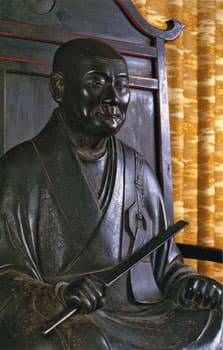
Jakushitsu Genkō
Jakushitsu Genkō was a significant Japanese Rinzai Zen master, poet, and musician, renowned for his exceptional Zen poetry. He studied Ch'an Buddhism in China and later returned to Japan, eventually becoming the first abbot of Eigen-ji, a temple built specifically for him to teach Zen.
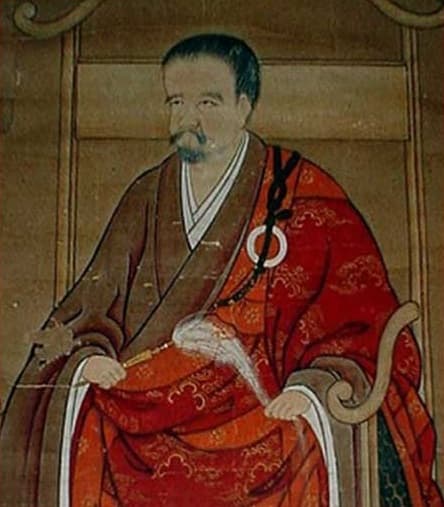
Bankei Yōtaku
Bankei Yōtaku (1622-1693) was a prominent Japanese Rinzai Zen master and abbot of Ryōmon-ji and Nyohō-ji. He is renowned for his minimalist approach to Zen, emphasizing the "unborn Buddha mind" and the concept of "fushō" (unborn). Bankei gained significant popularity through public talks delivered in colloquial Japanese, making his teachings accessible to laypeople.
Imakita Kosen
Imakita Kosen was a prominent Japanese Rinzai Zen roshi and Neo-Confucianist who played a significant role in introducing Zen Buddhism to lay practitioners and the West. As a government loyalist and supporter of Emperor Meiji, he held a position in the Ministry of Doctrine. His influence extended through his disciples, most notably Soyen Shaku, who participated in the World Parliament of Religions, leading to further engagement with Western thinkers.