
Wat Phra That Doi Suthep
Wat Phra That Doi Suthep is a revered Theravada Buddhist temple located on a mountain in Chiang Mai Province, Thailand. It is renowned for its sacred relic, believed to be a shoulder bone of Gautama Buddha, and its stunning architecture, offering panoramic views of the city below. The temple is a significant pilgrimage site, drawing a large number of visitors annually.
Key Facts
- ›Founded in 1383 with the construction of its first stupa.
- ›Believed to enshrine a relic of Gautama Buddha's shoulder bone.
- ›Features a towering 24-meter (79-foot) gold-plated chedi influenced by Sukhothai and Burmese styles.
- ›Draws inspiration from both Buddhist and Hindu traditions in its art and architecture.
- ›Accessible via a 309-step Naga-lined staircase or alternative transport like a tram or funicular.
- ›A major pilgrimage destination, attracting up to 120,000 visitors monthly.

Important Relationships
- King Kue Na of Lan Na
- King Lue Thai of Sukhothai
- Monk Sumanathera
- Khruba Siwichai
Golden Chedi, Naga-Lined Staircase, White Elephant Statue, Views of Chiang Mai, Model of the Emerald Buddha, Statue of the Hindu God Ganesh
- Founding of the Temple and Construction of the First Stupa
- Construction of A Road To the Temple
- Debate and Cancellation of A Cable Car Proposal
Northern Thai, Sukhothai Influenced, Burmese Influenced
About Wat Phra That Doi Suthep
Wat Phra That Doi Suthep is a highly revered Theravada Buddhist temple situated atop Doi Suthep mountain in Chiang Mai Province, Thailand. Often referred to simply as "Doi Suthep," it is a significant sacred site for many Thai people, drawing pilgrims and tourists alike. The temple is located approximately 15 kilometers from the city of Chiang Mai at an elevation of 1,073 meters, offering breathtaking panoramic views of the urban landscape below.
History and Legend
The origins of Wat Phra That Doi Suthep are steeped in legend, with the temple said to have been founded in 1383 with the construction of its first stupa. A prominent legend recounts a monk named Sumanathera who, guided by a dream, discovered a relic believed to be a shoulder bone of Gautama Buddha. After presenting it to King Lue Thai of Sukhothai, who doubted its authenticity, the relic was brought to King Kue Na of Lan Na. In 1368, the relic broke into two pieces; one was enshrined at Wat Suan Dok, and the other was placed on the back of a white elephant. The elephant is said to have ascended Doi Suthep, then known as Doi Aoy Chang (Sugar Elephant Mountain), trumpeted three times, and died, which was interpreted as a divine sign to build a temple at that location. The name "Phra That Doi Suthep" directly refers to the presence of a Buddha relic within the temple's sanctity.
Architecture and Features
Wat Phra That Doi Suthep is celebrated for its magnificent architecture, which blends Buddhist and Hindu elements. The ascent to the temple is marked by a long, Naga-lined staircase, leading to the iconic 24-meter-high gold-plated chedi. This central spire, typical of Northern Thai chedis, features a heightened redented octagonal base and a tiered chatra, showing influences from Sukhothai art and Burmese occupation. The design of the chedi and surrounding structures, such as the Wihans, emphasizes a sense of lightness and ascension, reflecting Buddhist principles of detachment and peace. Inside the temple, visitors will find numerous Buddha statues, murals depicting the life of Buddha, as well as pagodas, bells, and a museum. A model of the Emerald Buddha and a statue of the Hindu God Ganesh are also notable features.
Visiting and Significance
Reaching Wat Phra That Doi Suthep involves a journey from Chiang Mai city, with visitors able to climb 309 steps, take a tram, or utilize a funicular railway for accessibility. Upon entering the temple grounds, visitors are expected to adhere to a dress code and remove their footwear. The temple is a crucial pilgrimage site, especially during Buddhist holidays like Visakha Bucha Day, attracting a substantial number of visitors who engage in both religious devotion and cultural tourism. Its historical role as a center of Lanna Kingdom culture and its association with figures like Khruba Siwichai, who opposed religious centralization, underscore its enduring cultural and religious importance. The temple's layout is designed with bi-axial symmetry around the chedi, with all elements pointing inward, signifying its central role.
Source: Wikipedia ↗
Frequently Asked Questions
What is Wat Phra That Doi Suthep?
Wat Phra That Doi Suthep is a prominent Theravada Buddhist temple situated on a mountain in Chiang Mai Province, Thailand. It is considered a sacred site and is famous for its golden chedi.
What is the history behind Wat Phra That Doi Suthep?
Legend states the temple was founded in 1383 when a relic of Gautama Buddha's shoulder bone was placed on the back of a white elephant, which led it to the mountain. The king ordered a temple built at the spot where the elephant died.
What is the most significant relic at Wat Phra That Doi Suthep?
The most significant relic is believed to be a shoulder bone of Gautama Buddha, which is enshrined within the temple's main chedi. The name of the temple, 'Phra That Doi Suthep,' translates to 'Holy Relic on Suthep Mountain'.
What are the architectural highlights of Wat Phra That Doi Suthep?
The temple is crowned by a 24-meter-high gold-plated chedi, characteristic of Northern Thai style with influences from Sukhothai and Burmese art. The site also features numerous pagodas, statues, bells, and shrines within its grounds.
How can visitors reach Wat Phra That Doi Suthep?
Visitors can reach the temple by road from Chiang Mai. From the car park, they can climb 309 steps or use a tram, funicular railway, or hike via the Monk's Trail.
What should visitors expect when visiting Wat Phra That Doi Suthep?
Visitors are required to dress appropriately and remove their footwear before entering the temple grounds. The site offers impressive views of Chiang Mai and contains various religious structures, including a model of the Emerald Buddha and a statue of the Hindu God Ganesh.
Related Buddhist Temples

Wat Chedi Luang
Wat Chedi Luang is a significant Buddhist temple located in the historic center of Chiang Mai, Thailand. Originally comprising three temples, its centerpiece is a monumental ruined stupa that was once the largest structure in the Lan Na kingdom, making it a key historical and architectural landmark in the region.
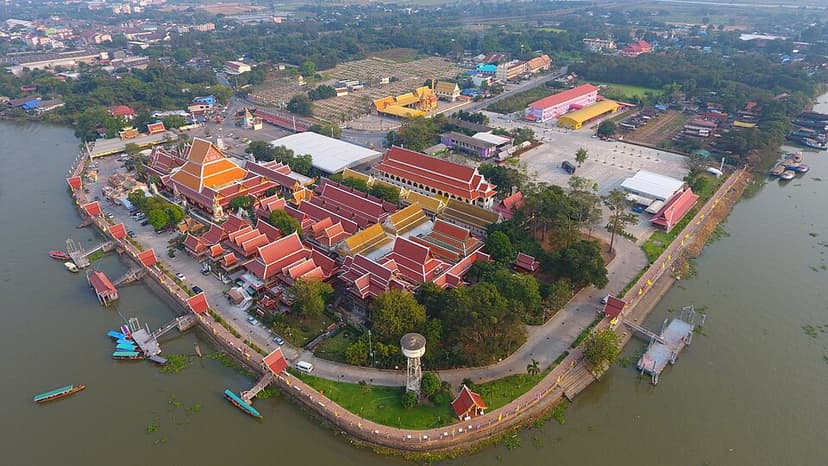
Wat Phanan Choeng
Wat Phanan Choeng is a significant Buddhist temple located in Ayutthaya, Thailand, built in 1324, predating the official founding of the city. It is renowned for its immense 19-meter gilded seated Buddha statue, Luang Pho Tho, and holds historical importance as a site visited by Chinese Admiral Zheng He and as a testament to early settlement in the region.

Wat Phra Singh
Wat Phra Singh, officially Wat Phra Singh Woramahaviharn, is a significant Buddhist temple located in Chiang Mai, Northern Thailand. It is renowned for housing the revered image of Phra Buddha Sihing, making it a crucial site for religious devotion and pilgrimage. The temple's history is deeply intertwined with the royal lineage of the Lan Na kingdom and has undergone several restorations and expansions throughout the centuries.