
Wat Chedi Luang
Wat Chedi Luang is a significant Buddhist temple located in the historic center of Chiang Mai, Thailand. Originally comprising three temples, its centerpiece is a monumental ruined stupa that was once the largest structure in the Lan Na kingdom, making it a key historical and architectural landmark in the region.
Key Facts
- ›Construction began in the 14th century, initially planned to house the ashes of a king.
- ›The main stupa was completed in the MID-15th century and stood as the largest building in Lan Na.
- ›The Emerald Buddha was housed in the temple in 1468 before being moved in 1551.
- ›An earthquake in 1545 caused the upper 30 meters of the stupa to collapse.
- ›The chedi was reconstructed in the early 1990s with funding from UNESCO and the Japanese government.
- ›The temple grounds also feature the city pillar of Chiang Mai, Sao Inthakin, and several Buddha statues.

Important Relationships
- Saenmueangma
- Tilokaraj
- Kawila
- UNESCO
- Japanese government
Ruined Main Stupa, Sao Inthakin, Phra Chao Attarot, Reclining Buddha Statue, Replica of the Emerald Buddha
Construction Began, Completion of the Main Chedi, Installation of the Emerald Buddha, Earthquake Causing Chedi Collapse, Emerald Buddha Moved To Luang Prabang, Sao Inthakin Moved To Temple Grounds, Reconstruction of the Chedi, Installation of Phra Phut Chaloem Sirirat
Lanna
About Wat Chedi Luang
Wat Chedi Luang, meaning 'Temple of the grand stupa,' is a historically significant Buddhist temple situated in the heart of Chiang Mai, Thailand. Its origins trace back to the 14th century, initially conceived to house royal ashes. The temple complex was formed from the unification of three existing temples: Wat Chedi Luang itself, Wat Ho Tham, and Wat Sukmin.
History and Architecture
The construction of the magnificent main stupa, or chedi, commenced in the 14th century under King Saenmueangma, though it remained unfinished for a decade. It was eventually completed in the mid-15th century during the reign of King Tilokaraj. At its zenith, the chedi measured 82 meters in height with a base diameter of 54 meters, making it the largest edifice in the Lan Na kingdom at that time. In 1468, the revered Emerald Buddha was placed in its eastern niche, a significant religious event. However, the temple's history is marked by natural disaster; an earthquake in 1545 caused the upper 30 meters of the stupa to collapse. Shortly after this, in 1551, the Emerald Buddha was relocated to Luang Prabang.
Reconstruction and Modern Significance
In the early 1990s, a major reconstruction effort was undertaken for the chedi, generously financed by UNESCO and the Japanese government. This restoration has been a subject of debate, with some critics noting that the new architectural elements lean towards Central Thai style rather than the traditional Lanna style. To commemorate the chedi's 600th anniversary in 1995, a replica of the Emerald Buddha, meticulously crafted from black jade and officially named Phra Phut Chaloem Sirirat, was installed in the reconstructed eastern niche. This replica is widely known as Phra Yok.
Other Structures and Activities
The temple grounds are also home to the city pillar of Chiang Mai, known as Sao Inthakin. Originally situated at Wat Sadeu Muang, it was relocated to Wat Chedi Luang in 1800 by Kawila. Three resin trees were planted alongside the pillar, believed to offer protection to the city. An annual festival honoring the city pillar takes place for 6–8 days each May. Within a wihan near the temple entrance stands the Buddha statue Phra Chao Attarot, meaning 'Eighteen-cubit Buddha,' which was cast in the late 14th century. Another pavilion nearby houses a reclining Buddha statue. Wat Chedi Luang actively engages with visitors by hosting daily monk chats, providing an opportunity for tourists to converse with monks, often novices, and gain insights into Buddhism and Thai culture.
Source: Wikipedia ↗
Frequently Asked Questions
When was Wat Chedi Luang built?
The construction of Wat Chedi Luang began in the 14th century. It was left unfinished after initial building and was later completed in the mid-15th century.
What happened to the main stupa at Wat Chedi Luang?
The main stupa, or chedi, suffered significant damage from an earthquake in 1545, causing the upper 30 meters to collapse. It was later reconstructed in the early 1990s.
Was the Emerald Buddha ever housed at Wat Chedi Luang?
Yes, the Emerald Buddha was installed in the eastern niche of the chedi in 1468. It was later moved to Luang Prabang in 1551 after the temple's damage.
What is the significance of Sao Inthakin at Wat Chedi Luang?
Sao Inthakin, the city pillar of Chiang Mai, is located on the temple grounds. It was moved to this location in 1800 and is believed to protect the town, with an annual festival held in its honor.
Can visitors interact with monks at Wat Chedi Luang?
Yes, Wat Chedi Luang hosts daily monk chats where tourists are invited to speak with monks, typically novices, to learn about Buddhism and Thailand.
Related Buddhist Temples
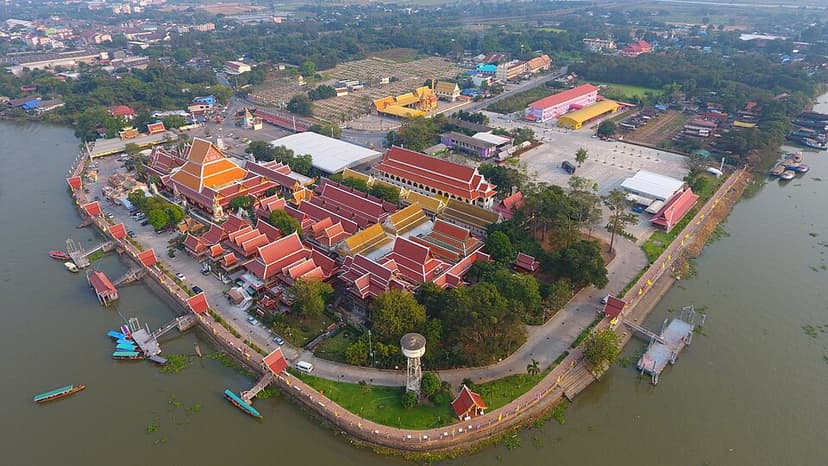
Wat Phanan Choeng
Wat Phanan Choeng is a significant Buddhist temple located in Ayutthaya, Thailand, built in 1324, predating the official founding of the city. It is renowned for its immense 19-meter gilded seated Buddha statue, Luang Pho Tho, and holds historical importance as a site visited by Chinese Admiral Zheng He and as a testament to early settlement in the region.

Wat Phra Singh
Wat Phra Singh, officially Wat Phra Singh Woramahaviharn, is a significant Buddhist temple located in Chiang Mai, Northern Thailand. It is renowned for housing the revered image of Phra Buddha Sihing, making it a crucial site for religious devotion and pilgrimage. The temple's history is deeply intertwined with the royal lineage of the Lan Na kingdom and has undergone several restorations and expansions throughout the centuries.

Wat Phra That Doi Suthep
Wat Phra That Doi Suthep is a revered Theravada Buddhist temple located on a mountain in Chiang Mai Province, Thailand. It is renowned for its sacred relic, believed to be a shoulder bone of Gautama Buddha, and its stunning architecture, offering panoramic views of the city below. The temple is a significant pilgrimage site, drawing a large number of visitors annually.