
Wat Suan Dok
Wat Suan Dok, meaning "flower garden temple," is a significant Buddhist temple in Chiang Mai, northern Thailand, established in 1370 CE. It holds the status of a Royal Temple of the Third Class and is notable for its large Sri Lankan-style chedi, which is said to house a relic of the Buddha. The temple grounds also host the Chiang Mai campus of the Buddhist Mahachulalongkornrajavidyalaya University.
Key Facts
- ›Founded in 1370 CE by King Kue Na of Lanna for the monk Sumana Thera.
- ›Originally named Wat Buppharam, derived from King Kue Na's flower garden located on the site.
- ›Features a prominent 48-meter-high bell-shaped chedi built in a Sri Lankan style, believed to contain a Buddha relic.
- ›The temple grounds include a large sermon hall (sala kan prian) built in 1932 by Phra Krubra Srivichai.
- ›Houses a 4.70 m high bronze Buddha statue, 'Phra Chao Kao Tue,' cast in 1504 CE, in its ubosot.
- ›Contains a collection of whitewashed mausoleums for the cremation ashes of Chiang Mai's royal family members.

Important Relationships
- King Kue Na of Lanna
- Sumana Thera
- Phra Krubra Srivichai
- Princess Dara Rasmi
- King Chulalongkorn (Rama V)
- King Inthawichayanon
- King Mueang Kaeo
- Mahachulalongkornrajavidyalaya University
- 48-Meter-High Sri Lankan-Style Chedi
- Whitewashed Mausoleums For Royal Family Ashes
- Lanna-Style Balusters With NāGa and Makara Motifs
- Phra Chao Kao Tue Bronze Buddha Statue
- Legend of the Duplicated Buddha Relic, Leading To the Construction of Wat Phrathat Doi Suthep.
- Princess Dara Rasmi Collected Royal Cremation Ashes For Internment At the Temple In the Early 20th Century.
Sri Lankan, Lanna
About Wat Suan Dok
Wat Suan Dok, also known by its older name Wat Buppharam, is a prominent Buddhist temple located in Chiang Mai, northern Thailand. Translating to "flower garden temple," it was founded in 1370 CE by King Kue Na of Lanna for the revered monk Sumana Thera. Situated west of the city moat, the temple holds the distinction of being a Royal Temple of the Third Class.
History and Legend
The temple was established within the ancient Lawa settlement of Wiang Suan Dok, predating Chiang Mai itself. Its original name, Wat Buppharam, derived from King Kue Na's adjacent flower garden. According to legend, the monk Sumana Thera was guided by a vision to bring a Buddha relic to Chiang Mai. When the relic was to be enshrined at the newly built Wat Buppharam Dok Mai, it miraculously duplicated. One relic was placed in the temple's shrine, while the other, carried by a white elephant, led to the foundational site of the equally significant Wat Phrathat Doi Suthep on the nearby mountain.
Sights and Architecture
A striking feature of Wat Suan Dok is its large, 48-meter-high bell-shaped chedi, constructed in a distinct Sri Lankan style, which is visible from a distance. This chedi is traditionally believed to house a relic of the Buddha. The original stair access on its four sides has been updated with ramps adorned with classic Lanna motifs of seven-headed nāgas emerging from the mouths of makaras.
Adjacent to the chedi is a substantial sala kan prian (sermon hall), built in 1932 by the renowned monk Phra Krubra Srivichai, who also oversaw restorations and the construction of an ubosot. Inside the sala, Buddha statues are positioned facing opposite directions: one seated in meditation facing east and another standing, holding a bundle of straw, facing west towards the chedi. An older Lanna-style Buddha statue, dating back to King Kue Na's era and noted for its individually formed toes influenced by Sri Lankan art, is also present.
The renovated ubosot houses the "Phra Chao Kao Tue," a 4.70-meter-high bronze Buddha statue cast in 1504 CE during the reign of King Mueang Kaeo. This statue exhibits Sukhothai influence in its uniformly long fingers, combined with Ayutthaya-style robes.
In the northwestern section of the temple grounds lies a cluster of whitewashed mausoleums. These structures serve as the final resting place for the cremation ashes of members of the royal family of Chiang Mai, a practice consolidated in the early 20th century under the initiative of Princess Dara Rasmi.
Source: Wikipedia ↗
Frequently Asked Questions
When was Wat Suan Dok founded?
Wat Suan Dok was founded in the year 1370 CE. It was established by King Kue Na of Lanna for the monk Sumana Thera.
What is the meaning of Wat Suan Dok?
Wat Suan Dok translates to 'flower garden temple.' The name originates from King Kue Na's flower garden that was located on the site where the temple was built.
What is housed within the main chedi at Wat Suan Dok?
The large, bell-shaped chedi at Wat Suan Dok is said to contain a relic of the Buddha. This relic was part of a legend involving a miraculous duplication.
Are there royal connections to Wat Suan Dok?
Yes, Wat Suan Dok is a Royal Temple of the Third Class. Additionally, its grounds feature mausoleums holding the cremation ashes of members of the royal family of Chiang Mai.
What notable Buddha statues are found at the temple?
The temple's ubosot contains a 4.70 m high bronze Buddha statue named Phra Chao Kao Tue, cast in 1504 CE. The main sala kan prian also houses Buddha statues, including one from King Kue Na's era with individually formed toes.
Related Buddhist Temples

Wat Phra Singh
Wat Phra Singh, officially Wat Phra Singh Woramahaviharn, is a significant Buddhist temple located in Chiang Mai, Northern Thailand. It is renowned for housing the revered image of Phra Buddha Sihing, making it a crucial site for religious devotion and pilgrimage. The temple's history is deeply intertwined with the royal lineage of the Lan Na kingdom and has undergone several restorations and expansions throughout the centuries.

Wat Chedi Luang
Wat Chedi Luang is a significant Buddhist temple located in the historic center of Chiang Mai, Thailand. Originally comprising three temples, its centerpiece is a monumental ruined stupa that was once the largest structure in the Lan Na kingdom, making it a key historical and architectural landmark in the region.
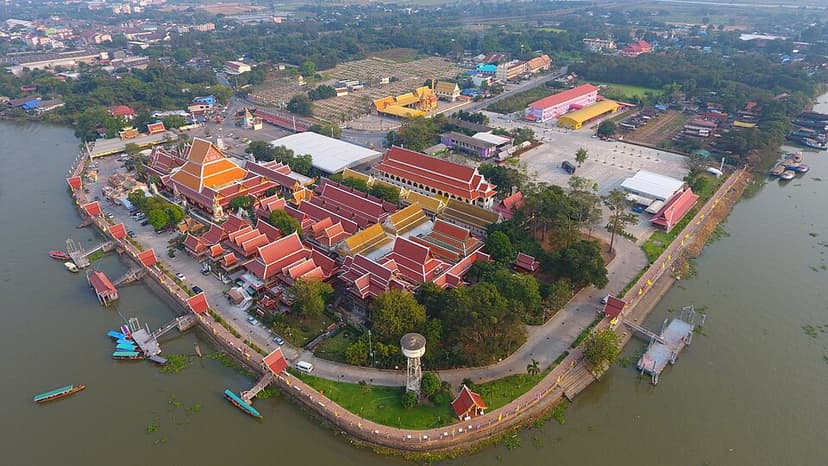
Wat Phanan Choeng
Wat Phanan Choeng is a significant Buddhist temple located in Ayutthaya, Thailand, built in 1324, predating the official founding of the city. It is renowned for its immense 19-meter gilded seated Buddha statue, Luang Pho Tho, and holds historical importance as a site visited by Chinese Admiral Zheng He and as a testament to early settlement in the region.