
Vandiyur Mariamman Temple
Vandiyur Mariamman Temple is a Hindu temple located in Madurai, Tamil Nadu, India, dedicated to the goddess Mariamman. Situated near the Vaigai River, it is distinguished by its large temple tank, which plays a significant role in temple festivities and is connected to the river via underground channels.
Key Facts
- ›Dedicated to the Hindu goddess Mariamman.
- ›Located on the banks of the Vaigai River in Madurai, Tamil Nadu, India.
- ›Features a large temple tank connected to the Vaigai River through underground channels.
- ›The temple tank has 12 granite steps and a central pavilion (Maiya Mandapam) housing a Vinayakar temple and a garden.
- ›Built during the reign of the Madurai Nayaks.
- ›Located approximately 3 km from the Meenakshi Amman Temple.

Mariamman
Religious Pilgrimage Site, Architectural Features of the Temple Tank
Madurai Nayaks
Granite
Vaigai River
About Vandiyur Mariamman Temple
Vandiyur Mariamman Temple is a significant Hindu temple located in Madurai, Tamil Nadu, India. It is dedicated to the worship of the goddess Mariamman, a popular folk deity.
Location and Features
The temple is situated on the banks of the Vaigai River, approximately 3 kilometers (1.9 miles) away from the well-known Meenakshi Amman Temple. A prominent feature of the temple complex is its large temple tank, which is utilized during temple festivities. This tank is ingeniously connected to the Vaigai River through a system of underground channels.
Temple Tank Construction
The temple tank itself is notable, featuring 12 granite steps that lead down to its waters. Historical accounts indicate that the construction of the temple tank took place during the reign of the Madurai Nayaks. At the center of the tank lies a pavilion, known as Maiya Mandapam (Central Mandapam), which houses a shrine dedicated to Lord Vinayakar (Ganesha) and a garden.
Source: Wikipedia ↗
Frequently Asked Questions
Where is Vandiyur Mariamman Temple located?
Vandiyur Mariamman Temple is situated in Madurai, in the state of Tamil Nadu, India. It is located on the banks of the Vaigai River.
To whom is Vandiyur Mariamman Temple dedicated?
The temple is dedicated to Mariamman, a Hindu goddess. Mariamman is a popular folk deity worshipped widely in South India.
What is notable about the temple tank at Vandiyur Mariamman Temple?
The temple features a significant temple tank that is used during festivities and is connected to the Vaigai River through underground channels. The tank itself has 12 granite steps leading down to it and a central pavilion.
When was the temple tank constructed?
The temple tank was constructed during the reign of the Madurai Nayaks. It features a central pavilion known as Maiya Mandapam.
Related Temples (Hindu)

Taraknath Temple
The Taraknath Temple, located in Tarakeswar, West Bengal, India, is a significant Hindu pilgrimage site dedicated to Lord Shiva, worshiped here as Tarakanatha. Constructed in 1729, it features a distinct Bengal architectural style with an 'atchala' structure and an adjacent 'natmandir'. The temple is renowned for its belief that a dip in the nearby Dudhpukur tank fulfills prayers and is considered one of the 64 Jyotirlingas.

Tanot Mata Temple
The Tanot Mata Temple is a significant Hindu shrine located in the Jaisalmer district of Rajasthan, India, near the Pakistan border. Revered as a form of Goddess Hinglaj Mata, the temple is famously associated with the Indian victories in the Indo-Pakistani Wars of 1965 and 1971, with local folklore attributing the successful outcomes to divine intervention. The Border Security Force of India now manages the temple complex, which also includes a victory tower and a war museum.
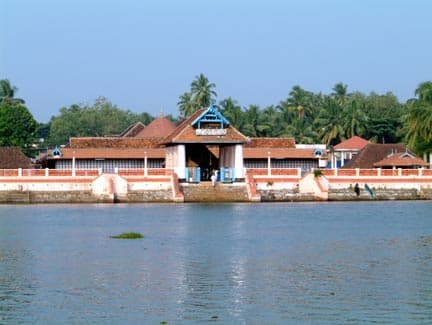
Thriprayar Temple
The Thriprayar Temple, also known as the Shree Ramaswami Temple, is a significant Hindu temple located in Triprayar, Thrissur district, Kerala, India. It is dedicated to Lord Rama, the seventh incarnation of Vishnu, who is depicted with four arms holding a conch, discus, bow, and garland. The temple's origin story involves the idol being worshipped by Krishna in Dwarka, later immersed in the sea, and eventually found by fishermen.