
Meenakshi Amman Temple
The Meenakshi Amman Temple, also known as Meenakshi Sundareswarar Temple, is a historic Hindu temple situated on the southern bank of the Vaigai River in Madurai, Tamil Nadu, India. Dedicated to Goddess Meenakshi (a form of Parvati) and her consort Sundareswarar (Shiva), it is a significant center for Shaivism, Shaktism, and Vaishnavism. The temple complex, spread over 14 acres, features numerous shrines, mandapas, and towering gopurams, making it a prominent landmark and a vital economic and cultural hub.
Key Facts
- ›The temple is dedicated to Meenakshi, a form of Parvati, and her consort Sundareswarar (Shiva).
- ›It is a significant site representing the confluence of Shaivism, Shaktism, and Vaishnavism.
- ›The earliest structures date back to the Pandya reign in the 12th-13th century CE, with significant expansion by the Vijayanagara Empire and Madurai Nayaks.
- ›The temple complex spans approximately 14 acres and is characterized by concentric enclosures fortified with high masonry walls.
- ›It features 14 gopurams (ornamental gateways), with the southern tower being the tallest at 170 ft (52 m).
- ›The temple is a major landmark in Madurai, attracting thousands of visitors daily and serving as an economic center.

Meenakshi, Sundareswarar
- Theological Significance As A Confluence of Shaivism, Shaktism, and Vaishnavism.
- Revered In Tevaram Hymns, Classified As A Paadal Petra Sthalam.
- Center of Tamil Culture and Literature.
- Symbolic Representation of Dravidian Kinship System.
- Considered One of the Four Most Important Pilgrimage Places In Shaivism.
Pandyas, Vijayanagara Empire, Madurai Nayaks
Granite, Masonry
Pandyas, Vijayanagara Empire, Madurai Nayaks, Malik Kafur, Kumara Kampana, Lakana Nayak, Ariyanatha Mudaliar, Rani Mangammal, Marudu Brothers
Thousand-Pillared Hall Sculptures, Murals Depicting the History of the Temple
Vaigai River, Golden Lotus Pond
About Meenakshi Amman Temple
The Meenakshi Amman Temple, also known as Meenakshi Sundareswarar Temple, is a historic Hindu temple located on the southern bank of the Vaigai River in Madurai, Tamil Nadu, India. It is dedicated to Meenakshi, a form of the goddess Parvati, and her consort Sundareswarar, a form of the god Shiva. The temple holds significant theological importance as it represents a confluence of various denominations of Hinduism, including Shaivism, Shaktism, and Vaishnavism.
History and Development
While Madurai is mentioned in Sangam literature, the existence of a temple is first referenced in Tamil texts from the 6th century CE. The early structures of the Meenakshi Temple were constructed during the reign of the Pandyas in the 12th to 13th century CE. Following destruction by the Delhi Sultanate, it was rebuilt by the Vijayanagara Empire in the 14th century CE and subsequently expanded extensively by the Madurai Nayaks in the 16th and 17th centuries. Structural improvements were made in the 18th and 19th centuries, and after a period of neglect during the British Raj, the temple was restored post-Indian independence with public donations.
Architecture and Design
The temple complex is spread over approximately 5.7 hectares (14 acres) and is characterized by several concentric enclosures (prakara) fortified with high masonry walls. The outer walls feature four large gopurams (ornamental gateways) and ten smaller ones, with the southern tower being the tallest at 170 feet (52 meters). The complex houses numerous mandapas, including the renowned thousand-pillared hall, and the golden lotus pond (Potramarai Kulam). The layout of the temple and the surrounding city is designed in a concentric pattern, radiating from the temple, reflecting principles of symmetry and cosmic diagrams.
Religious and Cultural Significance
The Meenakshi Amman Temple is a major pilgrimage site and is revered in the Tevaram hymns, classifying it as a Paadal Petra Sthalam. It symbolizes an affinal and protective relationship between Shaivism and Vaishnavism, with Shiva as Meenakshi's husband and Vishnu as her brother. Meenakshi herself is a central figure in Shaktism, often depicted as the dominant deity. The temple has also been a vital center for Tamil culture and literature, with poets and musicians composing works in praise of the deities. The state emblem of Tamil Nadu is inspired by the temple's west gopuram, highlighting its cultural importance.
Source: Wikipedia ↗
Frequently Asked Questions
What is the primary deity worshipped at Meenakshi Amman Temple?
The primary deities worshipped at the Meenakshi Amman Temple are Goddess Meenakshi, who is a form of Parvati, and her consort Sundareswarar, a form of Shiva. Meenakshi is considered the principal deity of the temple.
What is the historical significance of Meenakshi Amman Temple?
The temple has a long history, with its existence first referenced in Tamil texts from the 6th century CE. Early structures were built by the Pandyas in the 12th-13th centuries, and it was later rebuilt and expanded by the Vijayanagara Empire and the Madurai Nayaks from the 14th to 17th centuries.
What are the architectural highlights of the Meenakshi Amman Temple?
The temple complex is notable for its vast size, intricate design with concentric prakaras, and fourteen towering gopurams, the tallest of which is the southern tower. It also features numerous mandapas, including the famous thousand-pillared hall, and the golden lotus pond.
What is the significance of the name Meenakshi?
The name Meenakshi means 'fish-eyed' in Tamil, derived from 'mina' (fish) and 'akshi' (eyes). She was also known by the name Thadadakai, meaning 'fish-eyed one'.
What mythological story is associated with the temple's origin?
According to the 16th-century text Thiruvilaiyadal Puranam, Goddess Meenakshi appeared as a three-breasted daughter to King Malayadhwaja Pandya and his wife. She was advised to bring up the child, and she would lose the third breast upon meeting her future husband, Shiva.
How large is the Meenakshi Amman Temple complex?
The temple complex is spread over an area of approximately 5.7 hectares, which is about 14 acres.
What is the role of the temple in the local economy and culture?
The temple is a prominent landmark and a major tourist attraction, drawing thousands of visitors daily, thus serving as a significant economic center for Madurai. It has also been a long-standing center of Tamil culture and literature.
Related Temples (Hindu)
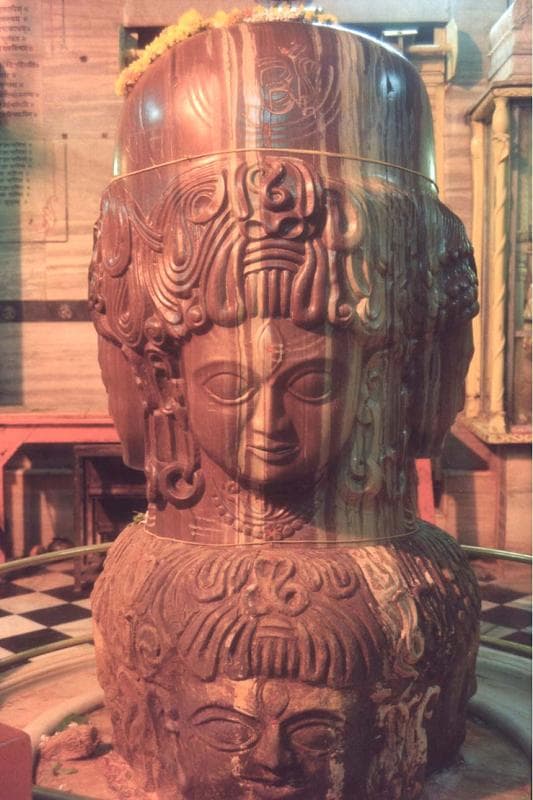
Pashupatinath Temple, Mandsaur
The Pashupatinath Temple in Mandsaur, Madhya Pradesh, India, is a significant Hindu temple dedicated to Lord Shiva, belonging to the Pashupatinath tradition within Shaivism. It is renowned for its rare eight-faced Shiva Linga, with the temple's sculpture dated to the 5th or 6th century CE, reflecting the artistic and cultural vibrancy of the Gupta Empire era.

Sharda Devi Temple Maihar satna
The Sharda Devi Temple in Maihar, Madhya Pradesh, is a significant Shakti Peeth dedicated to the goddess Sharda. According to legend, it is the site where the necklace of the goddess Sati fell. The temple is situated atop the Trikut hill and is a major pilgrimage destination, particularly during the Navratri festivals.

Harishchandragad
Harishchandragad is an ancient hill fort located in the Ahilyanagar district of India, with a history stretching back to the 6th century. It served as a strategic defensive point and cultural hub, featuring ancient caves, temples, and significant geological formations. The fort is renowned for its historical importance, architectural remnants, and natural beauty.