
Sharda Devi Temple Maihar satna
The Sharda Devi Temple in Maihar, Madhya Pradesh, is a significant Shakti Peeth dedicated to the goddess Sharda. According to legend, it is the site where the necklace of the goddess Sati fell. The temple is situated atop the Trikut hill and is a major pilgrimage destination, particularly during the Navratri festivals.
Key Facts
- ›The temple is one of the 51 Shakti Peeths, a major pilgrimage site for Hindus.
- ›Legend states that the goddess Sati's necklace fell at this location, giving Maihar its name (Mai for mother, har for necklace).
- ›The temple is dedicated to Maa Sharda, a form of the goddess Saraswati, and is also known as Mata Sharda Mai.
- ›It is believed that warriors Alha and Udal were among the first to worship the goddess at this site.
- ›The temple is located atop the Trikut hill and requires climbing 1,064 steps or using a ropeway.
- ›Maihar is also known as the birthplace of the Maihar gharana of Indian classical music.

Sharda Devi, Saraswati
- Shakti Peeth
- Pilgrimage Destination
- Birthplace of Maihar Gharana of Indian Classical Music
Navratri
Alha, Udal
Tamsa River
About Sharda Devi Temple Maihar satna
Sharda Devi Temple, Maihar
The Sharda Devi Temple, located in Maihar, Madhya Pradesh, is a highly revered Hindu pilgrimage site and is recognized as one of the significant Shakti Peethas.
Legends and Origins
The temple's name, Maihar, is derived from a legend stating that the necklace (har) of the mother goddess (Mai) Sati fell at this location when Lord Shiva carried her body. The goddess is worshipped here as Maa Sharda, a form of the goddess Saraswati, and is also known as Mata Sharda Mai. Local lore attributes the first worship at the site to the warriors Alha and Udal, who served under the Chandel king Paramardideva. It is believed that Alha worshipped the goddess for 12 years at this spot and attained immortality through the blessings of Saraswati.
Location and Access
The temple is situated atop the Trikut hill, a prominent landmark in Maihar. Reaching the shrine involves a climb of 1,064 steps, though a ropeway facility is also available for devotees. The temple complex is surrounded by extensive ruins of older shrines and buildings, hinting at its long history.
Religious and Cultural Importance
As a Shakti Peeth, the Sharda Devi Temple holds immense religious importance for Hindus. It attracts a large number of pilgrims, especially during the Navratri festivals. Beyond its religious significance, Maihar is also renowned in the realm of Indian classical music as the birthplace of the Maihar gharana. Allauddin Khan, a celebrated musician, lived in Maihar for many years, and his disciples, including Ravi Shankar and Nikhil Banerjee, played a crucial role in popularizing this school of music.
Source: Wikipedia ↗
Frequently Asked Questions
What is the origin of the name Maihar?
The name Maihar is believed to have originated from a legend where the necklace (har) of the mother goddess (Mai) Sati fell at this place. The goddess is known as 'Sharda Mai' or 'Mata Sharda Mai' here.
What is the religious significance of the Sharda Devi Temple?
The Sharda Devi Temple is considered one of the most important Shakti Peethas, which are sacred abodes of the Hindu goddess Shakti. It is a major pilgrimage site for devotees seeking blessings from Maa Sharda.
Who were Alha and Udal in relation to the Sharda Devi Temple?
According to local belief, the warriors Alha and Udal were the first to visit the goddess in the forest at this site. Alha is said to have worshipped her for 12 years and achieved immortality with the blessing of Saraswati.
How can one reach the Sharda Devi Temple atop Trikut hill?
The temple is situated at the summit of Trikut hill, which can be reached by climbing 1,064 steps. Alternatively, a ropeway is also available for easier access to the temple.
When is the best time to visit the Sharda Devi Temple?
Many pilgrims attend the Navratri festivals, suggesting this is a particularly significant and popular time to visit the temple. The area receives moderate rainfall, primarily in July and August.
Related Temples (Hindu)
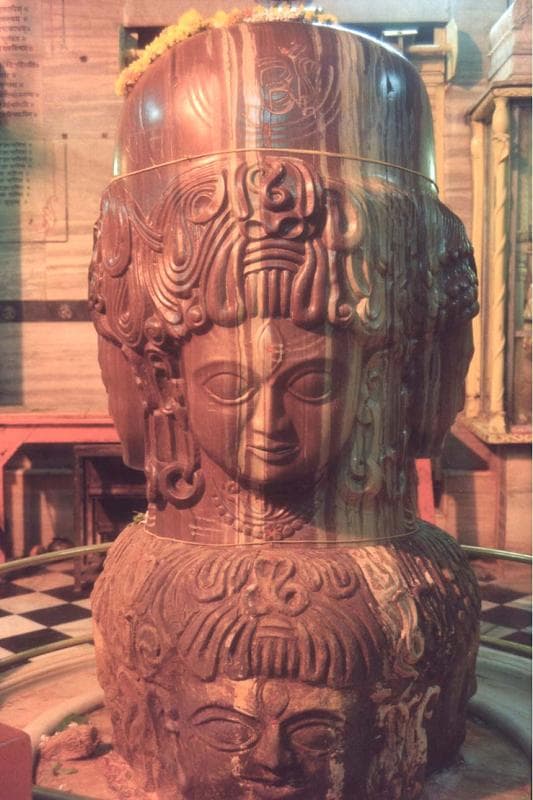
Pashupatinath Temple, Mandsaur
The Pashupatinath Temple in Mandsaur, Madhya Pradesh, India, is a significant Hindu temple dedicated to Lord Shiva, belonging to the Pashupatinath tradition within Shaivism. It is renowned for its rare eight-faced Shiva Linga, with the temple's sculpture dated to the 5th or 6th century CE, reflecting the artistic and cultural vibrancy of the Gupta Empire era.

Harishchandragad
Harishchandragad is an ancient hill fort located in the Ahilyanagar district of India, with a history stretching back to the 6th century. It served as a strategic defensive point and cultural hub, featuring ancient caves, temples, and significant geological formations. The fort is renowned for its historical importance, architectural remnants, and natural beauty.

Meenakshi Amman Temple
The Meenakshi Amman Temple, also known as Meenakshi Sundareswarar Temple, is a historic Hindu temple situated on the southern bank of the Vaigai River in Madurai, Tamil Nadu, India. Dedicated to Goddess Meenakshi (a form of Parvati) and her consort Sundareswarar (Shiva), it is a significant center for Shaivism, Shaktism, and Vaishnavism. The temple complex, spread over 14 acres, features numerous shrines, mandapas, and towering gopurams, making it a prominent landmark and a vital economic and cultural hub.