
Tanot Mata Temple
The Tanot Mata Temple is a significant Hindu shrine located in the Jaisalmer district of Rajasthan, India, near the Pakistan border. Revered as a form of Goddess Hinglaj Mata, the temple is famously associated with the Indian victories in the Indo-Pakistani Wars of 1965 and 1971, with local folklore attributing the successful outcomes to divine intervention. The Border Security Force of India now manages the temple complex, which also includes a victory tower and a war museum.
Key Facts
- ›The temple is dedicated to Goddess Aavad, worshipped as Tanot Mata, an incarnation of Goddess Hinglaj Mata and considered a Goddess of War.
- ›It was constructed and the idol installed by the Bhati Rajput King Tanu Rao in 828 AD.
- ›During the 1965 Indo-Pakistani War, approximately 3,000 bombs were reportedly fired at the temple, none of which exploded.
- ›The Border Security Force (BSF) took charge of the temple's management and maintenance after the 1965 war.
- ›A victory tower (Vijay Stambha) was built inside the temple compound after the 1971 war to commemorate the Battle of Longewala.
- ›The temple complex houses a war museum displaying unexploded Pakistani bombs and tanks from the conflicts.

Tanot Mata, Aavad Mata, Hinglaj Mata
- Religious Pilgrimage Site
- Historical Significance Related To Indo-Pakistani Wars
- Symbol of Divine Protection During Conflict
- War Memorial Site
Bhati Rajput
Victory Day
Tanu Rao
About Tanot Mata Temple
The Tanot Mata Temple is a revered Hindu shrine situated in the Jaisalmer district of Rajasthan, India. Its location is particularly notable, being very close to the border with Pakistan and in proximity to the site of the pivotal Battle of Longewala during the 1971 Indo-Pakistani War. Contemporary folklore strongly credits the temple and its presiding deity, Tanot Mata, for the victorious outcome of this battle, cementing its place in the national consciousness.
History and Divine Significance
Goddess Aavad, the daughter of Mamadji Charan, is worshipped here as Tanot Mata. She is considered a powerful warrior sage and an incarnation of the divine Goddess Hinglaj Mata, making her a Goddess of War. Traditional Charan literature posits that Hinglaj Mata reincarnated as Tanot Mata, who in turn later reincarnated as Karni Mata. The founding legend speaks of Mamadji Charan's deep devotion to Hinglaj Mata, leading to her divine birth as his daughter, Aavad Mata, one of seven daughters and one son born to him.
The temple itself was constructed and the idol of the deity was installed by the Bhati Rajput King Tanu Rao in 828 AD. For generations, it has been a sacred site for the Bhati Rajputs and the people of Jaisalmer. The temple's spiritual significance was dramatically highlighted during the Indo-Pakistani War of 1965, when Pakistani forces reportedly fired approximately 3,000 bombs at the temple. Local accounts and folklore maintain that these bombs miraculously missed their targets or failed to detonate, a phenomenon widely attributed to the divine protection of Tanot Mata.
Role in Military History and Memorialization
Following the 1965 war, the management and maintenance of the Tanot Mata Temple were entrusted to India's Border Security Force (BSF). The temple faced further military action during the Indo-Pakistani War of 1971. During this conflict, attacking Pakistani tanks allegedly became bogged down in the sand near the temple, enabling the Indian Air Force to effectively neutralize them. This event contributed to the Indian victory in the Battle of Longewala, where a significantly smaller Indian force of 120 infantry soldiers defeated a much larger Pakistani division, including its tank squadron.
In commemoration of this victory, the Indian Army constructed a Vijay Stambha (Victory tower) within the temple compound after the 1971 war. The BSF further developed the temple complex, establishing a war museum that showcases unexploded Pakistani bombs and tanks recovered from the battlefield. December 16th is observed annually at the temple as Victory Day, celebrating the triumphs of 1971. The Tanot temple and its war memorial museum are now part of the 'Bharat Ranbhoomi Darshan' initiative by the Indian Military, aiming to promote border tourism, patriotism, and local development in these strategic remote areas.
Source: Wikipedia ↗
Frequently Asked Questions
Who is worshipped at the Tanot Mata Temple?
The primary deity worshipped at the Tanot Mata Temple is Goddess Aavad, who is known as Tanot Mata. She is considered an incarnation of the divine Goddess Hinglaj Mata and is revered as a Goddess of War. She is also believed to be a predecessor of Karni Mata.
What is the historical significance of the Tanot Mata Temple?
The Tanot Mata Temple holds significant historical importance due to its association with the Indo-Pakistani Wars of 1965 and 1971. Local folklore attributes the Indian victories in these conflicts, particularly the Battle of Longewala, to the divine protection of Tanot Mata.
When was the Tanot Mata Temple built?
According to traditional Charan records, the temple was constructed and the idol of the reigning deity was installed by the Bhati Rajput King Tanu Rao in 828 AD. It has been revered by the Bhati Rajputs and the people of Jaisalmer since then.
What happened at the temple during the 1965 war?
During the Indo-Pakistani War of 1965, the Pakistan Army reportedly fired around 3,000 bombs towards the temple. However, according to local lore, none of these bombs hit their intended targets or exploded, a phenomenon attributed to the divine intervention of Tanot Mata.
What is the role of the Border Security Force (BSF) at the temple?
Following the 1965 war, India's Border Security Force (BSF) took over the responsibility for the management and maintenance of the Tanot Mata Temple. The BSF has since expanded the temple complex and developed it into a significant memorial site.
What can visitors see at the temple complex besides the main shrine?
Besides the main shrine, visitors can explore a victory tower (Vijay Stambha) built to commemorate the victory in the Battle of Longewala. The complex also includes a war museum that houses unexploded Pakistani bombs and tanks from the conflicts, serving as a testament to the events of the wars.
Related Temples (Hindu)

Kumararama
The Kumararama Temple, also known as Bhimarama or Chalukya Kumararama Bhimeswara Temple, is a significant Hindu temple dedicated to Lord Shiva, located in Samalkota, Andhra Pradesh. It is one of the five Pancharama Kshetras and is renowned for its unique limestone Shiva Lingam, which is 16 feet tall and pierces through the roof to the second floor.
Triloknath Temple
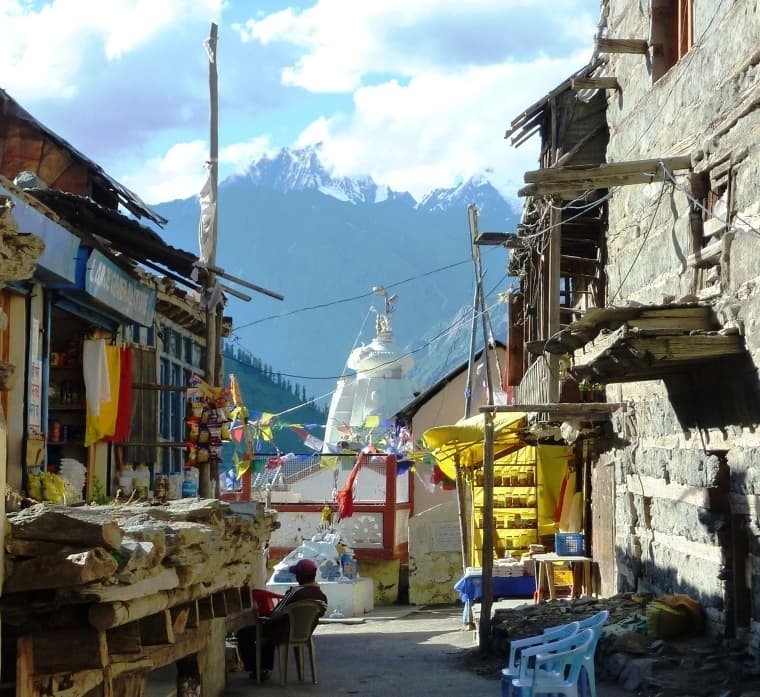
The Triloknath Temple, located in Himachal Pradesh, India, is a significant religious site revered by both Tibetan Buddhists and Hindus. Originally believed to be a Buddhist vihara, it now houses a marble statue of Avalokiteshvara, worshipped as Shiva by Hindus and as Avalokiteshvara by Buddhists. The temple's architecture and history suggest a blend of influences, with its columns dating to the 9th century CE.

Ananta Shayana
Ananta Shayana is a colossal open-air rock relief of the Hindu god Vishnu, carved in the early 9th century in Saranga village, Odisha, India. It depicts Vishnu in a reclining posture on the serpent Ananta and is notable for being the largest exposed rock-cut structure of its kind in India. Worship is still offered to this ancient and significant sculpture.