
Triloknath Temple
Hill temple style (curvilinear stone tower shikhara)·India
The Triloknath Temple, located in Himachal Pradesh, India, is a significant religious site revered by both Tibetan Buddhists and Hindus. Originally believed to be a Buddhist vihara, it now houses a marble statue of Avalokiteshvara, worshipped as Shiva by Hindus and as Avalokiteshvara by Buddhists. The temple's architecture and history suggest a blend of influences, with its columns dating to the 9th century CE.
Key Facts
- ›The temple is sacred to both Tibetan Buddhists and Hindus, with a dual reverence for its main deity.
- ›Its primary deity is worshipped as Shiva by Hindus and Avalokiteshvara by Buddhists.
- ›The temple's original structure is not extant, but local tradition points to it being a former Buddhist vihara.
- ›The current marble statue of Avalokiteshvara is attributed by some to the 12th century.
- ›Original temple columns date back to the 9th century CE during the reign of King Lalitaditya.
- ›The temple is situated at an altitude of 2,760 meters (9,055 ft) on a cliff.
Shiva, Avalokiteshvara
- Dual Religious Importance For Hindus and Tibetan Buddhists
- Historical Syncretism of Religious Traditions
- Architectural Style Representative of Regional Hill Temples
Lalitaditya
Pauri Festival
Marble, Stone, Granite, Wood
Padmasambhava, King Lalitaditya, Thakur Himpala
Six-Armed White Marble Avalokiteshvara, Granite Lingam, Small Nandi, Silver Idol of Kali As Mahishasurmardini
Chandrabhaga River
About Triloknath Temple
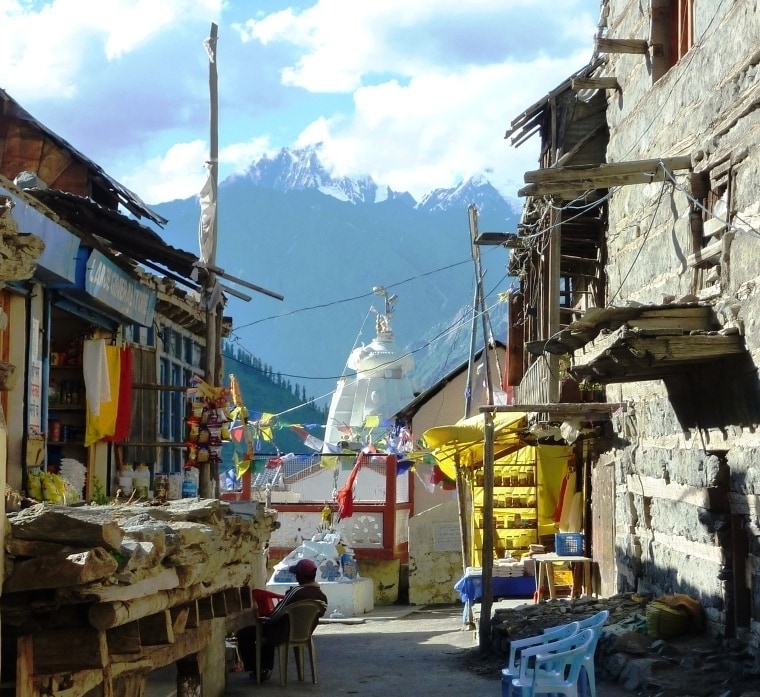
The Triloknath Temple is a significant religious site located in the Lahul and Spiti District of Himachal Pradesh, India. This temple holds a unique position as it is sacred to both Tibetan Buddhists and Hindus, reflecting a history of religious syncretism in the region. Situated on a cliff at an altitude of 2,760 meters (9,055 ft), the white-painted temple overlooks the valley and is approximately 9 km from Udaipur village.
Name and Deity
The name 'Trilokinath' is traditionally associated with the Hindu god Shiva, meaning 'Leader of the Trinity'. However, local tradition asserts that the site was originally a Buddhist vihara or monastery. The primary deity enshrined in the temple is a six-armed white marble Avalokiteshvara, which is revered as Avalokiteshvara by Buddhists and as Shiva by Hindus. This dual worship is further symbolized by the deity being crowned with an image of Amitabha Buddha.
History and Architecture
While nothing remains of the original temple structure, historical accounts and local traditions suggest a rich past. The temple's columns are believed to date from the time of King Lalitaditya in the 9th century CE. Scholars like Hutchinson and Vogel speculate that the temple might have been a Shiva temple originally, later converted into a Buddhist place of worship by Padmasambhava in the 8th century. The current white marble statue of Avalokiteshvara is attributed by some to the 12th century. The temple's architecture is characteristic of regional hill temples, featuring a curvilinear stone tower known as a shikhara, topped with an amalka. Unlike temples found on the plains, it does not possess a large pillared hall (mandapa), possibly due to the mountainous terrain.
Religious Significance and Traditions
Triloknath Temple is a vital pilgrimage destination for both Buddhist and Hindu devotees. The presence of Buddhist prayer wheels and a granite lingam with a small Nandi bull in the courtyard underscores its dual religious identity. The temple also plays host to the three-day Pauri Festival, celebrated annually in August by both communities. A silver idol of Kali as Mahishasurmardini was installed in the temple in 1959-60 by Thakur Himpala, further diversifying its religious iconography. Legends also surround the temple, including a tale of a Kulu Raja's unsuccessful attempt to move the idol, which is said to have become immovably heavy.
Source: Wikipedia ↗
Frequently Asked Questions
What is the significance of the name Trilokinath?
'Trilokinath' is a name for the Hindu god Shiva, meaning 'Leader of the Trinity'. However, local tradition suggests the temple was originally a Buddhist vihara, indicating a syncretic religious history.
What is the history of the main idol at Triloknath Temple?
The original marble statue of a six-headed Avalokiteshvara was stolen and replaced. The current six-armed white marble Avalokiteshvara is attributed by some to the 12th century and is revered by both Hindus and Buddhists. It is crowned with an image of Amitabha Buddha.
What is the architectural style of Triloknath Temple?
The temple is typical of the style introduced in the region between the 7th and 8th centuries, featuring a curvilinear stone tower shikhara crowned with an amalka. Unlike plains temples, it lacks a pillared hall (mandapa), possibly due to the terrain.
Are there any historical disputes regarding the temple's origins?
Yes, Hutchinson and Vogel speculate it was originally a Shiva temple converted to a Buddhist place of worship by Padmasambhava in the 8th century. This is supported by stylistic similarities between the Trilokinath image and a Buddhist head found nearby.
What connection does Triloknath Temple have to Nagarjuna and Kanishka?
An original image is said to have been coeval with an Avalokiteshvara head found near the Chandra and Bhaga rivers, now at Guru Ghantal Monastery. This head is claimed to date to the time of Nagarjuna (2nd century CE), suggesting a possible link to the Kanika (Kanishka) stupa in Zangskar.
What are some notable legends associated with the temple?
A popular story recounts a Kulu Raja's failed attempt to steal the idol, with the stone becoming impossibly heavy. A mark on the marble figure's right leg is said to be from a sword blow by a Kullu soldier during this event.
Related Temples (Hindu)

Tanot Mata Temple
The Tanot Mata Temple is a significant Hindu shrine located in the Jaisalmer district of Rajasthan, India, near the Pakistan border. Revered as a form of Goddess Hinglaj Mata, the temple is famously associated with the Indian victories in the Indo-Pakistani Wars of 1965 and 1971, with local folklore attributing the successful outcomes to divine intervention. The Border Security Force of India now manages the temple complex, which also includes a victory tower and a war museum.

Kumararama
The Kumararama Temple, also known as Bhimarama or Chalukya Kumararama Bhimeswara Temple, is a significant Hindu temple dedicated to Lord Shiva, located in Samalkota, Andhra Pradesh. It is one of the five Pancharama Kshetras and is renowned for its unique limestone Shiva Lingam, which is 16 feet tall and pierces through the roof to the second floor.

Ananta Shayana
Ananta Shayana is a colossal open-air rock relief of the Hindu god Vishnu, carved in the early 9th century in Saranga village, Odisha, India. It depicts Vishnu in a reclining posture on the serpent Ananta and is notable for being the largest exposed rock-cut structure of its kind in India. Worship is still offered to this ancient and significant sculpture.