
Kumararama
The Kumararama Temple, also known as Bhimarama or Chalukya Kumararama Bhimeswara Temple, is a significant Hindu temple dedicated to Lord Shiva, located in Samalkota, Andhra Pradesh. It is one of the five Pancharama Kshetras and is renowned for its unique limestone Shiva Lingam, which is 16 feet tall and pierces through the roof to the second floor.
Key Facts
- ›It is one of the five sacred Pancharama Kshetras dedicated to Lord Shiva.
- ›The temple features a unique 16-foot tall limestone Shiva Lingam.
- ›The main mandapam is supported by 100 pillars and is of significant architectural importance.
- ›It was constructed by the Chalukyas, with construction beginning in AD 892 and completed in 922 CE.
- ›The temple is recognized as a centrally protected monument of national importance.
- ›The Goddess is worshipped here as Bala Tripura Sundari.

Shiva, Kumara Bhimeswara, Bala Tripura Sundari
- One of the Pancharama Kshetras
- Centrally Protected Monument of National Importance
- Historical Significance Due To Chalukya Patronage
Chalukya, Kakatiya
- Maha Sivarathri
- Kalyana Mahotsam
- Abhisheka During Karthika and Margashira Masam
Limestone, Granite
Chalukya Bhima, Ganga Mahadevi, Musunuri Nayaks
Ekasila Nandi, Well-Decorated and Polished Pillars
Pushkarni Lake
About Kumararama
Kumararama Temple
The Kumararama Temple, also identified as Bhimarama or the Chalukya Kumararama Bhimeswara Temple, stands as a significant Hindu pilgrimage site dedicated to Lord Shiva. Located in Samalkota, within the Kakinada district of Andhra Pradesh, India, it is recognized as one of the revered Pancharama Kshetras, a group of five sacred Shiva temples.
Historical and Architectural Significance
The temple's construction commenced in AD 892 and was completed around 922 CE, during the reign of the Chalukya dynasty, specifically by King Chalukya Bhima, from whom the presiding deity, Lord Bhimeswara, derives his name. The architectural style predominantly follows the Dravidian tradition. A notable feature is the imposing 16-foot tall limestone Shiva Lingam, which uniquely ascends from the ground floor, pierces the roof, and extends into the second story. The temple's mandapam, an assembly hall, is a marvel of architectural engineering, supported by 100 pillars, many of which were later enhanced with fine finishes by the Kakatiya rulers between 1340 and 1466 CE. The temple complex also includes an Ekasila Nandi, a bull carved from a single stone, guarding the entrance to the shrine, and a sacred lake known as Pushkarni (Koneru).
Religious Importance and Festivals
As one of the Pancharama Kshetras, Kumararama holds profound religious significance for devotees of Lord Shiva. The temple is also dedicated to Goddess Bala Tripura Sundari. The Puranas describe it as a 'Yogakshetram,' implying that those destined by divine grace will have the opportunity to visit. Major festivals observed here include Maha Sivarathri, daily Abhisheka ceremonies during the months of Karthika and Margashira (November–December), and an Utsavam (Kalyana Mahotsam) in February–March. The temple remains an active site of worship with specific visiting hours.
Preservation and Recognition
The Kumararama Temple is designated as a centrally protected monument of national importance, underscoring its value as a historical and cultural heritage site. Its construction is noted for its solidity, having withstood the test of time with remarkable resilience, unlike some other ancient structures. Recent excavations within the temple compound have unearthed numerous artifacts dating back approximately 1000 years, further enriching its historical context.
Source: Wikipedia ↗
Frequently Asked Questions
What is the significance of Kumararama Temple?
Kumararama Temple is one of the five Pancharama Kshetras, which are highly sacred sites dedicated to Lord Shiva. Its historical prominence is also noted, having been built by the Chalukya dynasty.
What is unique about the Shiva Lingam at Kumararama Temple?
The Shiva Lingam at Kumararama Temple is made of limestone and stands an impressive 16 feet tall. Uniquely, it rises from the ground floor pedestal and extends through the roof to the second floor, where its Rudrabhaga is worshipped.
Who built the mandapam at Kumararama Temple?
The large mandapam at the temple was constructed by Ganga Mahadevi, who was the daughter-in-law of the Eastern Ganga Dynasty king Narasingha Deva I of Odisha.
What architectural style is the Kumararama Temple built in?
The temple was built in the Dravidian architectural style by King Chalukya Bhima, after whom the presiding deity, Bhimeswara, is named.
When was the Kumararama Temple constructed?
The construction of the temple was initiated in AD 892 and was completed between AD 892 and 922 CE, during the reign of King Chalukya Bhima.
What are the main festivals celebrated at Kumararama Temple?
The most important festival celebrated is Maha Sivarathri. Daily Abhisheka is performed during November–December, and an Utsavam (Kalyana Mahotsam) takes place in February–March.
Related Temples (Hindu)

Thanumalayan Temple
The Thanumalayan Temple, located in Suchindrum, Tamil Nadu, is a significant Hindu temple dedicated to the Trimurti: Shiva, Vishnu, and Brahma, as represented by the presiding deity Sthanumalayan. This temple holds importance for both Shaivaite and Vaishnavite traditions and is recognized among the Abhimana Kshetrams. Its present structure dates back to the 9th century under the Chola dynasty, with later additions by the Nayak kings and Travancore Maharajas.

Ulagalantha Perumal Temple, Kanchipuram
The Ulagalantha Perumal Temple in Kanchipuram, Tamil Nadu, is a significant Hindu temple dedicated to Vishnu. It is renowned for its towering deity image and for housing four Divya Desams within its complex, making it a unique pilgrimage site revered in early Tamil devotional literature.
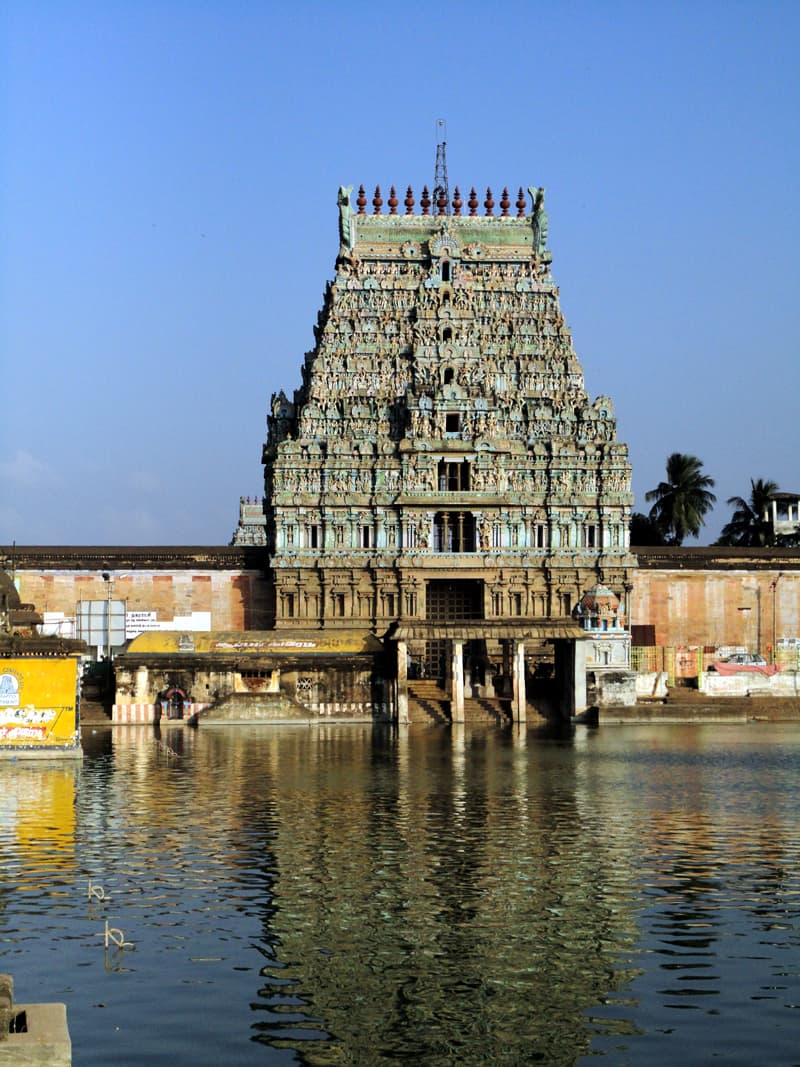
Thyagaraja Temple, Tiruvarur
The Thyagaraja Temple in Tiruvarur, Tamil Nadu, is a significant Hindu temple dedicated to Lord Shiva, worshipped as Thyagarajaswami. It is renowned for its vast complex, housing numerous shrines, including those of Goddess Neelotpalambika and Goddess Kamalambika, and for its annual Chariot festival featuring Asia's largest processional chariot. The temple's present structure dates back to the Chola dynasty in the 9th century and is a vital center for religious practices, music, and dance.