
Thyagaraja Temple, Tiruvarur
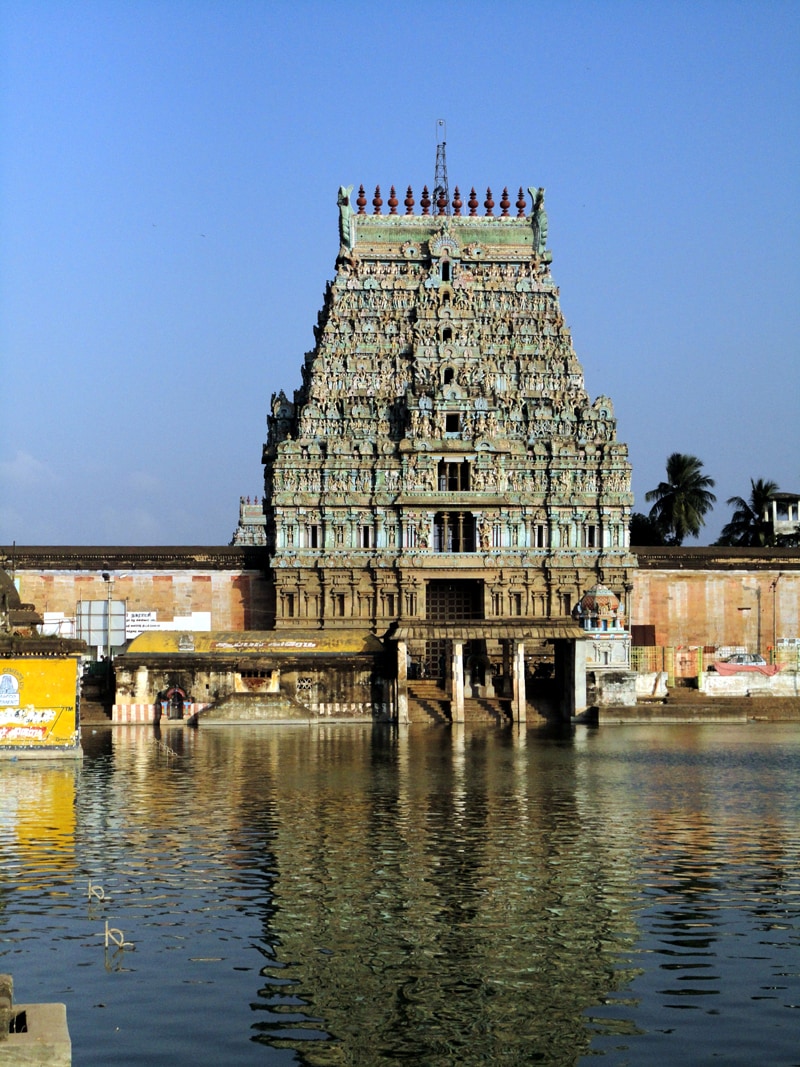
The Thyagaraja Temple in Tiruvarur, Tamil Nadu, is a significant Hindu temple dedicated to Lord Shiva, worshipped as Thyagarajaswami. It is renowned for its vast complex, housing numerous shrines, including those of Goddess Neelotpalambika and Goddess Kamalambika, and for its annual Chariot festival featuring Asia's largest processional chariot. The temple's present structure dates back to the Chola dynasty in the 9th century and is a vital center for religious practices, music, and dance.
Key Facts
- ›Dedicated to Lord Shiva, worshipped as Thyagarajaswami, and his consort Parvati as Neelotpalambika and Kamalambika.
- ›The temple complex covers 8.1 hectares (20 acres), making it one of the largest in India.
- ›Features nine entrance towers (gopurams), with the eastern tower being the tallest at 30 meters (98 ft).
- ›Houses the largest processional chariot in Asia, with the annual Chariot festival held in March.
- ›The present masonry structure was built during the Chola dynasty in the 9th century.
- ›Maintained and administered by the Hindu Religious and Charitable Endowments Department of the Government of Tamil Nadu.
Shiva, Thyagarajaswami, Neelotpalambika, Kamalambika
- Significant Center For Shaivism and Shaktism
- Mentioned In 7th-Century Shaiva Canonical Work Tevaram
- Classified As A Paadal Petra Sthalam
- Largest Temple Complex In India By Area
- Location of Asia's Largest Processional Chariot
- Traditional Center of Music and Dance
Chola Dynasty, Pallava Dynasty
Chariot Festival, Theppam, Panguni Uthiram, Thiruvathirai Festival
Stone, Masonry
Muchukunda, Chola Kings, Pallavas
- Sculptural Representation of Manu Needhi Cholan, His Son, and A Cow Under A Chariot
Kamalalayam Tank, Cauvery River Delta
About Thyagaraja Temple, Tiruvarur
The Thyagaraja Temple, located in the town of Tiruvarur in Tamil Nadu, India, is a significant Hindu temple dedicated to Lord Shiva, who is worshipped here as Thyagarajaswami. The temple complex is one of the largest in India, sprawling over 8.1 hectares (20 acres), and is renowned for its numerous shrines, including prominent ones dedicated to Goddess Neelotpalambika and Goddess Kamalambika. The latter's shrine is particularly noted as an important center for Shaktism and Tantra, and is considered a Shakti Peetha.
History and Architecture
The present masonry structure of the temple was constructed during the Chola dynasty in the 9th century, though its origins are believed to date back to the 7th century with the Pallavas. The temple's architecture is characteristic of Dravidian style, featuring nine entrance towers (gopurams), with the eastern tower reaching a height of 30 meters. The complex includes multiple shrines, halls (mandapas), and a large sacred tank, Kamalalayam, to its west. The most ancient shrine is dedicated to Vanmikinathar (Shiva), named after the anthill (putru) that forms the linga in the main shrine.
Religious Significance and Festivals
The Thyagaraja Temple is revered as a Paadal Petra Sthalam, a shrine celebrated in the 7th-century Shaiva canonical work, the Tevaram. It is an active place of worship with six daily rituals and twelve annual festivals. The temple is most famous for its annual Chariot festival, celebrated in March, which features the largest processional chariot in Asia, weighing 300 tonnes and standing 29 meters tall. Another notable event is the revelation of the deity's feet during specific festivals, such as the Panguni Uthiram and Thiruvathirai festivals.
Cultural Importance
Historically, Tiruvarur has been a vibrant center for arts and culture, particularly music and dance. The town is the birthplace of the 'Trinity of Carnatic Music'—Thyagaraja, Muthuswami Dikshitar, and Shyama Shastri. The temple itself is associated with unique musical instruments like the panchamuga vadyam and the Barinayanam type of nadaswaram. The temple complex also houses a sculptural representation of the legend of Manu Needhi Cholan, a Chola king known for his justice.
Source: Wikipedia ↗
Frequently Asked Questions
What is the main deity worshipped at the Thyagaraja Temple in Tiruvarur?
The primary deity worshipped at the Thyagaraja Temple is Lord Shiva, who is venerated in the form of a lingam as Thyagarajaswami. His consort, Goddess Parvati, is worshipped in her forms as Neelotpalambika and Kamalambika.
What is the historical significance of the Thyagaraja Temple?
The temple's history dates back to the 7th century when it is believed to have been initiated with a large complex by the Pallavas. The present masonry structure was built during the Chola dynasty in the 9th century, and it is mentioned in the 7th-century Shaiva canonical work, the Tevaram.
What is special about the chariot festival at this temple?
The Thyagaraja Temple is famous for its annual Chariot festival, which features the largest processional chariot in Asia. This massive chariot, weighing 300 tonnes and standing 29 meters high, is pulled around the four main streets surrounding the temple during the festival.
What is the architectural style of the Thyagaraja Temple?
The temple is characterized by Dravidian architecture, evident in its numerous shrines, nine gopurams, and extensive complex. The architecture of its halls, known as Mandapas, is similar to those found in other prominent temples in the region, such as those at Kumbakonam.
Is the Thyagaraja Temple an active place of worship?
Yes, the Thyagaraja Temple is an active place of worship. It conducts six daily rituals from early morning to late evening and celebrates twelve yearly festivals, with the Chariot festival being a major event.
What are some unique features of the temple's worship practices?
Unique practices include the deity Thyagaraja's feet being shown only twice a year, with the right leg of Thyagarajaswami and the left leg of Nilotpalambika revealed during specific festivals. The temple also has a standing Nandi facing the presiding deity, which is a unique feature.
Related Temples (Hindu)

Kumararama
The Kumararama Temple, also known as Bhimarama or Chalukya Kumararama Bhimeswara Temple, is a significant Hindu temple dedicated to Lord Shiva, located in Samalkota, Andhra Pradesh. It is one of the five Pancharama Kshetras and is renowned for its unique limestone Shiva Lingam, which is 16 feet tall and pierces through the roof to the second floor.

Thanumalayan Temple
The Thanumalayan Temple, located in Suchindrum, Tamil Nadu, is a significant Hindu temple dedicated to the Trimurti: Shiva, Vishnu, and Brahma, as represented by the presiding deity Sthanumalayan. This temple holds importance for both Shaivaite and Vaishnavite traditions and is recognized among the Abhimana Kshetrams. Its present structure dates back to the 9th century under the Chola dynasty, with later additions by the Nayak kings and Travancore Maharajas.

Ulagalantha Perumal Temple, Kanchipuram
The Ulagalantha Perumal Temple in Kanchipuram, Tamil Nadu, is a significant Hindu temple dedicated to Vishnu. It is renowned for its towering deity image and for housing four Divya Desams within its complex, making it a unique pilgrimage site revered in early Tamil devotional literature.