
Ulagalantha Perumal Temple, Kanchipuram
The Ulagalantha Perumal Temple in Kanchipuram, Tamil Nadu, is a significant Hindu temple dedicated to Vishnu. It is renowned for its towering deity image and for housing four Divya Desams within its complex, making it a unique pilgrimage site revered in early Tamil devotional literature.
Key Facts
- ›Dedicated to Vishnu as Ulagalantha Perumal, the temple is one of the 108 Divya Desams.
- ›It is believed to have been constructed by the Pallavas, with later contributions from the Cholas, Vijayanagara kings, and Madurai Nayaks.
- ›The temple complex uniquely houses four distinct Divya Desams: Tirukkaravanam, Tirukarakam, Tiruneerakam, and Tiruürakam.
- ›The main deity's image stands over 35 feet tall, depicting Vishnu in his Vamana avatar.
- ›Six daily rituals and a dozen yearly festivals are observed, with the chariot festival in March-April being the most prominent.
- ›The temple is maintained by the Hindu Religious and Endowment Board of the Government of Tamil Nadu.

Vishnu, Lakshmi
- Houses Four Divya Desams Within A Single Complex
- Revered In Early Tamil Devotional Literature
- Associated With the Legend of Vishnu's Vamana Avatar
- Considered One of the Oldest Temples In Kanchipuram
Pallavas, Cholas, Vijayanagara, Madurai Nayaks, Sambuvarayars
Chariot Festival, Brahmotsavam, Vamana Jayanthi
Pallavas, Rajendra Chola I, Kulothunga Chola I, Rajadhiraja Chola Ii, Rajaraja Chola Iii, Vijaya Gandagopala
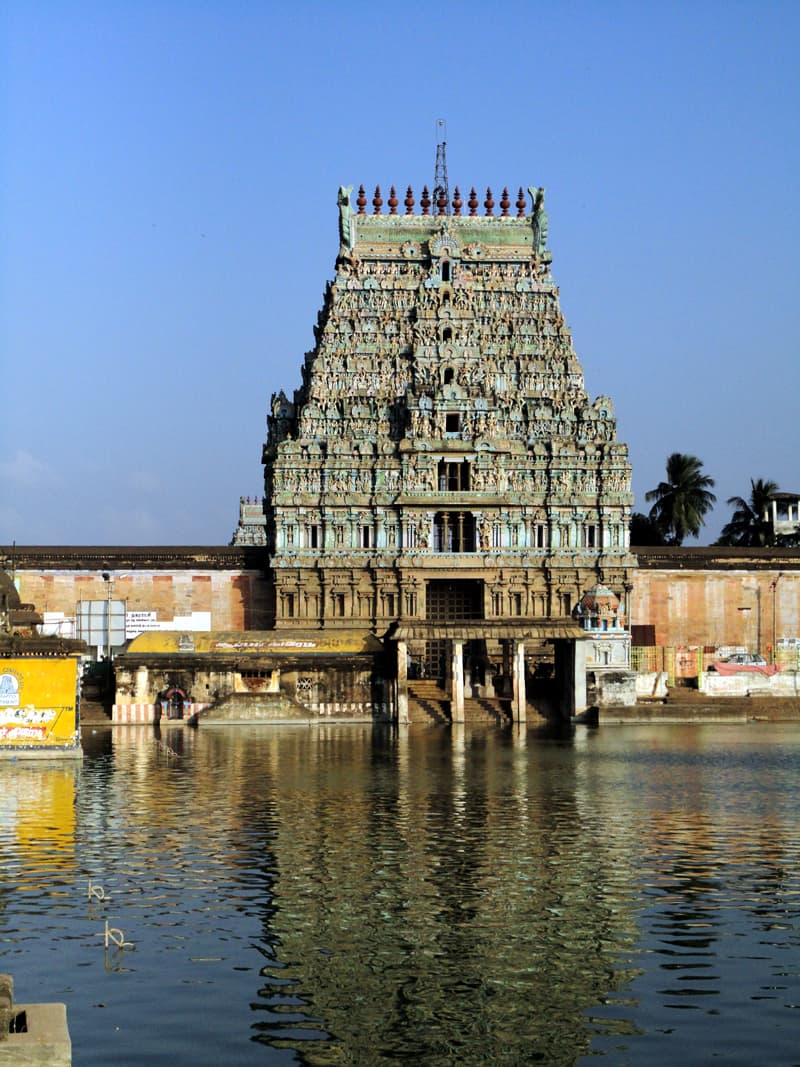
Image of Ulagalantha Perumal
Naga Tirtham, Agraya Tirtham, Gauri Tatakam, Taratara Tatakam, Akrura Tirtham
About Ulagalantha Perumal Temple, Kanchipuram
The Ulagalantha Perumal Temple, located in Kanchipuram, Tamil Nadu, India, is a significant Hindu temple dedicated to Lord Vishnu. It is celebrated for its monumental idol of Vishnu as Ulagalantha Perumal, which stands over 35 feet tall, depicting his Vamana avatar's cosmic stride across the worlds. The temple's architectural style is predominantly Dravidian, and it boasts a three-tiered rajagopuram.
Religious and Historical Significance
This temple holds a special place among the 108 Divya Desams, sacred Vishnu temples revered by the Alvar saints. Uniquely, the Ulagalantha Perumal Temple complex encompasses four distinct Divya Desams: Tirukkaravanam, Tirukarakam, Tiruneerakam, and Tiruürakam, with Tiruürakam housed within the main sanctum. The temple is revered in the early medieval Tamil canon, Naalayira Divya Prabandham, particularly by the saints Thirumangai Alvar and Thirumaḻisai Alvar.
Historical inscriptions suggest that the temple's origins trace back to the Pallava dynasty, with the earliest inscription dating to 846 CE. Subsequent contributions and patronage came from the medieval Cholas, Vijayanagara kings, and Madurai Nayaks, indicating its continuous importance through various ruling periods. The temple is managed by the Hindu Religious and Endowment Board of the Government of Tamil Nadu.
Legend and Worship
The temple is primarily associated with the Puranic legend of Vishnu's Vamana avatar. According to the stories, Vamana appeared before the benevolent asura king Mahabali, requesting a gift of three paces of land. In his cosmic form, Vamana then measured the earth with one step, the heavens with another, and Mahabali offered his head for the third, leading to his banishment to the netherworld. The colossal image of Ulagalantha Perumal vividly illustrates this event, with his left leg raised and his right foot placed on Mahabali's head.
Six daily rituals are performed at the temple, along with twelve annual festivals. The most prominent among these is the chariot festival, celebrated during the Tamil month of Chittirai (March–April). The main deity, Vishnu, is worshipped as Ulagalantha Perumal, and his consort Lakshmi as Amuthavalli. The temple also houses shrines for other deities and is a vital center for Vaishnavite worship and pilgrimage.
Source: Wikipedia ↗
Frequently Asked Questions
What is the legend behind the Ulagalantha Perumal Temple?
The temple is associated with the legend of Vishnu's Vamana avatar, who appeared as a dwarf Brahmin to quell the pride of the asura king Mahabali. Vamana, in his gigantic form known as Trivikrama, measured the three worlds with two steps and banished Mahabali to the netherworld with his third step.
What is special about the Ulagalantha Perumal Temple's architecture?
The temple is built in the Dravidian style of architecture and features a three-tiered rajagopuram. Its most striking architectural feature is the colossal 35-foot image of Ulagalantha Perumal, which necessitated an elevated roof for the sanctum (vimana).
Why is the Ulagalantha Perumal Temple considered unique among Divya Desams?
This temple is unique because its complex encompasses four different Divya Desams within its precincts: Tirukkaravanam, Tirukarakam, Tiruneerakam, and Tiruürakam. All four are praised in a single verse by Thirumangai Alvar.
Who are the primary deities worshipped at the temple?
The primary deity is Vishnu, worshipped as Ulagalantha Perumal. His consort, Lakshmi, is worshipped as Amuthavalli. The festival idol of the main deity is Vishnu as Loganathan.
What historical evidence supports the temple's age?
The temple is considered one of the oldest in Kanchipuram, with the earliest inscription dating back to 846 CE during the regime of Nandivarman III. It also holds inscriptions from various dynasties including Pallavas, Cholas, and Sambuvarayars.
Which saints have praised the Ulagalantha Perumal Temple?
The temple is revered in the Naalayira Divya Prabandham, an early medieval Tamil canon. Saints Thirumangai Alvar and Thirumaḻisai Alvar have sung praises of the temple and its deities.
Related Temples (Hindu)

Kumararama
The Kumararama Temple, also known as Bhimarama or Chalukya Kumararama Bhimeswara Temple, is a significant Hindu temple dedicated to Lord Shiva, located in Samalkota, Andhra Pradesh. It is one of the five Pancharama Kshetras and is renowned for its unique limestone Shiva Lingam, which is 16 feet tall and pierces through the roof to the second floor.

Thanumalayan Temple
The Thanumalayan Temple, located in Suchindrum, Tamil Nadu, is a significant Hindu temple dedicated to the Trimurti: Shiva, Vishnu, and Brahma, as represented by the presiding deity Sthanumalayan. This temple holds importance for both Shaivaite and Vaishnavite traditions and is recognized among the Abhimana Kshetrams. Its present structure dates back to the 9th century under the Chola dynasty, with later additions by the Nayak kings and Travancore Maharajas.
Thyagaraja Temple, Tiruvarur
The Thyagaraja Temple in Tiruvarur, Tamil Nadu, is a significant Hindu temple dedicated to Lord Shiva, worshipped as Thyagarajaswami. It is renowned for its vast complex, housing numerous shrines, including those of Goddess Neelotpalambika and Goddess Kamalambika, and for its annual Chariot festival featuring Asia's largest processional chariot. The temple's present structure dates back to the Chola dynasty in the 9th century and is a vital center for religious practices, music, and dance.