
Thanumalayan Temple
The Thanumalayan Temple, located in Suchindrum, Tamil Nadu, is a significant Hindu temple dedicated to the Trimurti: Shiva, Vishnu, and Brahma, as represented by the presiding deity Sthanumalayan. This temple holds importance for both Shaivaite and Vaishnavite traditions and is recognized among the Abhimana Kshetrams. Its present structure dates back to the 9th century under the Chola dynasty, with later additions by the Nayak kings and Travancore Maharajas.
Key Facts
- ›The temple's name, Stanumalaya, signifies Shiva (Stanu), Vishnu (Mal), and Brahma (Ayan).
- ›It is considered an Abhimana Kshetram in Vaishnavite traditions and one of the 108 Shiva Temples revered in Kerala Hindu culture.
- ›The present masonry structure was built during the Chola dynasty in the 9th century, with later expansions by Thirumalai Nayak and the Travancore Maharajas.
- ›The temple complex spans around two acres and features two gateway towers (gopurams), the tallest being 44 meters high.
- ›Notable architectural features include four musical pillars that emit different notes when struck and a 22-foot tall Anjaneya (Hanuman) statue carved from a single granite block.
- ›The temple is managed by the Hindu Religious and Charitable Endowments Department of the Government of Tamil Nadu.

Shiva, Vishnu, Brahma
- Religious Importance For Both Shaivaite and Vaishnavite Traditions
- Abhimana Kshetram In Vaishnavite Traditions
- One of the 108 Shiva Temples Revered In Kerala Hindu Culture
- Architectural Grandeur, Including Musical Pillars and Large Sculptures
Chola Dynasty, Nayak Dynasty, Travancore Maharajas
Margazhi Festival, Teppam
Stone, Granite, Mortar, Lime
Chola Dynasty, Thirumalai Nayak, Travancore Maharajas
- Musical Pillars
- Anjaneya Statue
- Nandi Statue
- Sculptures Depicting Scenes From Ramayana and Mahabharatha
About Thanumalayan Temple
The Thanumalayan Temple, also known as Sthanumalayan Temple, is a significant Hindu place of worship situated in Suchindrum, within the Kanyakumari district of Tamil Nadu, India. Its importance spans across both Shaivaite and Vaishnavite traditions, as its name, Stanumalaya, embodies the Trimurti: "Stanu" representing Shiva, "Mal" representing Vishnu, and "Ayan" representing Brahma. The temple is recognized as one of the Abhimana Kshetrams in Vaishnavite traditions and is also counted among the 108 Shiva Temples revered by Kerala Hindu culture, despite its current location in Tamil Nadu.
History and Architecture
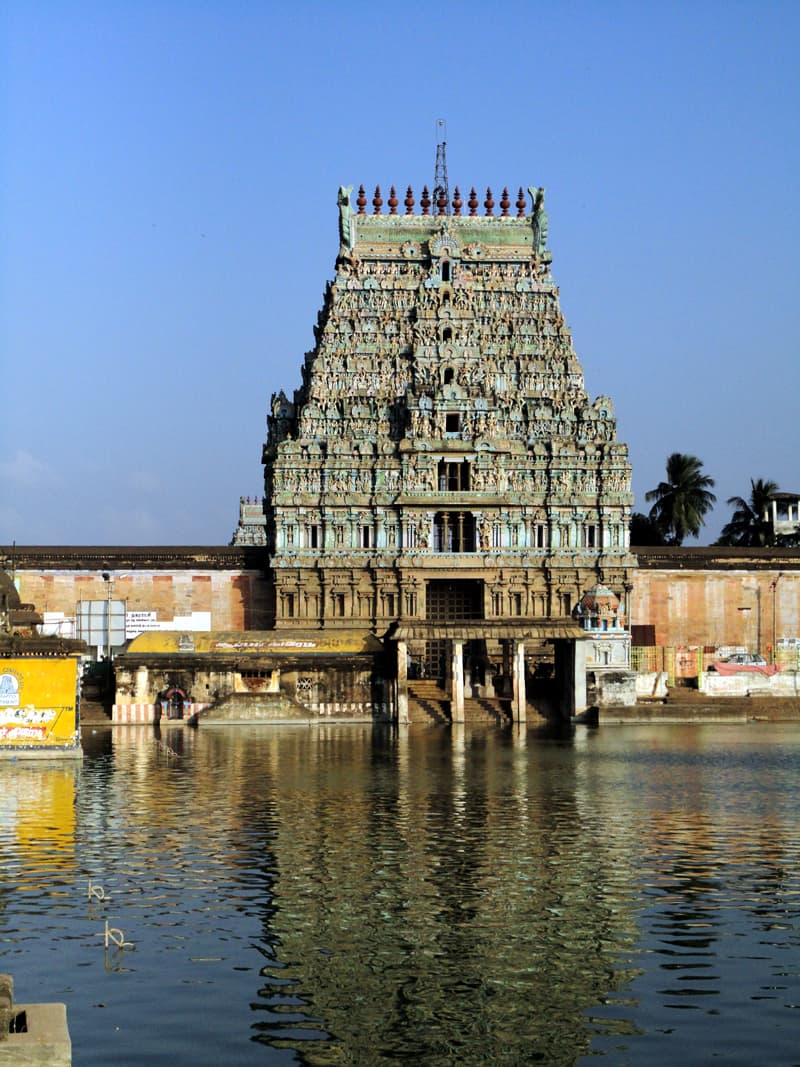
The present masonry structure of the temple was initiated during the Chola dynasty in the 9th century. Later expansions and enhancements were attributed to Thirumalai Nayak and the rulers of Travancore. The present temple complex extends over approximately two acres and is adorned with two gateway towers, known as gopurams, with the eastern tower reaching a height of 44 meters and featuring eleven stories. The temple is noted for its blend of Kerala and Tamil architectural styles, featuring a Navaratri Mandapam reminiscent of Kerala temple structures. A remarkable architectural highlight is the presence of four musical pillars, each standing 18 feet tall and carved from a single stone, which produce different musical notes when struck. The temple also boasts a colossal 22-foot Anjaneya (Hanuman) statue, carved from a single granite block, which is one of the tallest of its kind in India, and a large Nandi statue made from mortar and lime.
Religious and Cultural Significance
The unique religious significance of the Thanumalayan Temple lies in its presiding deity, Sthanumalayan, who represents the trinity of Shiva, Vishnu, and Brahma in a single linga form, a representation that is considered unique in India. The temple observes six daily rituals and hosts numerous annual festivals, with the celebration during Margazhi (December-January) being particularly prominent, drawing thousands of devotees. This festival includes a 10-day procession and a car festival. Another notable festival is Teppam, celebrated between April and May. Legends associated with the temple suggest that Indra was absolved of a curse here, and the area's name, Suchindrum, is believed to derive from the Sanskrit word for 'purify,' possibly linked to Indra's ritualistic worship at midnight. The temple is maintained and administered by the Hindu Religious and Charitable Endowments Department of the Government of Tamil Nadu.
Source: Wikipedia ↗
Frequently Asked Questions
What is the significance of the name Thanumalayan Temple?
The name Stanumalaya is derived from the Sanskrit words 'Stanu' (Shiva), 'Mal' (Vishnu), and 'Ayan' (Brahma), signifying the Trimurti, the three principal deities of Hinduism, who are represented in a single linga form at this temple.
What legends are associated with the Suchindrum area and this temple?
According to legend, Indra, the king of the devas, was relieved of a curse by worshipping the presiding deity. Another legend tells of sage Atri and his devoted wife Anasuya who, with her power of chastity, transformed the Trimurti into infants when they tested her devotion by appearing as mendicants.
What is the architectural style of the Thanumalayan Temple?
The temple exhibits a blend of Kerala and Tamil architectural styles. It features a Navaratri Mandapam with a typical wooden structure found in Kerala temples, alongside intricate stone carvings characteristic of Tamil architecture.
What are some of the notable sculptures and architectural highlights within the temple?
The temple is renowned for its architectural grandeur, including four musical pillars carved from a single stone that produce musical notes when struck. It also houses a massive 22-foot tall Anjaneya (Hanuman) statue carved from granite and a large Nandi statue made of mortar and lime.
When was the present structure of the Thanumalayan Temple built?
The present masonry structure of the Thanumalayan Temple was built during the Chola dynasty in the 9th century. Subsequent expansions and renovations were carried out by Thirumalai Nayak and the Travancore Maharajas.
What are the main festivals celebrated at the Thanumalayan Temple?
The most prominent festival celebrated at the temple occurs during Margazhi (December-January), which includes a 10-day procession and a car festival. Another festival, Teppam, is celebrated annually between April and May.
Related Temples (Hindu)

Kumararama
The Kumararama Temple, also known as Bhimarama or Chalukya Kumararama Bhimeswara Temple, is a significant Hindu temple dedicated to Lord Shiva, located in Samalkota, Andhra Pradesh. It is one of the five Pancharama Kshetras and is renowned for its unique limestone Shiva Lingam, which is 16 feet tall and pierces through the roof to the second floor.

Ulagalantha Perumal Temple, Kanchipuram
The Ulagalantha Perumal Temple in Kanchipuram, Tamil Nadu, is a significant Hindu temple dedicated to Vishnu. It is renowned for its towering deity image and for housing four Divya Desams within its complex, making it a unique pilgrimage site revered in early Tamil devotional literature.
Thyagaraja Temple, Tiruvarur
The Thyagaraja Temple in Tiruvarur, Tamil Nadu, is a significant Hindu temple dedicated to Lord Shiva, worshipped as Thyagarajaswami. It is renowned for its vast complex, housing numerous shrines, including those of Goddess Neelotpalambika and Goddess Kamalambika, and for its annual Chariot festival featuring Asia's largest processional chariot. The temple's present structure dates back to the Chola dynasty in the 9th century and is a vital center for religious practices, music, and dance.