
Rudranath
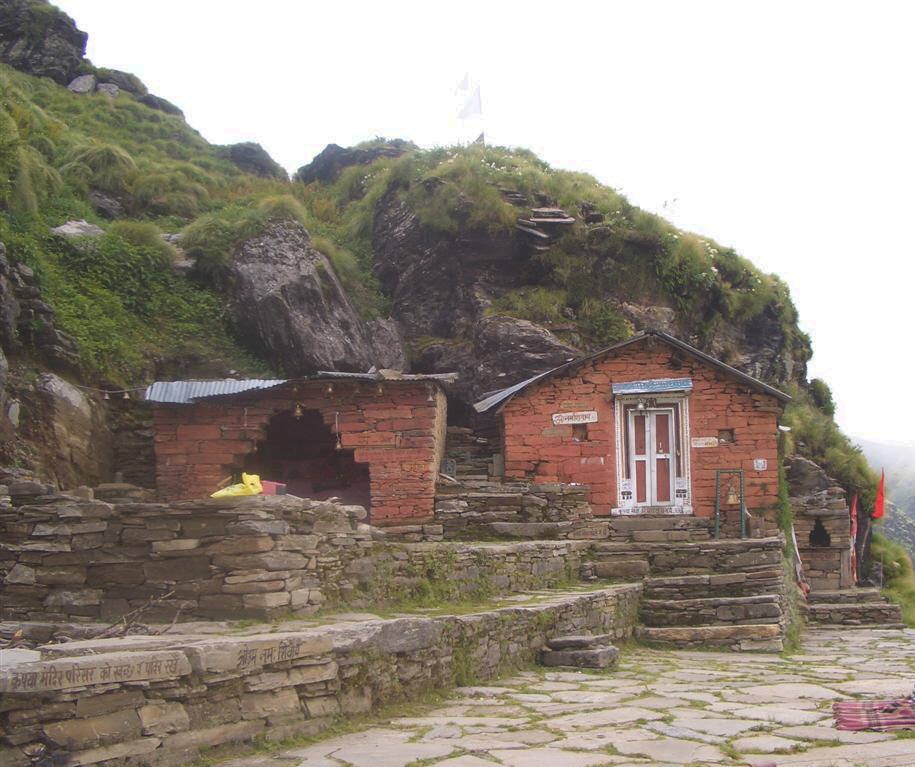
Rudranath Temple is a Hindu temple dedicated to Lord Shiva, situated in the Garhwal Himalayan mountains of Uttarakhand, India. It is renowned as a natural rock temple at an altitude of 3,600 meters, nestled within a dense rhododendron forest and alpine meadows. As the fourth site in the sacred Panch Kedar pilgrimage circuit, it holds significant spiritual importance for devotees seeking atonement and blessings.
Key Facts
- ›Dedicated to Lord Shiva, Rudranath is a natural rock temple located at 3,600 meters above sea level.
- ›It is the fourth temple in the Panch Kedar pilgrimage circuit, a sequence of five Shiva temples in the Garhwal region.
- ›Legend states the temple was established by the Pandavas to atone for sins committed during the Mahabharata war.
- ›The temple's face-like appearance is said to represent Lord Shiva's divine form.
- ›The holy river Rudraganga (Vaitarani) flows near the temple, considered a gateway for souls to the afterlife.
- ›Access typically involves trekking through forests from nearby villages like Sagar or Gangolgaon.
Shiva
Part of the Panch Kedar Pilgrimage Circuit, Site For Ancestral Rituals, Natural Rock Temple, Spiritual Significance In Seeking Atonement
Annual Fair On Full Moon Day In Sravan
Natural Rock
Pandavas
Grey Stone Idol of Rudranath
Rudraganga, Surya-Kund, Chandra-Kund, Tara-Kund, Mana-Kund
About Rudranath
Rudranath Temple
Rudranath Temple is a significant Hindu shrine dedicated to Lord Shiva, located at an elevation of 3,600 meters (11,800 feet) in the Garhwal Himalayan mountain range of Uttarakhand, India. It is distinguished as a natural rock temple, nestled within a picturesque landscape of dense rhododendron forests and alpine pastures. The temple's altitude and challenging access make it a notable destination for pilgrims.
Panch Kedar Pilgrimage
The temple holds a crucial place as the fourth site in the Panch Kedar pilgrimage circuit, a revered sequence of five Shiva temples in the Garhwal region. This circuit, which includes Kedarnath, Tungnath, Madhyamaheshwar, and Kalpeshwar, is undertaken in a strict order. The spiritual journey is believed to offer devotees a means to cleanse themselves of sins.
Legends and Mythology
According to Hindu epic traditions, the Rudranath Temple, along with the other Panch Kedar temples, was established by the Pandavas after their victory in the Mahabharata war. Seeking to atone for the sins of fratricide and killing Brahmins, they were guided by Lord Shiva, who had disguised himself as a bull. Upon being caught by Bhima, Shiva's form disappeared into the ground, reappearing in five different locations. The face of Shiva is said to have manifested at Rudranath, giving the temple its unique significance.
Geography and Access
The temple is situated near the holy river Rudraganga, also identified as Vaitarani, which is believed to be a passage for souls to the afterlife. This association makes Rudranath a site where devotees perform rituals for their ancestors. The surrounding geography is marked by several sacred water tanks, such as Surya-kund and Chandra-kund, and is framed by prominent mountain peaks like Nanda Devi and Trishul.
Access to Rudranath is generally considered the most challenging among the Panch Kedar temples. Most routes involve multi-day treks, often commencing from Gopeshwar and passing through dense forests. A common trek starts from the village of Sagar, followed by a 17 km (11 mi) walk through forests and shepherd settlements. Alternative routes also exist, but all require significant trekking effort.
Worship and Traditions
During the harsh winter months, a symbolic image of Lord Shiva is transferred from Rudranath to the Gopinath Mandir in Gopeshwar for continued worship. An annual fair is held at the temple on the full moon day in the Hindu month of Sravan (July–August), which is often observed on Raksha Bandhan. The local priests are traditionally from the Bhatt and Tiwari communities of Gopeshwar.
Source: Wikipedia ↗
Frequently Asked Questions
What is the significance of Rudranath Temple in the Panch Kedar circuit?
Rudranath Temple is the fourth temple visited in the Panch Kedar pilgrimage circuit, which comprises five important Shiva temples in the Garhwal region. Visiting these temples in a specific order is believed to help devotees seek blessings and atonement.
What is the legend behind the establishment of Rudranath Temple?
According to legend, the Pandavas established the Panch Kedar temples, including Rudranath, to atone for the sins of fratricide and killing Brahmins during the Kurukshetra war. Lord Shiva, in the form of a bull, revealed himself in five parts, with his face appearing at Rudranath.
What is the geographical setting of Rudranath Temple?
The temple is situated at a high altitude of 3,600 meters within the Garhwal Himalayan mountains. It is surrounded by dense rhododendron forests and alpine pastures, with prominent mountain peaks like Nanda Devi and Trishul visible from the site.
How is Rudranath Temple accessed?
Access to Rudranath Temple is primarily through trekking routes. Most routes start from Gopeshwar, involving walks through forests and shepherd settlements, with some treks being quite strenuous due to the altitude and terrain.
What rituals are performed at Rudranath Temple?
Devotees visit Rudranath to perform rituals for the dead, particularly pind offerings, as the holy river Rudraganga (Vaitarani) flowing nearby is associated with the afterlife. Performing these rituals here is believed to be highly meritorious.
What is the role of the Rudraganga river near the temple?
The Rudraganga river, also known as Vaitarani, flows near the temple. It is considered a sacred river where souls of the dead are believed to cross to reach the other world, making it a significant site for ancestral rituals.
Related Temples (Hindu)

Thiruchendur Murugan Temple
The Thiruchendur Murugan Temple, situated in the Thoothukudi district of Tamil Nadu, is a prominent Hindu temple dedicated to Lord Murugan. It is recognized as one of the Six Abodes of Murugan and holds significant mythological importance, recounting Murugan's victory over the asura Surapadman.

Kapila Theertham
Kapila Theertham is a Shaivite temple located at the foot of the Tirumala hills in Andhra Pradesh, India. The temple is dedicated to Lord Shiva, referred to as Kapileswara, and is believed to have been installed by Sage Kapila. It is situated at the entrance of a mountain cave, with a temple tank fed by a mountain stream, and holds significant religious importance for pilgrims.

Yaganti temple
The Sri Yaganti Uma Maheswara Temple, located in Andhra Pradesh, India, is a significant Hindu temple dedicated to Shiva. Constructed in the 15th century by the Vijayanagara Empire's Sangama Dynasty, it is known for its unique architectural features and popular beliefs surrounding a growing Nandi statue and the absence of crows.