
Madhyamaheshwar
North-Indian Himalayan·India
Madhyamaheshwar is a significant Hindu temple dedicated to Lord Shiva, located in the Rudraprayag district of Uttarakhand, India. As part of the sacred Panch Kedar pilgrimage circuit, it is believed that the navel (madhya or nabhi) of Shiva is worshipped here. The temple's origins are steeped in legend, with tradition attributing its construction to the Pandavas of the Mahabharata epic, who sought to atone for their sins.
Key Facts
- ›Dedicated to Lord Shiva, with the navel (nabhi) of Shiva being the primary deity worshipped.
- ›Part of the Panch Kedar pilgrimage circuit, located at an altitude of 3,497 meters.
- ›Believed to have been built by the Pandavas to seek forgiveness for sins committed during the Kurukshetra war.
- ›Accessible via a 16-18 kilometer trek from Aktolidhar or Ransi village.
- ›Features a navel-shaped Shiva-lingam made of black stone in its sanctum.
- ›Includes smaller shrines dedicated to Parvati and Ardhanarishwara, and a marble image of Saraswati.

Shiva
Part of the Panch Kedar Pilgrimage Circuit, Worship of the Navel of Shiva, Legendary Construction By the Pandavas, Spiritual Center Within the Garhwal Himalayas
Black Stone, Marble
Pandavas
Navel-Shaped Shiva-Lingam, Image of Saraswati Made of Marble, Ardhanarishwara Image
Saraswati Ganga, Morkhanda Ganga, Madhyamaheshwar Ganga, Madhu Ganga
About Madhyamaheshwar
Madhyamaheshwar, also known as Madmaheshwar, is a revered Hindu temple situated in Gaundar village within the Rudraprayag district of Uttarakhand, India. Nestled amidst the Garhwal Himalayas at an elevation of 3,497 meters, it is a vital component of the Panch Kedar pilgrimage circuit, a collection of five sacred Shiva temples in the region. Tradition holds that the navel (madhya or nabhi) of Lord Shiva is venerated at this temple, making it a unique spiritual destination.
Legend and Construction
Folklore surrounding the Panch Kedar temples often links their origin to the Pandavas, the protagonists of the epic Mahabharata. It is believed that after their victory in the Kurukshetra war, the Pandavas sought to atone for their sins of fratricide and killing Brahmins. Legend has it that Shiva, seeking to evade them, transformed into a bull and hid in the Garhwal region. Bhima, one of the Pandava brothers, pursued the bull and, upon recognizing Shiva, caught hold of its tail. Shiva then reappeared in five distinct parts across the Garhwal Himalayas, with his navel and stomach surfacing at Madhyamaheshwar. Pleased by this divine manifestation, the Pandavas are credited with building temples at these five locations to worship Shiva and attain salvation.
Temple Features and Worship
The current Madhyamaheshwar temple is constructed in the North-Indian Himalayan architectural style, set in a verdant meadow. The sanctum houses a navel-shaped Shiva-lingam carved from black stone. The temple complex also includes two smaller shrines dedicated to Shiva's consort, Parvati, and to Ardhanarishwara, a depiction of Shiva and Parvati as one being. Additionally, a marble image of Goddess Saraswati is installed in a small temple to the right of the main shrine. The water from the temple precincts is considered exceptionally sacred. Worship at Madhyamaheshwar follows a specific seasonal schedule, commencing in the summer months and concluding around October or November due to heavy snowfall. During winter, a symbolic idol of Shiva is ceremoniously moved to Ukhimath for continued worship. The priests serving at Madhyamaheshwar, like in many other temples in Uttarakhand, are Jangamas from the Veerashaiva community hailing from Mysore, Karnataka, fostering cultural exchange across India.
Geography and Access
The temple is set in a picturesque green valley, offering panoramic views of snow-capped Himalayan peaks including Chaukhamba, Neel Kanth, and Kedarnath. The region is part of the Kedar Massif and is known for its rich flora and fauna, including endangered species found in the Kedarnath Wildlife Sanctuary. Madhyamaheshwar is accessible via a trek of approximately 16-18 kilometers from Aktolidhar or Ransi village, near Ukhimath. The nearest motorable point is Ransi village. Rishikesh serves as the primary entry point to the Garhwal Himalayas, connected to major cities by rail. The nearest airport is Jolly Grant, located near Dehradun.
Source: Wikipedia ↗
Frequently Asked Questions
What deity is worshipped at Madhyamaheshwar?
Madhyamaheshwar is a Hindu temple dedicated to Lord Shiva. Specifically, the middle or navel part (madhya or nabhi) of Shiva is worshipped here in the form of a navel-shaped Shiva-lingam.
What is the significance of Madhyamaheshwar within the Panch Kedar pilgrimage circuit?
Madhyamaheshwar is one of the five temples that constitute the Panch Kedar pilgrimage circuit in the Garhwal region of Uttarakhand. It is traditionally visited after Kedarnath, Tungnath, and Rudranath, and before Kalpeshwar, with the navel of Shiva being the unique element worshipped at this site.
Who is credited with building Madhyamaheshwar temple?
According to local legends, the Pandavas, the central figures of the Hindu epic Mahabharata, are believed to have built the Madhyamaheshwar temple. They constructed it to atone for the sins of fratricide and killing Brahmins during the Kurukshetra war.
How does one reach Madhyamaheshwar?
Madhyamaheshwar is not directly connected by road and requires trekking. The last motorable point is Ransi village, and the temple can be reached via a 16-18 kilometer trek starting from Aktolidhar or Ransi village, passing through several small hamlets.
What is notable about the architecture or structure of Madhyamaheshwar?
The current temple is built in the North-Indian Himalayan style of architecture. Inside the sanctum, a navel-shaped Shiva-lingam made of black stone is enshrined. There are also smaller shrines dedicated to Parvati and Ardhanarishwara, and a marble image of Goddess Saraswati.
When is the best time to visit Madhyamaheshwar?
The best time to visit Madhyamaheshwar is generally from April to September. To avoid harsh weather conditions, it is advised to visit before October, as the temple precincts become inaccessible due to snow during winter.
Related Temples (Hindu)

Taraknath Temple
The Taraknath Temple, located in Tarakeswar, West Bengal, India, is a significant Hindu pilgrimage site dedicated to Lord Shiva, worshiped here as Tarakanatha. Constructed in 1729, it features a distinct Bengal architectural style with an 'atchala' structure and an adjacent 'natmandir'. The temple is renowned for its belief that a dip in the nearby Dudhpukur tank fulfills prayers and is considered one of the 64 Jyotirlingas.

Tanot Mata Temple
The Tanot Mata Temple is a significant Hindu shrine located in the Jaisalmer district of Rajasthan, India, near the Pakistan border. Revered as a form of Goddess Hinglaj Mata, the temple is famously associated with the Indian victories in the Indo-Pakistani Wars of 1965 and 1971, with local folklore attributing the successful outcomes to divine intervention. The Border Security Force of India now manages the temple complex, which also includes a victory tower and a war museum.
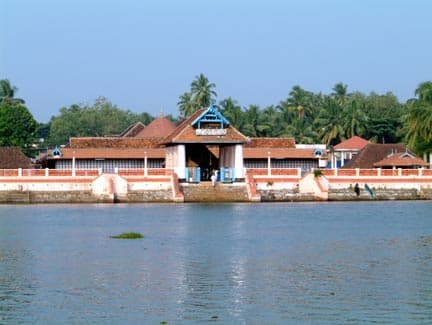
Thriprayar Temple
The Thriprayar Temple, also known as the Shree Ramaswami Temple, is a significant Hindu temple located in Triprayar, Thrissur district, Kerala, India. It is dedicated to Lord Rama, the seventh incarnation of Vishnu, who is depicted with four arms holding a conch, discus, bow, and garland. The temple's origin story involves the idol being worshipped by Krishna in Dwarka, later immersed in the sea, and eventually found by fishermen.