
Rishikesh
Rishikesh, also known as Hrishikesh, is a significant municipal corporation and tehsil in the Dehradun district of Uttarakhand, India. Situated on the banks of the Ganges River, it is renowned as a major Hindu pilgrimage town and the "Yoga Capital of the World." Rishikesh serves as the starting point for journeys to the Char Dham pilgrimage sites and various Himalayan tourist destinations, attracting visitors for its spiritual ambiance, adventure activities, and natural beauty.
Key Facts
- ›Rishikesh is a pilgrimage town for Hindus, associated with famous sages and yogis.
- ›It is nicknamed the "Gateway to the Garhwal Himalayas" and is a vegetarian-only, alcohol-free city.
- ›Rishikesh hosts the annual International Yoga Festival, earning it the title "Yoga Capital of the World."
- ›It is the starting point for travel to the Char Dham pilgrimage sites: Badrinath, Kedarnath, Gangotri, and Yamunotri.
- ›The city is the location where the Ganges River emerges from the Himalayas onto the Gangetic Plain.
- ›Rishikesh was designated as one of India's first "twin national heritage cities" in 2015.

Vishnu, Rama, Lakshmana
- Major Hindu Pilgrimage Destination
- Center For Yoga and Meditation
- Starting Point For Himalayan Treks and Char Dham Pilgrimage
- Spiritual Retreat Town
- National Heritage City
International Yoga Festival, Ganga Aarti
Adi Shankaracharya, Raibhya Rishi
Ganges River
About Rishikesh
Rishikesh, also known as Hrishikesh, is a significant municipal corporation and tehsil located in the Dehradun district of Uttarakhand, India. Nestled on the right bank of the sacred Ganges River, it is a globally recognized pilgrimage town for Hindus, deeply associated with ancient sages and yogis. The town is affectionately nicknamed the "Gateway to the Garhwal Himalayas" and is distinguished by its status as a vegetarian-only and alcohol-free city.
Spiritual and Pilgrimage Significance
Rishikesh holds immense spiritual importance, serving as a central hub for Hindu traditions and practices. Legends connect it to the epic Ramayana, with tales of Lord Rama performing penance here and his brother Lakshmana crossing the Ganges at the site of the present-day Lakshman Jhula. The town is also the starting point for pilgrims embarking on the arduous journey to the four revered Char Dham pilgrimage sites: Badrinath, Kedarnath, Gangotri, and Yamunotri. Numerous temples, such as Shatrughna Mandir, Bharat Mandir, and Lakshman Mandir, are built along the riverbanks, many established by Adi Shankaracharya.
Yoga Capital of the World
Since ancient times, Rishikesh has been a sanctuary for yogis and spiritual seekers. Its reputation as the "Yoga Capital of the World" was cemented by the visit of the Beatles to Maharishi Mahesh Yogi's ashram in 1968. This event spurred a surge in Western interest, leading to the establishment of many yoga and meditation centers, attracting practitioners and aspiring instructors from across the globe. The city hosts the annual International Yoga Festival every March, drawing international participants and further solidifying its global identity.
Geography and Environment
The city is strategically located at the foothills of the Shivalik Range, where the Ganges River emerges from the Himalayas before flowing into the Gangetic Plain. While the Ganges faces pollution downstream, the water in Rishikesh remains relatively cleaner. Rishikesh also serves as an ecological buffer zone, bordering the Rajaji National Park, a tiger reserve and a vital habitat for Asian elephants. The surrounding forests are rich in medicinal plants and birdlife, supporting eco-tourism and birdwatching activities. The Neergarh Waterfall, with its jade-blue waters, is a popular natural attraction for visitors seeking refreshment and scenic beauty.
Tourism and Activities
Beyond its spiritual allure, Rishikesh is a vibrant center for adventure tourism. It offers thrilling activities such as white-water rafting on the Ganges, India's highest bungee jumping, and the longest zipline in Asia. The iconic Lakshman Jhula and Ram Jhula suspension bridges, along with nearby ashrams like the Sivananda Ashram, are significant landmarks. The Ganga Aarti, a mesmerizing ritual of music and offerings at Triveni Ghat, is a daily spectacle that draws crowds. The city's commitment to a clean environment is reflected in its vegetarian-only policy and ongoing efforts to manage waste and water pollution, though challenges persist due to rapid tourism growth.
Source: Wikipedia ↗
Frequently Asked Questions
What is the meaning of the name Rishikesh?
The name Hṛṣīkeśa is derived from Vishnu, combining 'hṛṣīka' meaning 'senses' and 'īśa' meaning 'lord,' to signify 'Lord of the Senses.' This name commemorates an apparition of Vishnu to the sage Raibhya Rishi.
What is Rishikesh historically known for?
Historically, Rishikesh is believed to be part of the legendary "Kedarkhand" mentioned in the Skanda Purana. Legends suggest that Rama performed penance here after killing Ravana, and Lakshmana crossed the Ganges at the spot where the Lakshman Jhula bridge now stands.
What are the main pilgrimage and tourist attractions in Rishikesh?
Rishikesh is a starting point for the Char Dham pilgrimage and many Himalayan tourist spots. Key attractions include ancient temples along the Ganges, suspension bridges like Lakshman Jhula and Ram Jhula, and ashrams such as the Sivananda Ashram. It is also popular for adventure activities like white-water rafting and bungee jumping.
Why is Rishikesh called the "Yoga Capital of the World"?
Rishikesh has been a haven for yogis and practitioners for centuries. Its fame grew significantly after the Beatles visited Maharishi Mahesh Yogi's ashram in 1968, leading to an influx of Westerners seeking yoga and meditation experiences, and the establishment of numerous centers.
What are the environmental challenges faced by Rishikesh?
Rishikesh faces significant pollution challenges in the Ganges River, with high levels of pharmaceutical compounds. The city also struggles with air quality, primarily due to Particulate Matter (PM10) from sources like road dust and vehicular emissions. Waste management is strained by rapid tourism growth, leading to issues with inadequate disposal and a central landfill.
What culinary traditions are found in Rishikesh?
The cuisine of Rishikesh is entirely vegetarian, with a ban on the sale of meat, fish, and eggs since 1956. Traditional Garhwali dishes are common, featuring ingredients like lentils, legumes, millet, and vegetables, often cooked with mustard oil and select spices.
Related Temples (Hindu)

Taraknath Temple
The Taraknath Temple, located in Tarakeswar, West Bengal, India, is a significant Hindu pilgrimage site dedicated to Lord Shiva, worshiped here as Tarakanatha. Constructed in 1729, it features a distinct Bengal architectural style with an 'atchala' structure and an adjacent 'natmandir'. The temple is renowned for its belief that a dip in the nearby Dudhpukur tank fulfills prayers and is considered one of the 64 Jyotirlingas.

Tanot Mata Temple
The Tanot Mata Temple is a significant Hindu shrine located in the Jaisalmer district of Rajasthan, India, near the Pakistan border. Revered as a form of Goddess Hinglaj Mata, the temple is famously associated with the Indian victories in the Indo-Pakistani Wars of 1965 and 1971, with local folklore attributing the successful outcomes to divine intervention. The Border Security Force of India now manages the temple complex, which also includes a victory tower and a war museum.
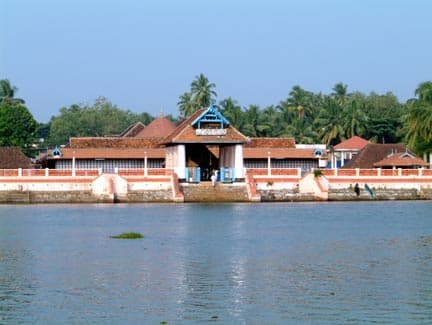
Thriprayar Temple
The Thriprayar Temple, also known as the Shree Ramaswami Temple, is a significant Hindu temple located in Triprayar, Thrissur district, Kerala, India. It is dedicated to Lord Rama, the seventh incarnation of Vishnu, who is depicted with four arms holding a conch, discus, bow, and garland. The temple's origin story involves the idol being worshipped by Krishna in Dwarka, later immersed in the sea, and eventually found by fishermen.