
Kapila Theertham
Kapila Theertham is a Shaivite temple located at the foot of the Tirumala hills in Andhra Pradesh, India. The temple is dedicated to Lord Shiva, referred to as Kapileswara, and is believed to have been installed by Sage Kapila. It is situated at the entrance of a mountain cave, with a temple tank fed by a mountain stream, and holds significant religious importance for pilgrims.
Key Facts
- ›The temple is dedicated to Lord Shiva, known here as Kapileswara, believed to have been installed by Sage Kapila.
- ›It is located at the entrance of a mountain cave at the base of the Tirumala hills.
- ›The temple complex includes a temple tank fed by a natural mountain stream, with a statue of Nandi at the entrance.
- ›Kapila Theertham received significant patronage from the Vijayanagara rulers between the 13th and 16th centuries.
- ›It is believed that bathing in the temple tank during the 'mukkoti' on the 'Purnima' day of the 'Kartika' month can lead to salvation.
- ›The temple celebrates major Shaivite festivals, with the Kapileswara Swamy Brahmotsavams being the largest annual event.

Shiva
- Religious Pilgrimage Site
- Historical Patronage By Vijayanagara Rulers
- Belief In Attaining Salvation Through Bathing In the Temple Tank During Specific Times
Vijayanagara Empire
Maha Shivaratri, Karthika Deepam, Vinayaka Chavithi, Adikirtika, Kapileswara Swamy Brahmotsavams
Sage Kapila, Saluva Narasimha Deva Raya, Sri Krishna Deva Raya, Venkatapathi Raya, Aliya Ramaraya
Stone Statue of Nandi
Mountain Stream, Kapila Theertham
About Kapila Theertham
Kapila Theertham is a notable Shaivite temple and sacred water body, identified as a 'theertham,' located at the foot of the Tirumala hills in Tirupati, Andhra Pradesh, India. The temple is dedicated to Lord Shiva, revered here as Kapileswara, with the idol believed to have been installed by the ancient sage Kapila. The name of the temple and the theertham itself are derived from this revered muni.
Legend and Religious Significance
According to local legend, Sage Kapila performed intense penance at this site, leading to a divine appearance by Lord Shiva and Goddess Parvati. The Lingam worshipped at the temple is considered self-manifested. A significant belief associated with Kapila Theertham is that all the holy waters from the three worlds converge into its temple tank, the Pushkarini, on the 'mukkoti' Purnima day of the 'Kartika' month. Devotees who bathe in the tank during this auspicious time are believed to attain liberation from the cycle of birth and death. The site also holds importance for performing ancestral rituals, with the belief that it can absolve sins for the non-performance of 'Pindam' offerings for departed ancestors.
History and Patronage
The temple has a rich historical connection, having received considerable patronage from the rulers of the Vijayanagara Empire. Between the 13th and 16th centuries, rulers such as Saluva Narasimha Deva Raya, the renowned Sri Krishna Deva Raya, and later figures like Venkatapathi Raya and Aliya Ramaraya, extended support and development to the temple.
Architecture and Administration
Kapila Theertham is distinctively situated at the entrance of a mountain cave, with the temple complex built against a steep, vertical rock face. A natural mountain stream cascades directly into the temple tank, enhancing its sacred ambiance. At the temple's entrance stands a stone statue of Nandi, the bull mount of Lord Shiva. The temple is currently administered by the Tirumala Tirupati Devasthanams (TTD), which ensures its continued protection, sustenance, and the grand celebration of its annual festivals.
Festivals and Worship
The temple observes all major festivals associated with Shaivism, including Maha Shivaratri, Karthika Deepam, Vinayaka Chavithi, and Adikirtika. The most significant annual event is the Kapileswara Swamy Brahmotsavams, a nine-day festival celebrated with great splendor by the TTD during February. This festival involves the ceremonial procession of the deities of Lord Shiva and Parvati on various divine vehicles, culminating in a celestial bath for the Shiva Lingam.
Within the main temple premises, there are several sub-shrines dedicated to deities such as Kamakshi, Vinayaka, Subhramanya, Agasthesswara, and Sri Krishna with Rukmini and Satyabhama.
Source: Wikipedia ↗
Frequently Asked Questions
What is the legend behind Kapila Theertham?
According to temple legend, Sage Kapila performed penance to Lord Shiva at this location. Pleased with his devotion, Shiva and Parvati appeared, and the Lingam is believed to have self-manifested. Kapila Muni is also said to have emerged from a cavity in the Pushkarini (temple tank).
Who were the historical patrons of Kapila Theertham?
The temple received substantial patronage from the rulers of the Vijayanagara Empire between the 13th and 16th centuries. Notable patrons included Saluva Narasimha Deva Raya, Sri Krishna Deva Raya, Venkatapathi Raya, and Aliya Ramaraya.
What is the religious significance of Kapila Theertham?
It is believed that all holy waters from the three worlds merge into the Kapila Theertham tank at noon on the 'mukkoti' Purnima day of the 'Kartika' month. Bathing in the tank at this auspicious time is thought to grant salvation from the cycle of birth and death. It is also a place where one can perform rituals for departed ancestors.
What are the main festivals celebrated at Kapila Theertham?
The temple observes all significant Shaivite festivals, including Maha Shivaratri, Karthika Deepam, Vinayaka Chavithi, and Adikirtika. The most prominent event is the nine-day Kapileswara Swamy Brahmotsavams, held annually in February, featuring processions of Lord Shiva and Parvati.
What is the architectural setting of Kapila Theertham?
The temple is situated at the entrance of a mountain cave, nestled against a steep, vertical rock face at the foothills of the Tirumala hills. A mountain stream flows directly into the temple tank located within the complex.
Related Temples (Hindu)
Girnar
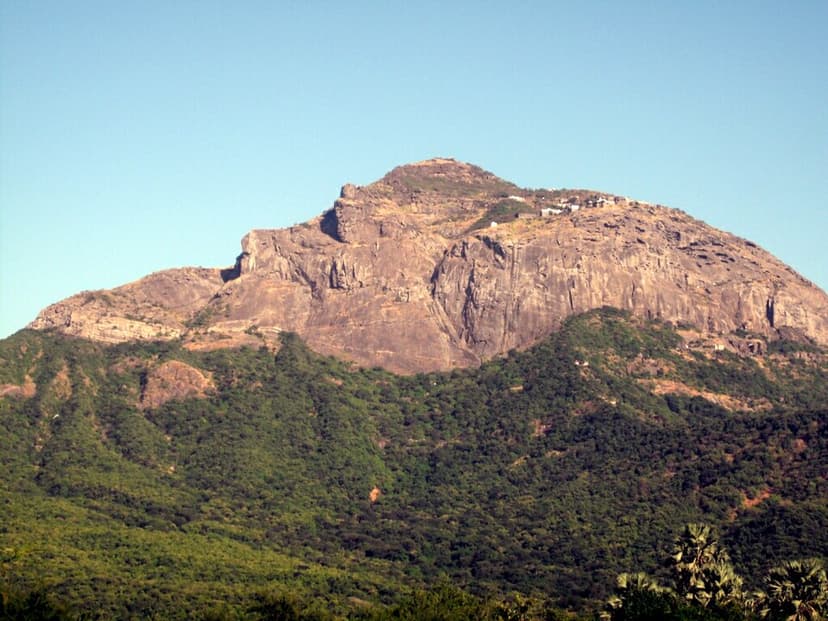
Girnar is an ancient and sacred hill in Junagadh, Gujarat, India, renowned as a Mahatirth for Jains. It is the site where the 22nd Tirthaṅkar, Lord Neminath, attained omniscience and nirvana, along with many enlightened sages. The hill also bears historical significance with Ashoka's Major Rock Edicts inscribed on a boulder near its base.

Mahamaya Temple
The Mahamaya Temple, located in Ratanpur, Chhattisgarh, India, is a significant Hindu temple dedicated to Goddess Durga and Mahalaksmi. It is recognized as one of the 52 Shakti Peethas and holds historical importance, with parts of the complex dating back to the 12th-13th centuries and a later structure built in 1492 CE.

Aundha Nagnath Temple
The Aundha Nagnath Temple, located in Hingoli district, Maharashtra, India, is revered as the eighth of the twelve Jyotirlinga shrines dedicated to Lord Shiva. Its architecture uniquely blends Hemadpanti and Maratha styles, featuring a distinctive basement sanctum and a rear-facing Nandi pavilion, a testament to the legend of Sant Namdev. The temple is a significant heritage site, holding religious importance for Hindus and also a place of reverence in Sikhism due to its connection with Sant Namdev and a believed visit by Guru Nanak.