
Mahamaya Temple
The Mahamaya Temple, located in Ratanpur, Chhattisgarh, India, is a significant Hindu temple dedicated to Goddess Durga and Mahalaksmi. It is recognized as one of the 52 Shakti Peethas and holds historical importance, with parts of the complex dating back to the 12th-13th centuries and a later structure built in 1492 CE.
Key Facts
- ›Dedicated to Goddess Durga and Mahalaksmi, also known as Kosaleswari.
- ›Considered one of the 52 Shakti Peethas, shrines of Shakti.
- ›Originally housed Maha Kali, Maha Lakshmi, and Maha Saraswati.
- ›The current temple structure was built in Vikram Samvat 1552 (1492 CE).
- ›Built in the Nagara style of architecture.
- ›Located in Ratanpur, Bilaspur district, Chhattisgarh, India.

Durga, Mahalaksmi, Mahamaya, Kosaleswari
- One of the 52 Shakti Peethas
- Presiding Deity of Old Dakshin Kosal Region
- Historical Importance During Kalachuris of Ratnapura Reign
- Pilgrimage Site
Kalachuris of Ratnapura
Navaratri
King Ratnadeva, King Bahar Sai, Santosh Giri, King Prithivideva Ii
Beautiful Carvings On Kantideval Temple
Water Tank
About Mahamaya Temple
The Mahamaya Temple is a significant Hindu place of worship located in Ratanpur, within the Bilaspur district of Chhattisgarh, India. Dedicated to Goddess Durga and Mahalaksmi, it holds the distinction of being one of the 52 Shakti Peethas, which are sacred shrines venerating Shakti, the divine feminine principle, spread across India. The presiding deity, Goddess Mahamaya, is also known as Kosaleswari and is considered the divine patron of the historical Dakshin Kosal region, which corresponds to modern-day Chhattisgarh.
History and Construction
The temple's origins date back to the 12th-13th century, constructed during the rule of the Kalachuris of Ratnapura. Legend states it was established at the site where King Ratnadeva had a vision of Goddess Kali. Initially, the temple was consecrated for three goddesses: Maha Kali, Maha Lakshmi, and Maha Saraswati. Later, Maha Kali departed, and a new temple was erected in Vikram Samvat 1552 (1492 CE) by King Bahar Sai, specifically for Goddess Maha Lakshmi and Maha Saraswati. The temple complex also features ponds and houses shrines to Shiva and Hanuman. Mahamaya is traditionally revered as the Kuldevi (family deity) of the Ratanpur state, and the temple has undergone renovations by the architecture department.
Architecture and Features
Built in the Nagara style of architecture, the Mahamaya Temple faces north and is situated adjacent to a substantial water tank. The complex showcases remnants of ancillary temples, domes, palaces, and forts that once surrounded the temple and the royal residence of the Ratanpur Kingdom. Within this complex lies the Kantideval Temple, believed to be the oldest structure, initially built by an ascetic named Santosh Giri in 1039 and later expanded by Kalchuri King Prithivideva II in the 15th century. Kantideval features four gates and intricate carvings, and has been restored by the Archaeological Survey of India. The sanctum and the mandapa are enclosed by a fortified courtyard added during the Maratha period in the late 18th century. Nearby, on a hilltop within the ruins of an ancient fort, are the remnants of the 11th-century Kadeideol Shiva Temple, also built by the Kalachuri rulers, who were devotees of both Shiva and Shakti, and this temple is also slated for restoration.
Religious Significance and Practices
The temple is a major pilgrimage destination, particularly drawing large crowds during the Navaratri festival. During this time, Jyotikalash lamps are lit to honor the mother goddess. The guardian deity of the temple is considered to be Kalbhairva, whose shrine is located on the highway leading to Mahamaya Temple. It is a widely held belief among pilgrims that visiting the Kalabhairava temple is a necessary step to complete their pilgrimage to Mahamaya Temple.
Administration
The Shri Mahamaya Devi Mandir is managed by the Sidh Shakti Peeth Shri Mahamaya Devi Mandir Trust, a registered non-profit organization. This trust comprises 21 trustees responsible for the temple's maintenance, architecture, daily operations, finances, and administration. The trust also engages in various social welfare activities for the benefit of the underprivileged and disabled sections of society.
Source: Wikipedia ↗
Frequently Asked Questions
When was the Mahamaya Temple built?
The Mahamaya Temple was built in the 12th-13th century during the reign of the Kalachuris of Ratnapura. A later temple structure for Goddess Maha Lakshmi and Maha Saraswati was built in Vikram Samvat 1552 (1492 CE).
What deities are worshipped at the Mahamaya Temple?
The Mahamaya Temple is primarily dedicated to Goddess Durga and Mahalaksmi, who is also known as Kosaleswari. Originally, the temple housed Maha Kali, Maha Lakshmi, and Maha Saraswati.
What is the architectural style of the Mahamaya Temple?
The Mahamaya Temple is built in the Nagara style of architecture. It faces north and is situated beside a large water tank.
What is the historical significance of Mahamaya Temple?
The temple is significant as it is one of the 52 Shakti Peethas dedicated to Shakti. It was built during the reign of the Kalachuris of Ratnapura and is associated with the presiding deity of the old Dakshin Kosal region.
Are there other temples within the Mahamaya Temple complex?
Yes, within the campus, there are temples of Shiva and Hanuman. The temple of Kantideval, which is the oldest in the cluster, is also part of the complex, along with the temple of Kalbhairva on the approach road.
What festivals are celebrated at Mahamaya Temple?
People throng the temple during the Navaratri festival, when Jyotikalash is lit to appease the mother goddess. Visiting the temple of Kalabhairava is also considered essential to complete the pilgrimage.
Related Temples (Hindu)
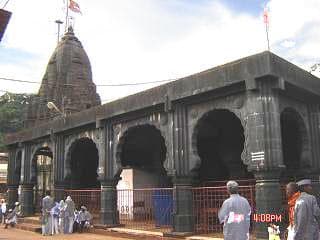
Bhimashankar Temple
The Bhimashankar Temple, located in Pune district, Maharashtra, is a significant Hindu pilgrimage site dedicated to Lord Shiva. It is revered as the abode of one of the 12 Jyotirlingas, with its Shiva lingam being one of the three Jyotirlingas found in Maharashtra. The temple complex, dating back to the 13th century and constructed in black stone, features a central hall and dome enhanced in the 18th century.

Baijnath Temple
The Baijnath Temple, located in Kangra District, Himachal Pradesh, India, is a significant Hindu temple dedicated to Shiva as Vaidyanath, the lord of physicians. Built in 1204 AD by two local merchants, Ahuka and Manyuka, it is constructed in the Nagara architectural style and is protected by the Archaeological Survey of India. The temple is notable for its historical inscriptions, intricate sculptures, and a unique tradition of not celebrating Dussehra due to a legend involving King Ravana.
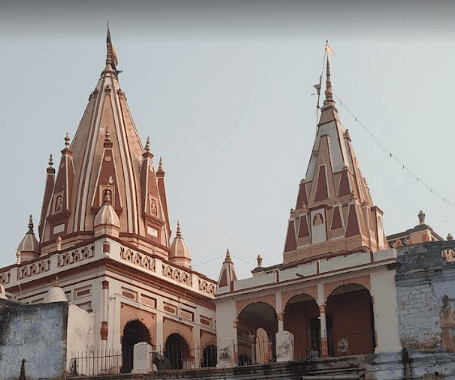
Budhanath Temple, Bhagalpur
The Budhanath Temple, also known as Vriddheshwarnath or Baba Bal Vridheshwarnath Temple, is a significant Hindu temple dedicated to Lord Shiva, located on the banks of the Uttarvahini Ganga in Bhagalpur, India. It is believed to be one of the 108 Nath temples mentioned in the Shiva Purana and is celebrated for its spiritual ambiance and as a focal point for regional cultural identity.