
Baijnath Temple
The Baijnath Temple, located in Kangra District, Himachal Pradesh, India, is a significant Hindu temple dedicated to Shiva as Vaidyanath, the lord of physicians. Built in 1204 AD by two local merchants, Ahuka and Manyuka, it is constructed in the Nagara architectural style and is protected by the Archaeological Survey of India. The temple is notable for its historical inscriptions, intricate sculptures, and a unique tradition of not celebrating Dussehra due to a legend involving King Ravana.
Key Facts
- ›Built in 1204 AD by merchants Ahuka and Manyuka.
- ›Dedicated to Shiva in his form as Vaidyanath, the lord of physicians.
- ›Constructed in the Nagara architectural style.
- ›Houses a Shiva lingam in its inner sanctum.
- ›Features numerous idols carved on its walls, some predating the current structure.
- ›Protected and conserved by the Archaeological Survey of India.

Shiva
- Historical Importance Due To Ancient Inscriptions Detailing Its Construction and Patronage.
- Architectural Example of the Nagara Style.
- Religious Site Dedicated To Shiva As Vaidyanath.
- Unique Cultural Significance For Not Celebrating Dussehra Due To Local Legend.
Chand Dynasty
Dussehra
Ahuka, Manyuka, Sansar Chand, Ganga Ram
Ganesha, Harihara, Kalyanasundara, Shiva's Defeat of the Asura Andhaka
About Baijnath Temple
The Baijnath Temple is a significant Hindu temple located in the town of Baijnath, Kangra District, Himachal Pradesh, India. It is dedicated to Lord Shiva, worshipped here as Vaidyanath, meaning 'the lord of physicians'. The temple's construction dates back to 1204 AD, attributed to two local merchants named Ahuka and Manyuka. It is an exemplary specimen of the Nagara style of architecture and is currently protected and conserved by the Archaeological Survey of India.
History and Construction
Inscriptions found within the temple indicate that a shrine to Shiva existed on the site before the current structure was built. The present temple was constructed by the merchants Ahuka and Manyuka. The inscriptions, written in Sanskrit and local Pahari scripts, also name the ruling king Jaya Chandra, the architects, and donor merchants at the time of its construction. Later, in 1786, ruler Sansar Chand undertook renovation and restoration work, including the reconstruction of the spire and outer roof, led by his family priest Ganga Ram. The temple sustained minor damages during the 1905 earthquake but survived this natural disaster.
Religious Significance and Traditions
The inner sanctum of the Baijnath Temple houses a Shiva lingam. The walls and exterior niches are adorned with numerous carved idols, some of which predate the current temple structure. These sculptures depict deities such as Ganesha, Harihara (a composite form of Vishnu and Shiva), Kalyanasundara (the wedding of Shiva and Parvati), and Shiva's victory over the asura Andhaka.
A unique tradition associated with the Baijnath Temple is the non-celebration of the Dussehra festival. This practice stems from a legend in the Puranas where King Ravana, after receiving invincible powers from Lord Shiva, was carrying a shivling to Lanka. According to the legend, Ravana placed the shivling on the ground at the site of Baijnath (then known as Kiragrama) to quench his thirst, and it became fixed there. Out of reverence for Ravana's devotion, Dussehra has never been observed in Baijnath.
Accessibility
The Baijnath Temple is accessible by various means of transport, including bus, train, and flight. It is situated on National Highway No. 154, between Kangra and Mandi. The nearest airport is Gaggal Airport in Dharamshala, and the closest railway stations are Paprola (narrow gauge) and Amb Andaura (broad gauge).
Source: Wikipedia ↗
Frequently Asked Questions
When was the Baijnath Temple built?
The present-day Baijnath Temple was built in 1204 AD. Inscriptions on the temple structure indicate that a temple of Shiva had existed there prior to this construction.
Who built the Baijnath Temple?
The temple was built by two local merchants named Ahuka and Manyuka. The inscriptions also mention the names of architects and other donor merchants who contributed to its construction.
What deity is worshipped at Baijnath Temple?
The Baijnath Temple is dedicated to Lord Shiva, specifically worshipped in the form of Vaidyanath. Vaidyanath translates to 'the lord of physicians'.
Why is Dussehra not celebrated at Baijnath Temple?
According to local legends rooted in the Puranas, Dussehra is not celebrated at Baijnath Temple out of respect for King Ravana's devotion to Lord Shiva. The legend states that Ravana placed a shivling on the ground at Baijnath (then Kiragrama) after being granted boons by Shiva.
What kind of architecture does the Baijnath Temple have?
The Baijnath Temple is built in the Nagara style of architecture. This style is characterized by its curvilinear shikhara (spire) and intricate carvings.
What historical inscriptions are found at the Baijnath Temple?
Two long inscriptions in Sanskrit (Sharada script) and local Pahari language (Takri script) are engraved on stone slabs in the main hall. These provide details about the temple's construction, rulers, architects, and donor merchants.
Related Temples (Hindu)

Mahamaya Temple
The Mahamaya Temple, located in Ratanpur, Chhattisgarh, India, is a significant Hindu temple dedicated to Goddess Durga and Mahalaksmi. It is recognized as one of the 52 Shakti Peethas and holds historical importance, with parts of the complex dating back to the 12th-13th centuries and a later structure built in 1492 CE.
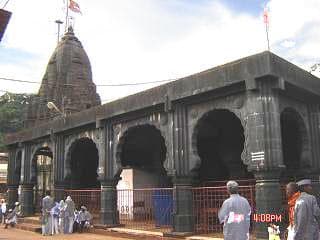
Bhimashankar Temple
The Bhimashankar Temple, located in Pune district, Maharashtra, is a significant Hindu pilgrimage site dedicated to Lord Shiva. It is revered as the abode of one of the 12 Jyotirlingas, with its Shiva lingam being one of the three Jyotirlingas found in Maharashtra. The temple complex, dating back to the 13th century and constructed in black stone, features a central hall and dome enhanced in the 18th century.
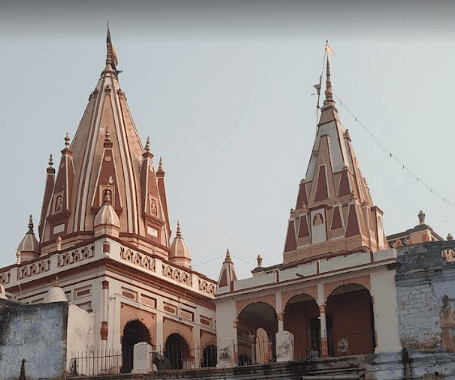
Budhanath Temple, Bhagalpur
The Budhanath Temple, also known as Vriddheshwarnath or Baba Bal Vridheshwarnath Temple, is a significant Hindu temple dedicated to Lord Shiva, located on the banks of the Uttarvahini Ganga in Bhagalpur, India. It is believed to be one of the 108 Nath temples mentioned in the Shiva Purana and is celebrated for its spiritual ambiance and as a focal point for regional cultural identity.